7 Days 7 Lessons #1

One of the few podcasts I do listen to is Diary of a CEO. I think it's a solid place to start if you're looking to widen your knowledge in life. It includes brilliant advice from top professionals in their industry. Naturally, when I heard that Steven Bartlett had released a book (The Diary of a CEO: The 33 Laws of Business and Life) I picked it up and gave it a read.
One of the things he mentioned in the second chapter of his book was that when he was starting out in his career, everyday, he picked up a small topic, and tried his best to convey that in the simplest way possible. This not only allowed him to learn about it, but also understand and master it. Thus this idea came to life. With the hopes of expanding my knowledge in some of my favourite subject fields, every week I intend to make a 7D7L post where I learn one lesson every day and try my best to explain it as simply as possible.
This week we have:
- Finance: Stock Market FOMO
- Learning: The Feynman Technique
- Learning: The Learning Pyramid
- Health: Giving is a powerful way to recover from stress
- Efficiency: The Pareto Principle
- Health: Green Tea's Health Benefits
- Moral: Hanlon's Razor
Stock Market FOMO
Fidelity, one of the biggest financial brokerages in the world, released an article titled Reasons to stay invested.
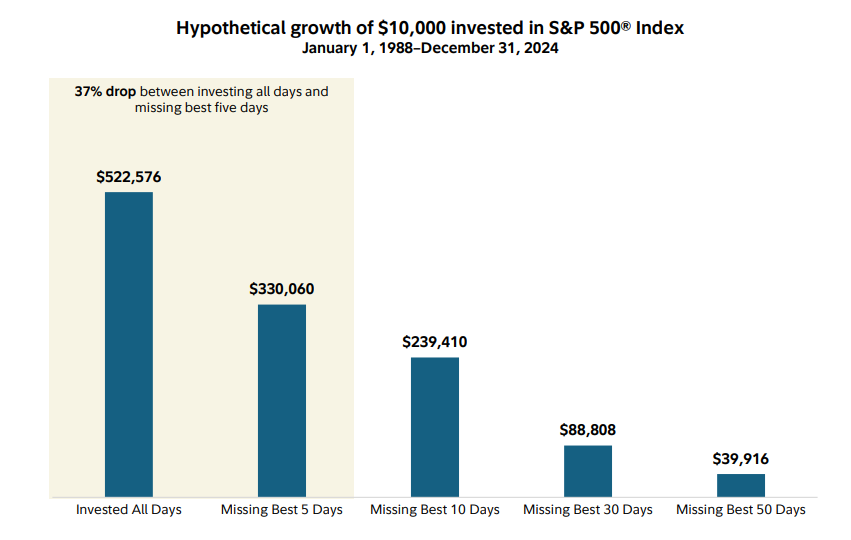
The above graph highlights the second point they made Missing out on best days can be costly.
The cost of timing the market is shown. Trying to time when to leave and when to re-join, two tasks that are statistically improbable, in majority of the cases leads to significant damages in your long-term portfolio.
This is because, some of the best day returns happen during bear markets, and during bear markets, negativity is the name of the game. Therefore, by the time you hear about the good news, the stock would have already moved without you, and you would've missed one of the best days in history.
This just means that statistically the best thing you can do is do nothing. There's not many opportunities in life that you can say that being lazy will result in better results than doing something!
Of course, this is not financial advise, and I would still highly encourage you to understand why you are making the investments you are making.
TLDR: DCA your investments into ETF's, let it sit there and reap the rewards later.
The Feynman Technique
Richard Feynman was one of the most famous theoretical physicists in modern history. You typically wouldn't attribute fame to theoretical physics, but he was responsible for a ton of development in Quantum Physics and had a big part to play in the Manhattan Project.
Although he was well renowned for his scientific work, he was also known for being a brilliant communicator and a fantastic teacher. The way he could break complex topics, into the simplest explanation possible was a gift he had. If you want to witness his skill first hand, I would highly recommend watching any of his lectures on YouTube.
Scott Young popularised the Feynman Technique as a way of establishing a simple process that helped you get as good at explaining complicated topics as Richard Feynman was.
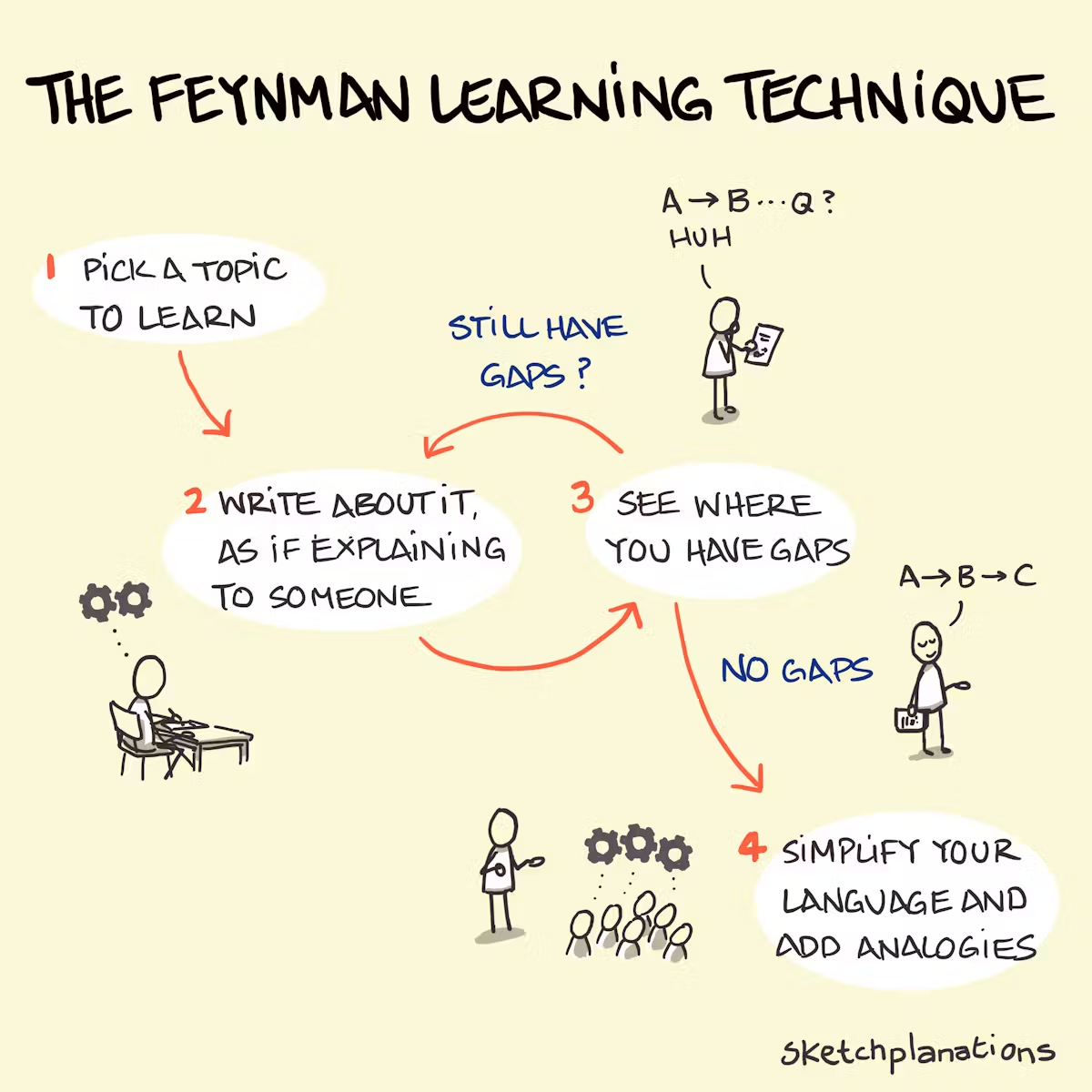
- Start off by picking a topic you want to learn. You want to dive into the details of the topic so that you become familiar with it. The goal of the Feynman Technique is to be able to explain the topic you have just learned to anyone. How can you expect to explain something to someone without knowing the intricate details of it.
- Write about it as if explaining the topic to someone else. It's time to use the knowledge you've learned and write it in a way that explains the topic as easily as possible to absolutely anyone. Some recommend writing as if you were talking to someone else, maybe even a kid. It really pushes you to cut down and simplify certain topics to it's fundamentals.
- Identify any misconceptions you have with your explanations. You really want to make sure you aren't making any mistakes. Ensuring you are correct about everything is a must, otherwise you are leading people astray and ruining your reputation in the process.
- Fine-tune your work. Now that everything is correct, maybe show your work to someone, and maybe they said they got lost at a certain point. How can you go about fine-tuning it so that it becomes perfect. You don't need to just rely on someone either, you can look for areas that become more confusing as time goes by, find ways you can reduce the time it takes to explain something, or even just trying to use simpler language. Analogies elevate this dramatically.
During so many of the lectures I attended at university, there were plenty of times the teacher disregarded explaining certain words in hopes that we already knew them. I really do think they could have taken advantage of learning about the Feynman Technique to fine-tune their teaching as best as possible, seen as they are the ones being paid to teach.
The goal isn't to make the topic more abstract and high-level, instead it's to simplify it to an extreme that retains the critical pieces of information and accuracy, whilst making it accessible to the biggest possible audience.
That's the goal of this blog, understand it by writing about it, and master it by teaching it to others. This is the Feynman Technique in action!
TLDR:
“If you want to learn something, read about it. If you want to understand something, write about it. If you want to master something, teach it” - Yogi Bhajan
The Learning Pyramid
The learning pyramid, created by the NTL in the early 1960's is something that has seemed to consistently gain steam in the self-help community. Although backed by very little evidence (claims that the evidence went missing or was destroyed), I believe it can still be useful.
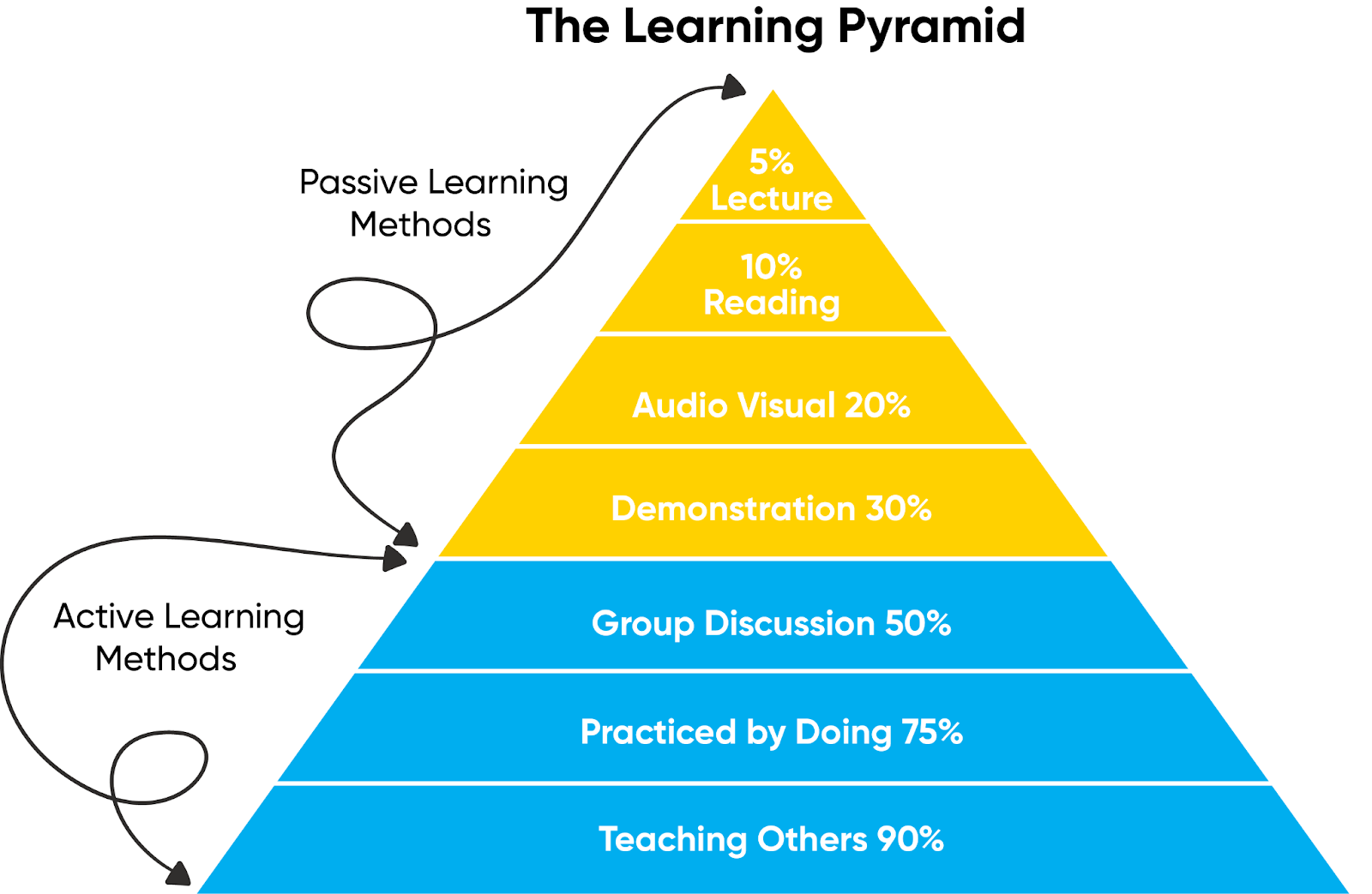
Although there might not be any evidence specifically leading to the retention percentages on the pyramid, you can still extrapolate from the pyramid that passive learning is significantly less likely to help you retain your knowledge, than active learning, and there's plenty of evidence showing this.
So although the pyramid might not be backed by evidence, the message behind it seemingly is backed by evidence.
Anecdotally, I've seen this play positively in my life. At the start of Year 11, I was predicted to get Grade 5's (C's) for my GCSE's. This was primarily because up to that point in life, all I did was listen to my lectures. In that same year, I started making notes, and my grade jumped quite dramatically to Grade 7's (A's). When I did go to University, however, I started using a new technique. I would sit in my room and pretended that I was giving a lecture to an imaginary class, this helped me get a 1st class honours with an 85% pass rate.
Passive learning is not good enough if you want to be successful in your field. Active learning is required for you to excel.
Think about the people you know with the most amount of knowledge. Did they gain that from just sitting down and listening? Probably not. Instead they've probably worked in the industry that's made them so knowledgeable or they're teachers who put effort into learning about a subject and breaking it down as simply as possible in order to teach others.
TLDR: Research shows that passive learning has consistently shown worse results for retention than active learning. Don't just listen, but discuss, do, and teach.
Giving is a powerful way to recover from stress
It's Christmas! I thought it would be a good idea to learn a lesson that somehow related to Christmas, specifically around giving. Was there any scientific evidence that shows that giving is good for you? Well, to my surprise (not really) there's plenty, but I'm going to speak about specifically the effects of giving on recovery from stress.
A 2022 study named The benefits of giving: Effects of prosocial behaviour on recovery from stress wanted to see whether prosocial behaviour helped people recover from stress better than selfish or neutral behaviours.
The layout of the study:
- The Trier Social Stress Test (TSST) was carried out to induce acute stress for participants.
- Participants were asked to carry out one of the following acts:
- Gifting someone a present
- Receiving a gift from someone
- Choosing the most aesthetically pleasing gift card
- Physiological and psychological measurements was tracked throughout the entire process.
Results:
- There was no significant differences in psychological measurements depending on the different acts chosen after the TSST.
- Gifting someone a present showed to be the most effective way to reduce acute stress when compared to the other acts. This was seen specifically in cardiovascular measurements.
- Those who are more willing to give received even better results from the giving act vs. those who are less willing to give, but just to be clear, giving was still the best option.
It doesen't have to be an expensive present, it just has to be a present. Something that shows you've put effort into making it, or that you've thought about the other person.
No wonder people are so happy during Christmas (of course, having a day off definitely has a compounding effect on this).
Maybe we should normalise giving more gifts to others. I reckon the world would be a much better place if we asked ourselves the question, how can I make someone else's day better?
TLDR: Given an acute stress event, out of all the acts you could do (giving, receiving or choosing) the best option is to give!
Pareto Principle
The Pareto Principle states that 80% of outcomes come from 20% of causes. It highlights that there isn't a 1:1 relationship with inputs and outputs. I first came across it when reading an article by Google's CISO Phil Venables. He mentioned that there are a few key metrics (20%) that can be used to improve your security by 80%.
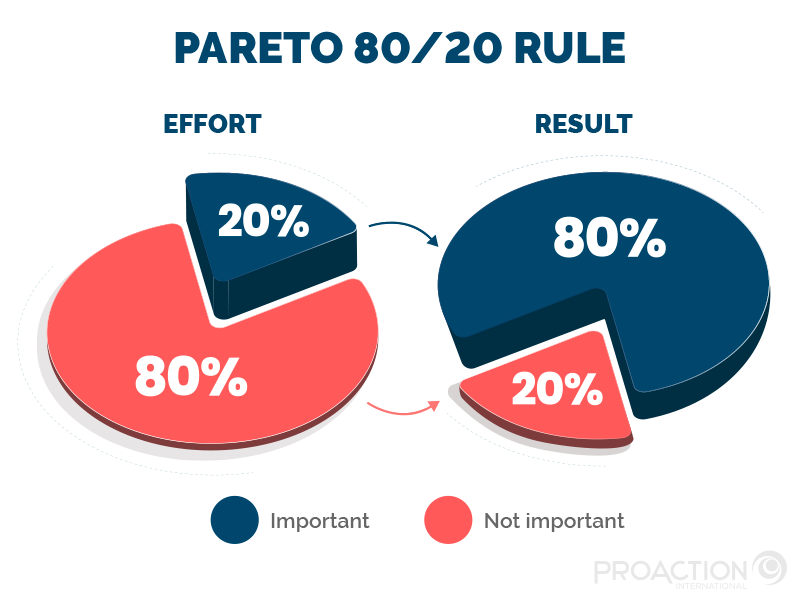
First coined by Joseph M. Juran for business management after reading Cours d'économie politique where Pareto showed that 80% of land was owned by 20% of people not just in Italy, but in many different countries. It has since been used in many industries such as Economics, Computing, Finance, Healthcare, Time management, etc.
Although not a solid piece of research, it is a broader observation that many people have noticed in their field and have positively used in their life. The message is clear, small actions can lead to big consequences.
The Pareto Principle can be used to manage your time more efficiently. Not just by optimising everything you do, but specifically by optimising the most important things (dictated by how significant the outcome is).
What are some small habits/changes you could be build/do that would dramatically improve your life?
TLDR: Typically it's the small things that lead to the biggest changes in your life.
Green Tea's Health Benefits
One of my favourite things to do to keep myself entertained whilst at work is drinking a hot beverage. Before, I used to drink multiple cups of coffee. However, I've pretty much removed all caffeine from my diet because of why we sleep by Matthew Walker (a 10/10 book if I might add).
Although I'm not the biggest fan of caffeine, I do absolutely love me a green tea. With more research indicating that green tea has plenty of health benefits for you, I can't seem to help but keep it in my diet.
Below are a list of the best studied health benefits for green tea:
- Antioxidant Effects - Tea polyphenols, particularly catechins, are believed to be responsible for providing most health benefits, including it's antioxidant effects. Antioxidants help prevent cell damage specifically to DNA, proteins, and fats, which could impact aging and chronic diseases like heart disease, cancer, and neurodegeneration.
- Anti-Inflammatory Effect - Thanks to catechins, research shows that green tea has anti-inflammatory properties. Although short-term inflammatory is useful when it comes to healing from cuts, long-term inflammatory is linked to multiple chronic diseases such as heart disease, diabetes, arthritis, and neurodegenerative conditions.
- Anticancer Activity - Green tea has some early research indicating that it might be helpful at decreasing the chance of cancerous activity (Reduces DNA damage that initiates cancer and slows uncontrolled cell growth, etc.) from occurring, thanks to its anti-inflammatory and antioxidant effects.
Other early research:
- Antimicrobial Activity - Good early research
- Reducing Cholesterol Levels - Good early research
- Managing Body Weight - Early research draws inconsistencies between Japanese and non-Japanese studies.
- Neuroprotective Properties - Decent early research
Personally, I only drink 1 or 2 cups of green teas per day. I like the flavour, I like the decently strong research showing it's health benefits, I just think it's a bit of a no brainer.
For me, the only change that I've made is by only drinking decaf green tea. Although research hasn't been specifically carried out on decaf green tea, it is relatively safe to extrapolate based on the extraction process that only some of the benefits are lost during the decaffeination process. Therefore, the strength of it's benefits might be poorer. I would love to see more research done on this, but that's not my speciality.
What I love is that this is a brilliant example of something so small in your life, making a potentially big impact in it.
TLDR: Green tea has a decently strong evidence supporting many health benefits in many different areas such as anticancer, anti-inflammatory, antioxidant, cholesterol, neurological, etc.
Hanlon's Razor
Throwing rubbish on the floor. Leaving a toilet with no toilet roll. Cutting you off in traffic. These are some things that would immediately cause us to be upset with the person who done it, usually because we believe they did it with malice. But Hanlon's Razor tells us otherwise.
Maybe the rubbish on the floor slipped out of someone's pocket. Maybe someone was in a rush and didn't have time to refill the toilet roll. Maybe someone forgot to check their blind spot and cut you off in the process. These aren't choices of malice. Instead, they are choices of stupidity.

Psychologically, it's definitely a better way to look at life. To assume that people don't do things out of malice, but instead they do it out of ignorance or stupidity. I don't think people are naturally evil, I think quite the opposite, I think that sometimes they do wrong, but with good intentions. So I would like to think Hanlon's razor is more often true than not.
How many times have you made a mistake or done something bad because of your ignorance or stupidity? Probably more times than you can count.
How many times have you done something for the shear want to do bad? Probably significantly less.
That's probably the same case for nearly everyone else in this world.
TLDR: Never attribute to malice that which is adequately explained by stupidity.
Quotes of the Week
- “The beautiful thing about learning is that nobody can take it away from you” - B.B. King
- “History doesn’t repeat itself, but it often rhymes” - Mark Twain
- “The four most expensive words in investing are: ‘This time it’s different’” - Sir John Templeton
- “If you want to learn something, read about it. If you want to understand something, write about it. If you want to master something, teach it” - Yogi Bhajan
- “The person who says he knows what he thinks but cannot express it usually does not know what he thinks” - Mortimer Adler
- “Anyone can make a subject complicated but only someone who understands can make it simple” - Shane Parrish