7 Days 7 Lessons #10

- Lesson 1: Not Everything That Makes Us Happy Is Good (Mindset)
- Lesson 2: Hold Yourself Accountable (Mindset)
- Lesson 3: Pyritthic Victory (Growth)
- Lesson 4: Everyone Has Time (Mindset)
- Lesson 5: Thematic Investing (Finance)
- Lesson 6: The Four Stages of Competence (Learning)
- Lesson 7: Jevons Paradox (Economics)
Not Everything That Makes Us Happy Is Good
Doing the right thing may not always make you happy. But it is still the right thing to do.
A few years ago, saying this may have been common sense. But I feel like our sense of what is "good" has been severely undermined recently. I think the ease of getting dopamine has been a big reason for this.
Let's highlight some things that bring people happiness:
- Sports
- Gaming
- Fast Food
- Reading
- Watching TV
- Going on Hikes
- Travelling to different countries
- Smoking
You may look at this list and think that some of these things are good, some are bad, and some don't really matter. But one thing is certain: each one can bring you joy.
However, things such as Fast Food, Travelling to different countries, and smoking can all be detrimental to your health, finances, or both.
We live in a time where we are told to do whatever makes us happy. Go and drink all you want, go and smoke all you want, go and spend your hard-earned money recklessly, do whatever you want. But during this time of freedom, it has seemed to cause severe societal and personal ramifications.
Smoking and Alcohol cost the NHS Billions of Pounds per year, the average UK person doesn't have enough money to cover an emergency, and obesity costs the NHS around £6.5 billion a year.
Some of the above choices were obviously bad, but what about watching TV or playing video games? I mean, if all you do is spend 4 hours after work watching TV every day, you are severely damaging your health, not only impacting you, but also those who interact with you (family, friends, and medical staff).
I'm not here to be the anti-fun police. However, the lie of "do whatever you want" has led to reckless abuse of a ton of things that bring us happiness but aren't good.
Moderation is key to all things in life, including the ones that bring us joy.
A lot of people ask me what I like doing in my spare time. I usually answer with "writing blogs, and watching finance/self-help/economics/tech videos". But I also love me a good take-out, good movies, and playing games.
However, I would be fooling myself if I indulged in all my fun-time activities without a care for the possible repercussions that could ensue.
Everything in life has a trade-off, whether you realise it or not. Moderation helps spread the risk.
TLDR: Not all things that bring happiness are good, and not all things that are good bring happiness; find the right mix of both to live a good life.
Hold Yourself Accountable
Stop telling yourself lies; you're the one stopping yourself from success.
The cruellest lie anyone can tell themselves is that they are a constant victim of what happens to them. They say this, and never acknowledge that they are the common denominator in their life.
I don't doubt that the bad things that have happened in your life have made things harder. But to sit there and say that you can't do anything to change your future does nothing for you. Tell me all the bad things you've had to work against, and I'll point you to tons of people who've overcome that exact situation, not from sheer luck, but from hard work.
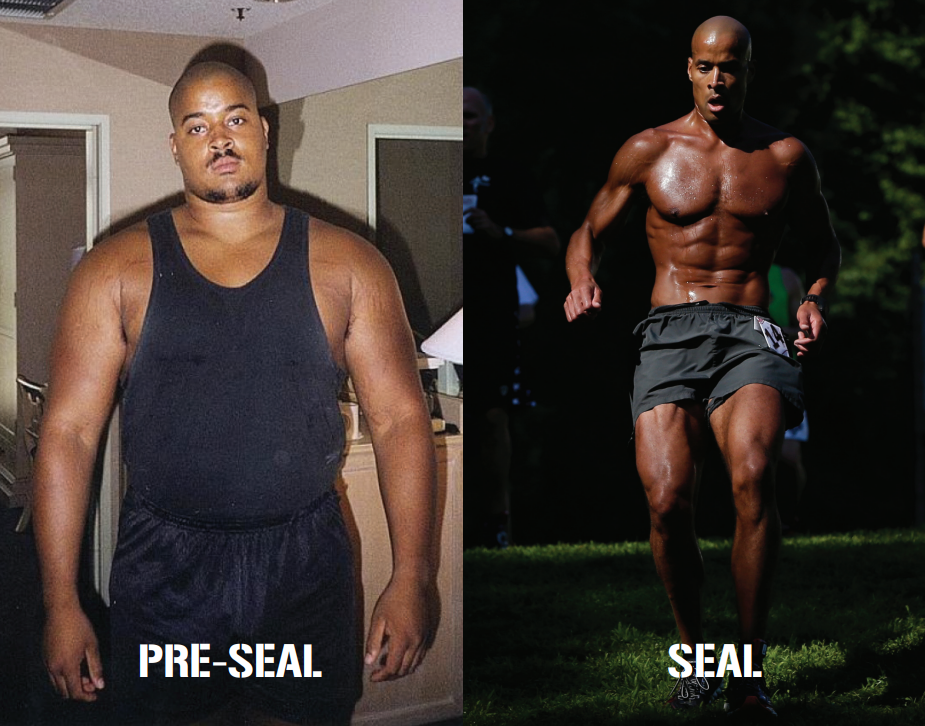
David Goggins, a man who was severely overweight, had no sense of meaning in his life, suffered from abuse, poverty, and learning disabilities, but one day, transformed his life. He overcame the depressed man he was to become one of the most resilient and determined men to exist. He joined the Navy SEALs, was an ultramarathon runner, and now writes books teaching people how to build their mental fortitude.
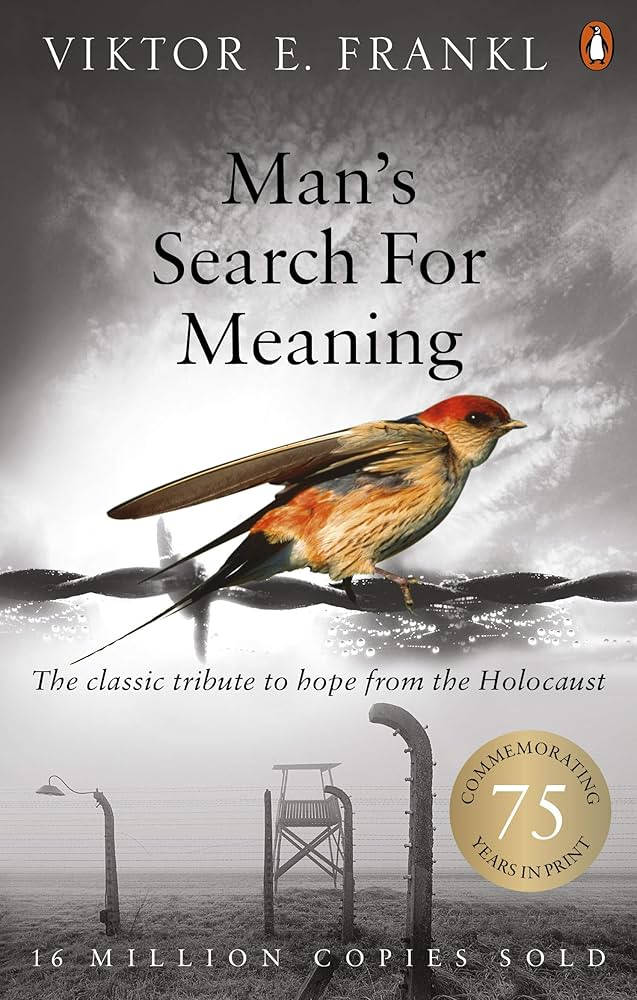
Viktor Frankl, a holocaust survivor, went through one of the worst experiences in recent history. Not only did he survive the holocaust, but instead of letting that awful event force him to lose his humanity, he went on to write 39 books, including Man's Search for Meaning, one of the best-selling books of all time, an autobiography giving new meaning to life to those who read it.
A boy, who was as dumb as bricks, who was told he was never going to make it anywhere in life, who was expected 5's in his GCSE's and C's in his A-Levels, who was brought up by two immigrant parents making enough money to survive, and to take care of their kids. The same kid had a Mother who was both working full-time and taking care of a daughter who had severe learning difficulties, who required constant help with simple life tasks.
That same boy went onto getting 7/8's in GCSEs, A's in A-Level, Graduating from a Top 150 Worldwide University with 85% pass rate, having his first job in a FTSE 100 company, getting married at 23, having some of the closest friends he always longed for, a relationship with God he never knew he was missing, and the mentality that no-one could stop him from reaching his goal. That kid was me.
My friends can vouch for me. I am not special; I didn't get special treatment, and no one even thought I would be in the position I am in today. All I simply kept doing was trying. I didn't want to give up, because giving up was me telling myself that I'm settling for what I have, and I was not ready to settle.
Honestly, the ROI my fiancée has gotten from this relationship is quite funny. I was probably worth as much as the dirt I stood on 7 years ago, but today I'm worth 1,000,000% more. It wasn't a result of life giving me a break. It wasn't because I was magically gifted with good luck. It wasn't because I suddenly cracked the secret to life. It was because I recognised that I was the common denominator in all things, and that changed my life forever. I started holding myself accountable.
To blame every negative thing to have ever happened to you on someone else is simply a way of keeping your conscience free of the regret from inaction.
I'm not here to tell you that your past hasn't had a massive impact on who you are today. But you aren't alone in that journey. So many people have gone through exactly what you're going through, and they've made it out alive and well.
It's up to you if you're going to give yourself that hope. If you think there's nothing you can do to help yourself, then I would agree, there isn't anything you can do, because the only person who would support you, has already given up.
TLDR: Don't lose hope. What can you be doing to become the better version of yourself.
Pyrrhic Victory
Are you aiming to be a one-hit wonder or a consistent hit maker?
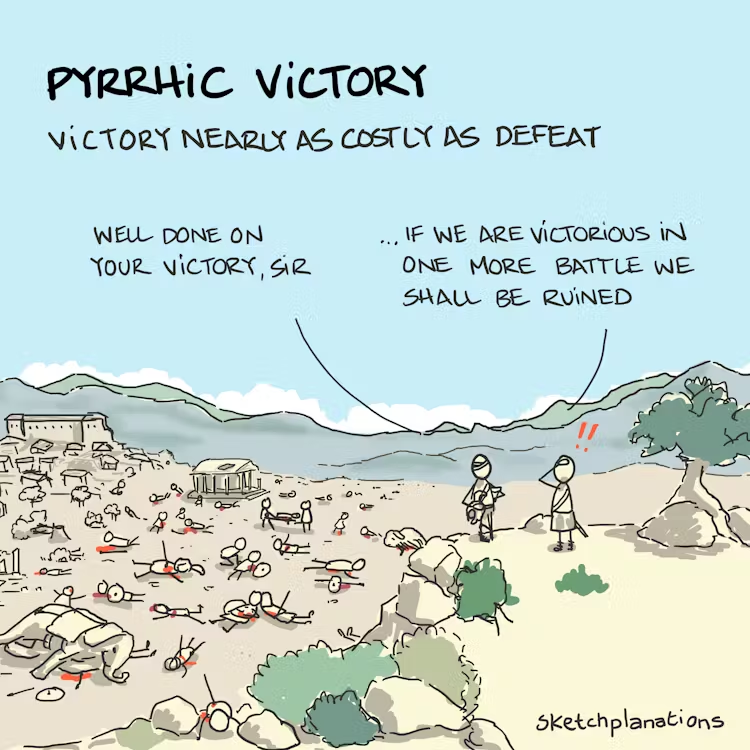
Hundreds of years ago, King Pyrrhus of Epirus fought battle after battle in hopes of achieving a great victory. However, instead of stopping when he was on a winning streak, he continued to fight. He didn't lose a war; however, he had exhausted all his resources, which meant his army was no longer able to fight.
This story spawned the term Pyrrhic Victory, a victory that looks exactly like defeat.
I first came across this term from one of my recent reads, The 5 Types of Wealth by Sahil Bloom.
In it, he used this story to emphasise the need for sustainability during your growth journey. For example, what is the point of working hard for money at the cost of your health? Or what is the point of having tons of friends if that means you cannot provide for your family?
It is critical for your long-term success that you find a way to make it sustainable. Otherwise, you may achieve certain goals but at great cost.
You may get that job promotion, but at the cost of your love life. You may have a great social life, but at the cost of becoming an alcoholic. You may not need to make your own food and can order takeout every day, but at the cost of your health.
Progress in one area of your life should not come at a great cost to the other areas. You should aim to bring each pillar of your life up with eachother.
Success is not worth it if you cannot enjoy the rewards; if you need a break, take it; otherwise, the outcome of success will be an unhappy and/or short life.
Right now, we live in a "grind" culture, one that encourages long working hours and sleepless nights. That often comes at our own detriment.
To be clear, it is important to become the best version of you. In fact, it is your duty to become the best version of you.
However, an unsustainable work ethic comes at a great cost (health/social life), one that could have been avoided by patience and sustainability.
TLDR: Work-Life balance is important. Everyone has their own gauge of balance; for example, some people can work for longer than others. However, it is your responsibility to ensure that your growth is sustainable. You owe it to the people in your life.
Everyone Has Time
The lie you keep telling yourself is keeping you the same.
How many times this month, or even this week, have you said something along the lines of "I'm super busy, I wish I had time for that"?
If you're anything like me, you've probably said that a few times this week. However, although there is nothing inherently wrong with the statement, there is something wrong with that statement if it's stopping you from being a better person.
One of the earliest times I can remember this happening to me was regarding reading. I kept telling myself and others that I simply had no time to read. I was busy with University, having my daily meals, and sleeping. But when I looked at my screen time, it told me a completely different story.
It was telling me I was spending 6 hours a day between YouTube, Instagram, and whatever else I had on my phone. Clearly, there were 6 hours of my day I could use for reading, but I just kept telling myself I didn't have the time.

In reality, it's rare that we don't have the time to do something new. We use that excuse, but the statement we should be saying is "I just don't want to prioritise that in my life right now".
We do have the time, we just prioritise it differently. When you make that clear distinction, you start internally accepting where your time is going. For example, I started realising I spent a lot of time playing video games and watching YouTube.
However, what then happened to me was that I couldn't make the excuse of "I don't have time to go to the gym" or "I don't have time to go see my parents". When you can no longer make that choice, you become guilty of the person you could be if you started bettering your life day by day.
That's kind of what happened with me. The moment I realised I had a leak in my time wallet, I became more intentional with it, but that also meant I became more intentional with making it mean something. Taking care of my health, seeing family, and personal development became a bigger priority than just sitting at home playing games and watching YouTube videos.
The moment you swap the "I can't because I have no time" to "I don't want to do it because I have other priorities" you give your brain the ability to make the right decision, one to either keep you bound to the life you're living now, or one that will help you break free and become the better you.
Do you want to become healthier? Go to the gym? Don't say, "I don't have time". Look at what you're already doing and start cutting things off that keep you in the same spot/unhappy.
TLDR: Everyone has the same 24 hours of the day. Look at what is keeping you the same/unhappy and cut it out of your life. Time is valuable, and you can't just give it to everything.
Thematic Investing
The "safest" form of investing.
When you're told about investing, what do people usually recommend as a safe bet? Probably the S&P 500, right? Nowadays, it seems like people are moving away from that and investing in All-World Funds.
Either way, they suggest to you that these are the safest investments anyone can make, because "Of course the USA will go up in the long-term, they're the greatest economy of all time" or "Of course the world's economy will go up in the long-term because it has always gone up".
Although historically and at present this has been true, this is a form of thematic investing. Thematic investing is the process of putting money towards trends you think will be successful. You might not invest in a specific company, but instead, invest in a global trend.
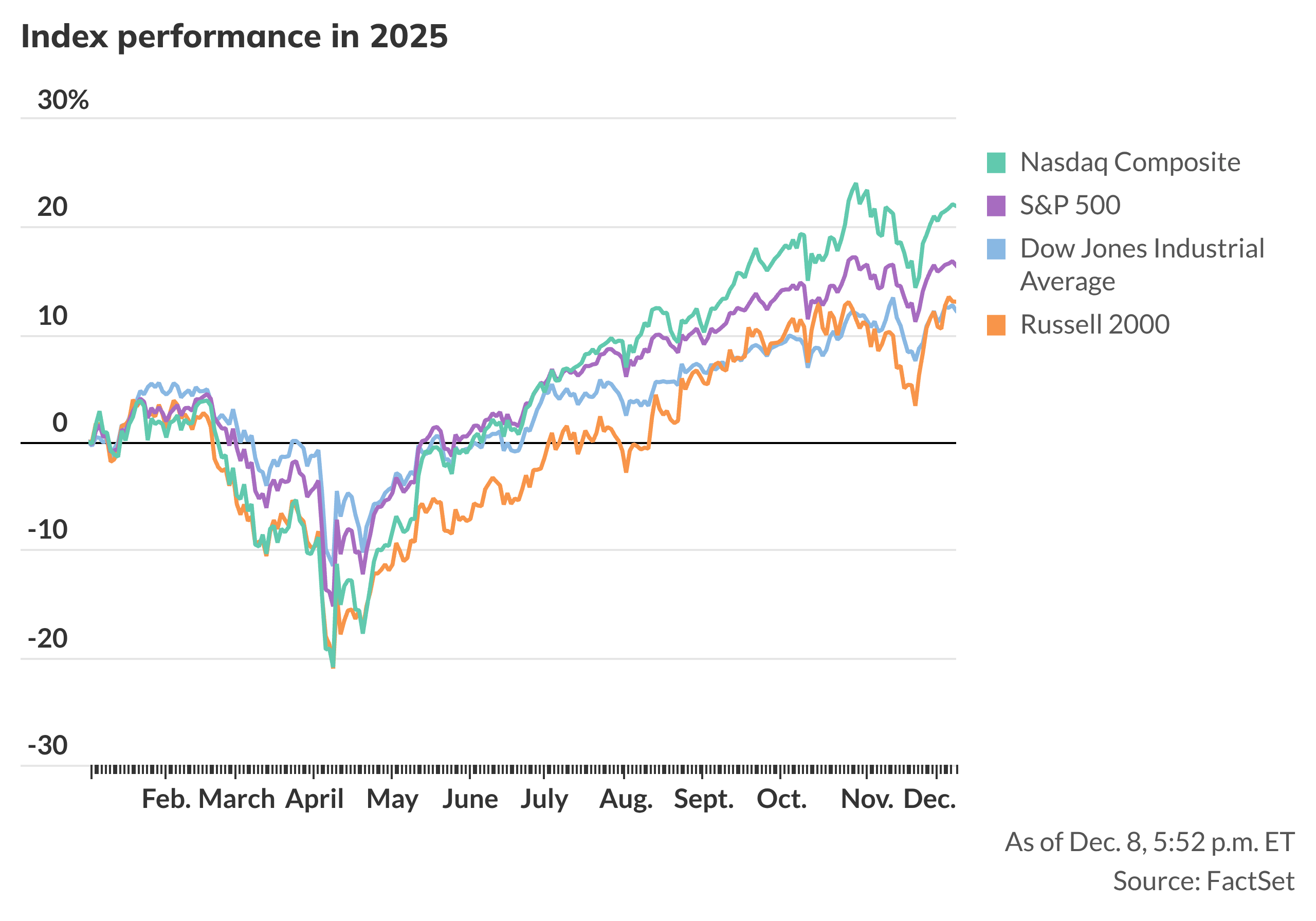
Popular thematic investments include:
- AI - Investing into things like AI ETFs, but also supply-chain ETFs such as Water, Electricity, and even investing into raw materials such as gold, copper and silver.
- Defence - The world is becoming (and has always been) a frosty place. Although post-WW2 it had become more friendly (apart from the Cold War), it seems like we are returning to a more geopolitically tense world. Some would even argue that the Second Cold War has started.
- Economies - Mentioned briefly, but betting on the USA or the World improving are forms of thematic investing in economies.
One of my recent investment portfolios, focusing specifically on thematic investing, has been performing quite well. The past year it has had a 30.8% return, but most importantly, it has been relatively stable and growing, even after the trump tariffs and the recent software and AI turmoil. The lack of volatility makes sense as it's sitting around a 0.73 beta.
All of this is to say, betting on a trend or a market is usually much safer than betting on a specific stock.
Stock picking is riskier than trend picking. You're more likely to choose a correct trend, rather than choose a correct stock.
Rather than needing to bet on a specific stock winning, you can simply bet on the market winning. It may result in smaller gains as opposed to choosing the right stock, but it would be less risky than putting all your chips behind one company.
For example, I know for a fact AI will be the most important thing of our lifetime; however, do I know who's going to win the AI arms race, absolutely not. I could hazard a guess, but it would simply be that, a guess.
TLDR: If you really want to make riskier bets, trend picking is a much safer way of doing so than stock picking. It requires less time and effort to carry out, and your chance of choosing a correct trend is higher than choosing a correct stock.
The Four Stages of Competence
Four simple steps to make you better at anything.
How do you go from being bad at something to being good at it? Well, the Four Stages of Competence provide a step-by-step framework for becoming good at anything.
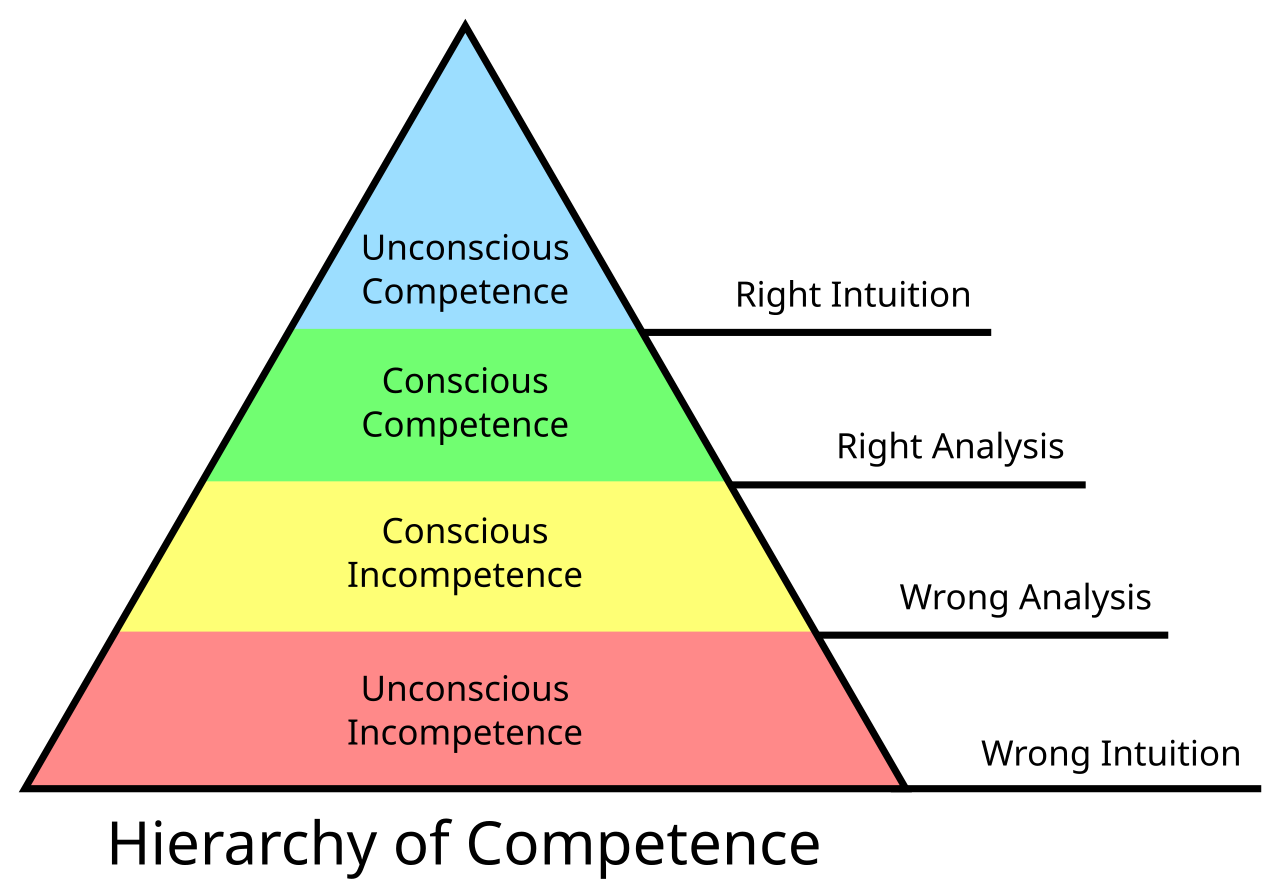
Unconscious Incompetence - Stage 1: How can you improve something if you don't know you're bad at it? Skills stuck in this stage are because the owner of the skill doesn't recognise they're bad at it. A friend of mine was consistently bad at video games. He laughed and thought he was decent. As a result, he hasn't made much progress since. You need to recognise what your weaknesses are before you can improve them.
Conscious Incompetence - Stage 2: This is the stage where most people give up. You've recognised that you're bad at something, and you actively try to put effort into becoming better at it. However, you feel like you're not making any progress, and you still suck! All I can say is that, eventually, after many hours or days, you will become better. Don't give up, as giving up is an acceptance that you will continue to be bad at the skill. This is a classic example of the Plateau of Latent Potential.
Conscious Competence - Stage 3: You're starting to make progress! Every time you try using your skill, you're good at it. You're finally out of the valley of dissappointment and you're now riding high. You still need to fine-tune your work, but you're so close to mastering your skill. One thing to note is that it still requires active effort. You still need to put your mind into it; if you suddenly start relaxing, you will become just as bad as you were before.
Unconscious Competence - Stage 4: You've reached the peak of competence. You are talented at your skill, without having to think about it. It comes naturally to you, and people will tell you that. What they won't realise is the other stages of competence that you had to fight through to get to the stage you're in now.
Before we sum things up, give one answer to the following questions:
- What are you effortlessly good at?
- What are you good at that requires effort?
- What are you bad at, even when trying?
- What are you bad at that you don't even know you're bad at it?
Just like that, you've identified one skill for each stage of competence. Use this as a way of actively selecting skills to either go higher or lower. Everyone has limited time, and there's no need to become good at everything. Choose the ones that matter to you, and focus on helping them get better, and neglect the ones you don't need in your life.
Just like an addict can't break their addiction without acknowledging that they are an addict, you also cannot get better at something if you refuse to acknowledge you're bad at it.
Being honest with yourself is the least you can do. Too many people will lie to themselves just to feel better, but in reality, they are just remaining stagnant and robbing themselves of the person they could've been.
TLDR: To be better at any skill, you must identify that you're bad at it, put effort into becoming good, put effort into becoming better, and then you can effortlessly do your skill to a good standard.
Jevons Paradox
Making something easier or cheaper to do will increase the likelihood of you doing it.
If something becomes cheaper, how does that affect the demand for that good? Do you think it would increase, decrease or stay the same? According to Jevons Paradox, as the cost of a resource decreases, the consumption of it increases.
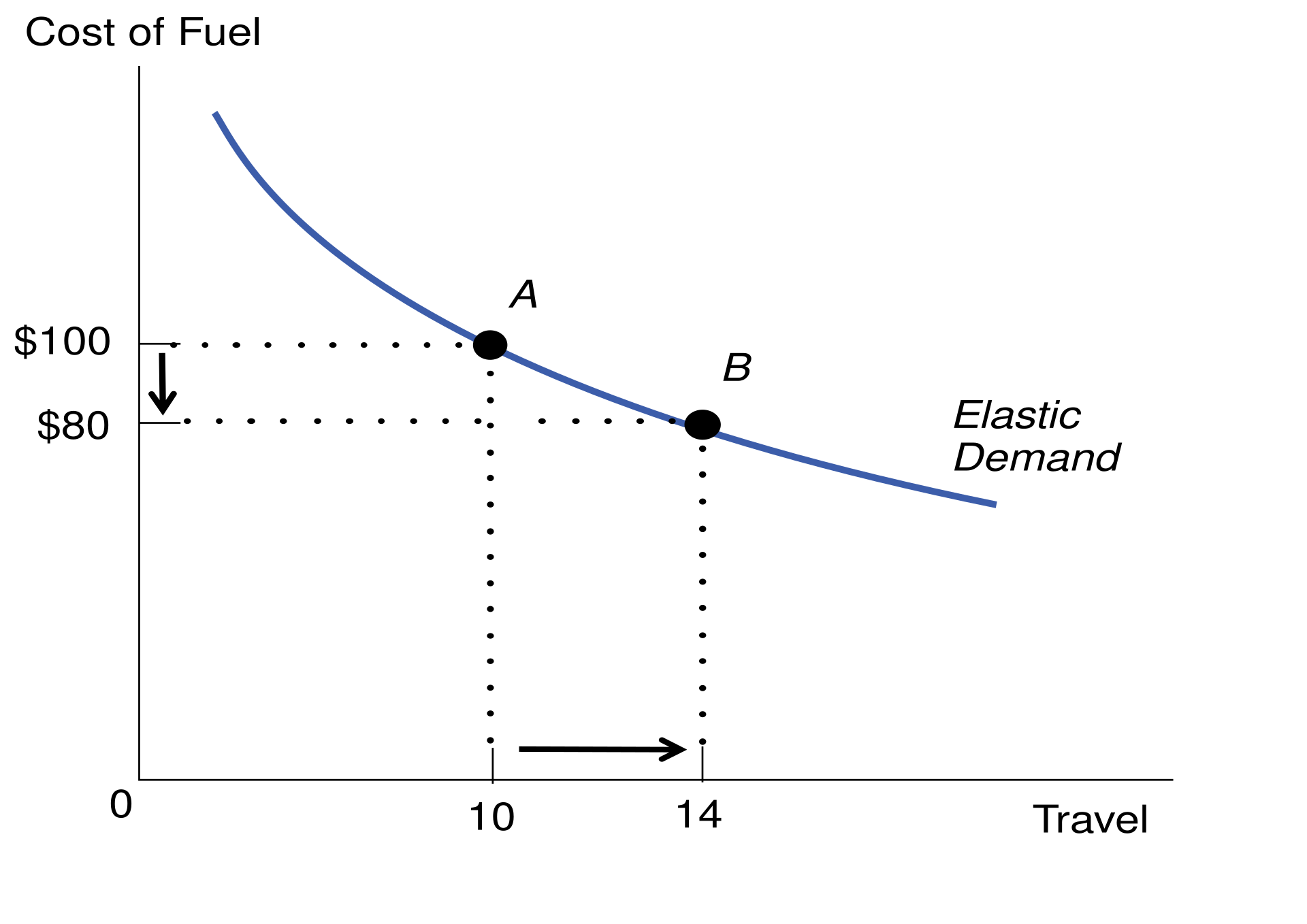
This is the case for most goods. For example, if your fuel is cheaper, you are more likely to travel, therefore consuming more fuel. If the prices of cars were to fall, you could imagine people buying an extra household car. If the price of homes were to fall, so would the buying of homes.
It's an interesting phenomenon that William Stanely Jevons first discovered in 1865 in his book The Coal Question.
You may be asking, well that's a cool history lesson, but I'm not sure how I can apply this to my life?
Well, Jevons Paradox can help you in a few areas of life.
I work in Cybersecurity. If the cost of implementing a security solution in one of my products decreases (becomes less time-consuming, or just costs less), more people would introduce that security solution to the product.
Look at the AI sector, it is incredibly popular at the moment, but that's just because a lot of the cost of AI is being subsidised by their companies. Nearly all AI companies are losing money on their AI products when you factor in training and inference. So what would happen if the price of using AI increased suddenly? Bye-bye users! This could help you make a financial decision.
What about in your life? If you built an in-home gym, you'd probably use it more than if you had to commute 30 mins to your gym. This would dramatically improve your health.
Jevons Paradox may be an economic theorem; however, like most of economics, it can still be applied to life in general.
Look at the areas of your life that you would benefit from by doing it more. Sometimes, willpower is limited, and your discipline falls short.
But if you managed to make the activity easier, that would go a long way in implementing it into your life. Eating healthy, going to the gym, reading a book, going on walks, and building a business.
If you can make it easier, you will do it more.
TLDR: Making something cost less (time or money), you can improve the consumption of it. What are areas of your life that could benefit from Jevons' paradox?
Quotes Of The Week
- "Study hard what interests you the most in the most undisciplined, irreverent and original manner possible." ― Richard Feynman
- "A drunk man's words are a sober man's thoughts" – Jean-Jacques Rousseau
- "Those who don't know history are doomed to repeat it."
― Edmund Burke - "Never let hard lessons harden your heart; the hard lessons of life are meant to make you better, not bitter."
― Roy T. Bennett - "People that have trust issues only need to look in the mirror. There they will meet the one person that will betray them the most."
― Shannon L. Alder - "If we let ourselves, we shall always be waiting for some distraction or other to end before we can really get down to our work. The only people who achieve much are those who want knowledge so badly that they seek it while the conditions are still unfavorable. Favorable conditions never come."
― C.S. Lewis