7 Days 7 Lessons #13

- Lesson 1: Managing vs. Leading (Leadership)
- Lesson 2: The Ikea Maze (Sales)
- Lesson 3: Supply and Demand (Economics)
- Lesson 4: Fractional Reserve Banking (Economics)
- Lesson 5: How Much Is A Dollar Really Worth? (Economics)
- Lesson 6: Stanford Marshmallow Experiment (Psychology)
- Lesson 7: Third Marshmallow Fallacy (Wisdom)
What's stopping you from being the person you want to become? For me, it's self-imposed discipline. Maybe the solution to all your problems is to tackle the issue you're facing.
Welcome to Week 13 of 7D7L - I hope you enjoy!
Managing vs. Leading
Two groups can have the same resources, but leadership decides the success of using these resources.
I believe we are living through a leadership crisis. Maybe I'm being overly dramatic, and maybe it's just from my perspective, but I think we can see this in many different areas of our lives.
Countries, now more than ever, are becoming increasingly frustrated with their leaders. Governments not doing what their people told them to do is leading to anger, protests, and even regime change in some countries.
Companies are struggling to navigate the AI landscape, unsure how to lead their companies' futures, and shareholder sentiment is beginning to show, with the S&P 500 stagnant for the past 6 months.
Families are bringing their children up wrong. I'm not sure of the reason behind this, but an article from The Observer emphasises that teachers need to teach kids motor, speech and hygiene skills now more than ever.
I think a big reason for this is that along the way, we lost what it means to be a good leader. A leader doesn't manage you; they lead you. So what does that look like?
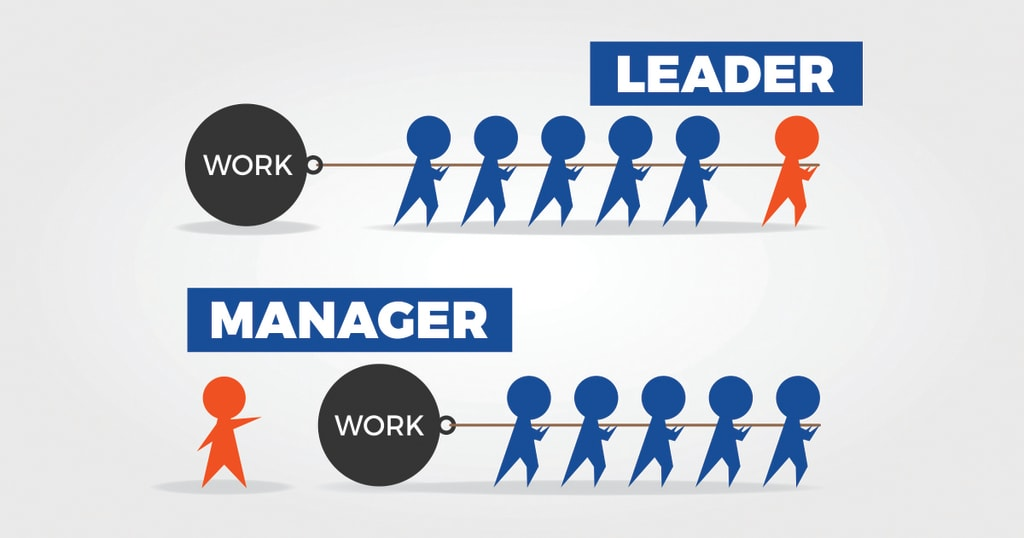
A manager is someone who tells their workers what to do. The reasoning behind the task is often claimed to be from the powers that be, and they will usually give you a list of quests to complete to ensure you've done all your work.
Managers are surface-level; they want to navigate known territory, they don't want to venture into the wilderness, that's scary to them, and they aren't paid enough to do that.
I mean, think of the word itself. Manager. You manage what you already have. There's no discovery, there's no obtaining the new, there's staying still and doing what you've always done.
That is not what a leader does. A leader is the first one in and the last one out. They show you how it's done, and then get your help. They pave new pathways, and they explore unknown territory with you.
They instil confidence, hope and strength in their workforce. They encourage you to keep improving. They encourage you to grow, not to stay the same.
To illustrate this, I will bring two politicians into the mix. To keep it apolitical, both will be from the same ideology. Introducing Mark Carney and Keir Starmer.
I would urge you to listen to speeches by both of these government figures. I would then ask you who you would like to be led by. Who instils more confidence in you? Who sounds more trustworthy?
To me, Keir Starmer seems to be confidently shy. I think that's the best way to put it. He's scared of stepping on toes, therefore, scared of travelling that uncharted territory. But Mark Carney is confident and bold, and is not scared of breaking people's hearts. His Davos speech showed this very clearly.
I don't know about you, but I want the person in an authoritative position to lead me, not manage me. If they are leading me, they are taking me to new locations that will unlock new experiences and help me grow. However, if they are managing me, they are working with what I have now with no thirst for more. That's simply not for me.
Leaders are becoming increasingly important thanks to the rise of uncertainty. A leader will comfort you and will give you the plan to fix a problem. They will help you get over the situation you are in and into a better one.
That's what we need right now. With the economy being stretched to its limit, geopolitical tension becoming increasingly glacial, and with AI being thrown into the mix of this all, we all find ourselves in a worrisome position. A good leader is the answer.
TLDR: Managers will work with what you have and tell you to do tasks with no ambitions to become better. Leaders will explore uncharted territory with you, with a dream bigger than the current mission, in hopes of achieving more than they could ever imagine.
The Ikea Maze
Companies will use your depleting level of discipline against you.
For those living under a rock, IKEA is a DIY furniture store. You go in looking for a table, and you pay them a low price for what essentially is a massive LEGO set that you build.
IKEA is a company to study. They capitalise on many different marketing, brand and sales techniques.
One of which is the IKEA Maze.
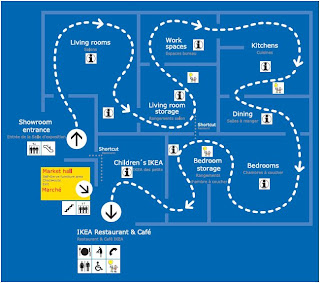
If you've ever been to an IKEA, you would notice that there is an entrance and an exit, and only one path to both. This is not a mistake, but intentional. My Dad even noticed this when we went to get some things from there a few years ago. He said something along the lines of "bloody hell, is there no exit?"
The IKEA Maze plays on a few different psychological tricks. The main one is that willpower is a sort of muscle that gets tired the more you resist your desires.
Think about it like this. If you go through a maze that takes you half an hour to go through, eventually, after multiple "I don't need this, but I do like it", you'll give in and buy more than what you came for.
IKEA popularised this, but I've seen this in other stores too, including a Sainsbury's in Tower Bridge.
Stores do this in general anyway; they scatter their inventory all over the place so that you have to pass a lot of items before getting to the things you want. Along the way, you are more likely to purchase something.
Thinking about how you position your items in a physical store is critical to ensuring you get the best sales possible. Maybe you can use this to boost your sales.
However, the most likely way of benefiting from this is by being aware that companies are doing this and not falling for the trap. Understanding something is the first step to conquering it.
TLDR: Ikea will force you to walk by all their furniture before you leave their store. They attempt to chip away at your willpower into eventually buying something you never really wanted.
Supply and Demand
How are prices decided?
The first thing you're taught in Economics is the relationship between supply and demand. It's a simple tool that guides businesses on how to price their goods.
What is Supply and Demand?
- Supply – is the quantity of an item that is available.
- Demand – is the number of people wanting to consume the available item.
This can be represented with the following graph:
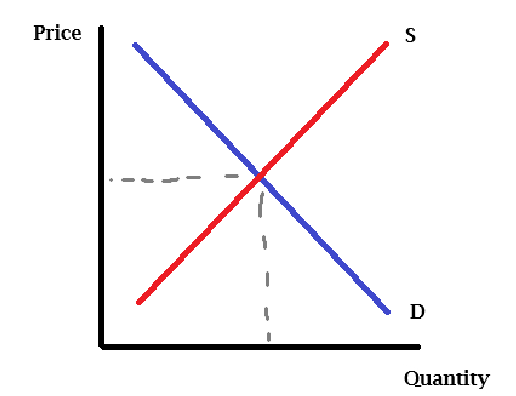
Where supply and demand meet is called the equilibrium, and is hypothetically the best place to price your good to maximise profits.
Let's look at oil prices right now. The Iran war has led to the Strait of Hormuz being blocked. This narrow area of water carries 20% of global oil. This has been "closed" by Iran. Essentially, if any unapproved vessel attempts to sail through the strait, it is on the bombing list. As you can imagine, this has led to the price of oil shooting up. This can be represented with the following graph:
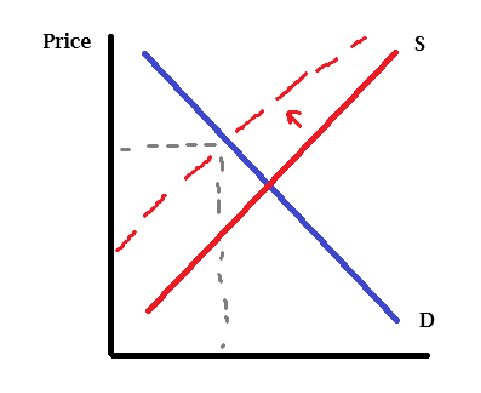
Let's look at another example. Let's say brand X is being boycotted. Well, demand is decreasing for the company, and therefore, a graph may look something like the one below:
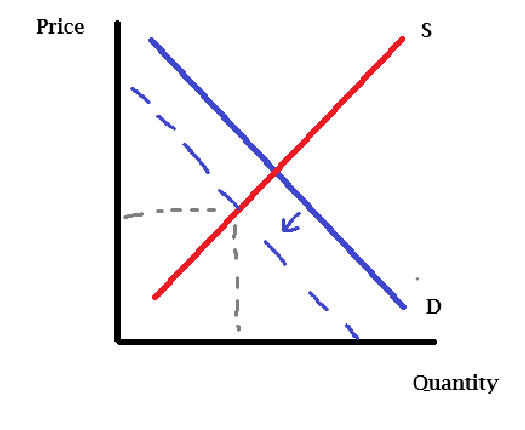
You may have noticed something strange in the oil example. If 20% of the oil supply suddenly disappeared, you would expect a 20% increase in oil price. In reality, the oil price has increased by around 50%.
The Supply and Demand Curve isn't perfect. It doesn't factor in uncertainty, price wars, etc. As a result, it won't perfectly predict a price change. However, the supply and demand curve is still useful for understanding the overall change in price. It might not tell you how much a price will change, but it will tell you in what direction it will change.
Why am I talking about Economics? Well, there are a small number of things in life that affect everyone in the world. Economics is one of them. Understanding the economic landscape you are living in is critical for planning, but also for long-term financial success.
Economics has made me a better investor, has helped me learn business more easily, and has allowed me to understand the political landscape more plainly. I would recommend everyone to learn about it.
TLDR: Demand and supply decide the prices of things. A shortage in oil leads to an increase in price. A decrease in the demand for a resource leads to the price of that resource decreasing.
Fractional Reserve Banking
The secret finance trick that speeds up innovation.
Understanding what banks do is very eye-opening. You realise that the money you deposit never sits around there; instead, it is being used as loans for other people. This helps people buy homes, start businesses, buy cars, etc. Kurzgesagt has a great video explaining what banks do.
The process of lending a fraction of your deposited money to others is known as Fractional Reserve Banking, and it's a big reason why innovation is so fast nowadays. Essentially, banks will reserve a small amount of the money you deposit and loan the rest to businesses and other people. This, in turn, allows these people to buy things that they wouldn't be able to afford then in return of sacrificing some future earnings. Businesses also use this as a way to kick-start their idea or simply to speed up their innovation.
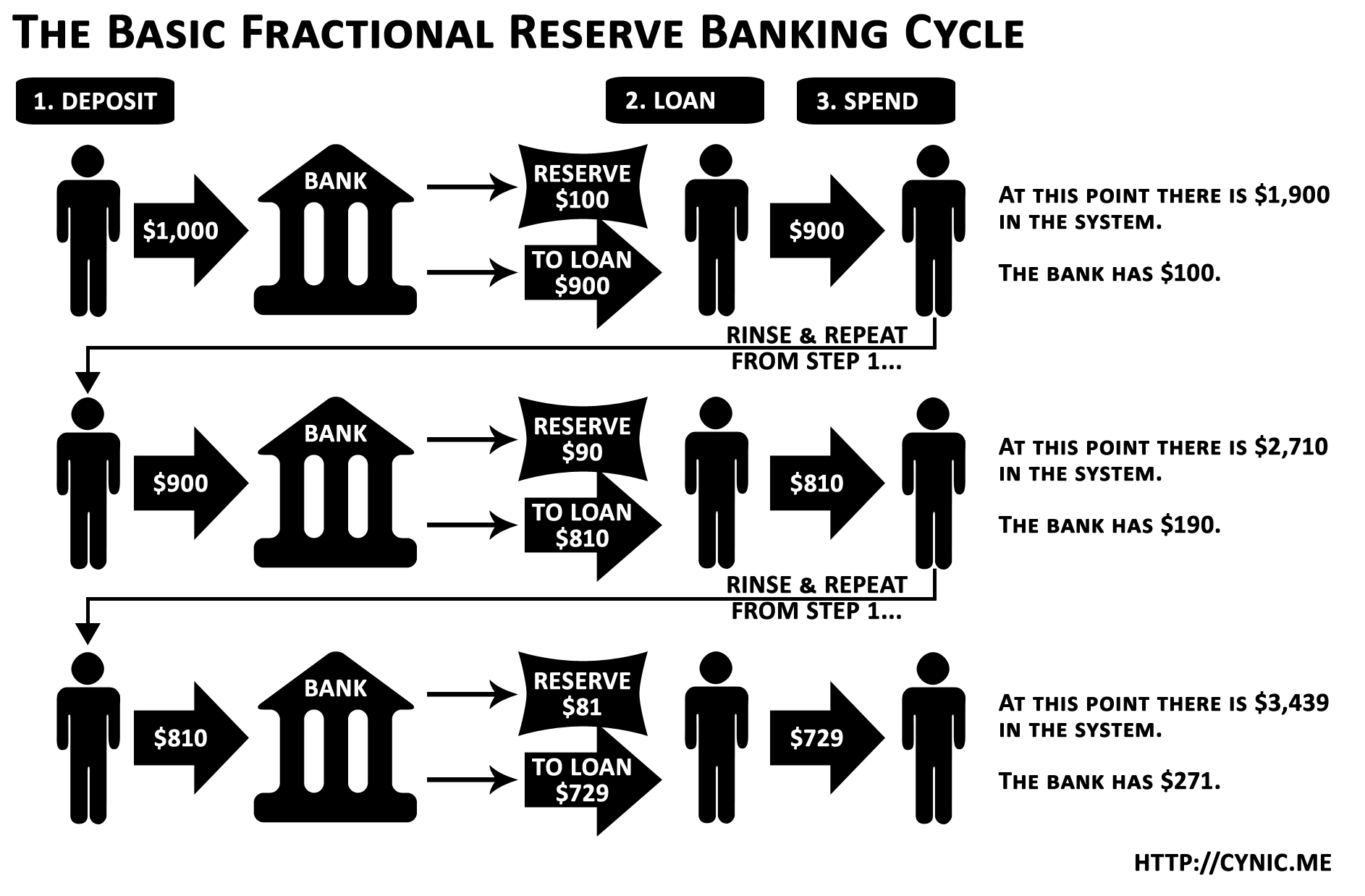
Without Fractional Reserve Banking, innovation would be much slower, as businesses would have to wait to get all the required amount of cash in order to carry out a project. Consumers would also be unhappy, as they would have to rent all their lives until they saved enough cash to buy a home (and other items).
Of course, Fractional Reserve Banking doesn't come without risks. If banks are using the money they receive from deposits to make risky loans, this could lead to an increase in defaults and, therefore, mean they cannot pay back their original deposits.
Fractional Reserve Banking, in a way, is like an infinite money glitch. However, it has its limits, and when not handled well can lead to a credit cycle such as one we saw in the 2008 financial crisis, primarily caused by defaults on bad home loans.
Regulation allows for Fractional Reserve Banking to be safer, whilst also allowing for innovation to be much faster.
Fractional Reserve Banking is undoubtedly good. The problem arises when banks and other financial institutions take advantage of this. Greed is usually the reason why credit cycles occur, such as the one during the 2008 financial crisis.
Depositing money into the bank is risky. The bank could hypothetically go bankrupt and take your money with it. Governments usually don't let this happen and will bail them out, but if they don't, you're stuck between a rock and a hard place.
As of 2025, the UK has a protection of up to £120,000 per person, per authorised firm. That means that £120,000 can be repaid if the bank goes insolvent.
TLDR: Fractional Reserve Banking allows money to be used more efficiently; however, if greed exploits this mechanism, bad economic fallouts can occur. Regulation is key to preventing this.
How Much Is A Dollar Really Worth?
What determines a currency's value?
You might think the answer is quite simple. A dollar is worth £0.75. That means it can buy you a few mini packs of Haribo, or a pot noodle on offer.
In reality, this answer doesn't hold. Why does a dollar translate to 75p? Why is it that sometimes a pound gets me more dollars and sometimes less? Why do currencies fluctuate?
But I will try to answer why a dollar is worth a dollar.
To be clear, a dollar has no intrinsic value. It is a special paper that is incredibly hard to reproduce, although many try. That piece of paper is not what holds the value.
In fact, the value of the dollar is held up by a massive amount of trust. The dollar isn't "backed" by something like it used to be. You can't trade a dollar for gold anymore. We just trust that the dollar is worth the value it claims to hold.
The dollar is a fiat currency. A currency that allows us to buy and sell things in a very simple format (rather than trading cows or buying things with gold coins) but holds no intrinsic value.
I really want to push that thought. Money, fiat currency, is intrinsically worth nothing and only has value because of trust in the currency.
Countries with the strongest currencies include the UK, the EU, the USA, and Switzerland. These are all countries with a lot of trust backing their currencies. They have respectable central banks that are safe, that do not fall victim to corruption (usually).
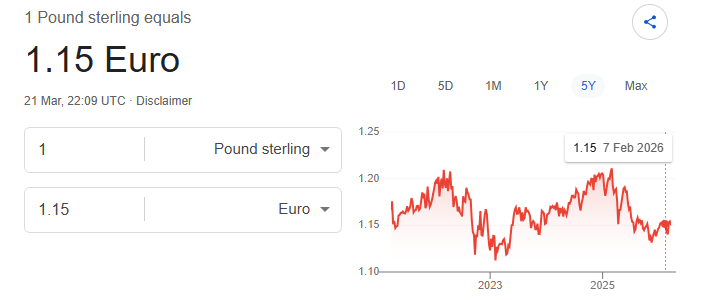
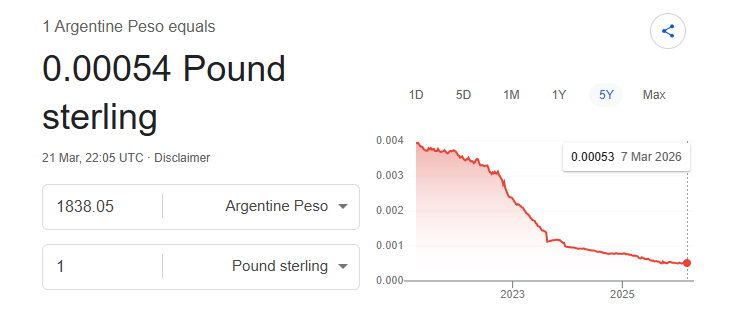
That's why these currencies don't fluctuate as much as others. The Argentine peso is an example of where the same isn't true.
Why does a country's central bank matter so much? Because they control the money supply. If the US central bank suddenly printed trillions of dollars to pay off its massive credit card bill, that would cause massive inflation, and the currency would immediately lose a lot of its trust.
That's why President Trump's bullying of the current Federal Reserve Chair is quite concerning. It threatens central bank independence. It seems like he is trying to replace him with a monetary dove, one controlled by Trump, which would cause a massive loss of trust and could harm the strength of the dollar.
Back in the day, the dollar and other currencies weren't just based on trust. They were backed by gold. In fact, you could go to the bank and trade in a certain amount of dollars for gold. But that is no longer the case since they went off the gold standard.
I've mentioned a lot of topics here, and I don't have time to explain them all in detail. However, each topic has a link attached to it, and hopefully, those are enough to give you an understanding of why a dollar is worth a dollar.
Nearly all currencies around the world are based on some level of trust, including the world reserve currency, the dollar. This is important to know. Holding a currency is inherently risky because it holds no value. If the currency's trust is lost, or the currency is printed at higher rates, or an economy collapses, this could lead to a massive loss in your worth.
That's why it's important to hold real assets, such as stocks in a company, gold, silver, and other forms of real assets.
TLDR: The dollar's value is based on trust. If trust is high, the value of the dollar will stay relatively stable; however, if the trust in the dollar falls, so will the value of the dollar, causing inflation.
Stanford Marshmallow Experiment
Delayed gratification displays your ability to control your emotions.
In the 1970's, Stanford conducted a study on delayed gratification led by Walter Mischel.
The purpose of the study was to see whether children could resist a small immediate reward in exchange for a bigger one later on. The authors of the study followed these children and measured their success afterwards, and the success for those who waited seemed to correlate with those who didn't.
From this, it was long believed that delayed gratification was a hallmark of future success.
In 2018, however, during psychology's ongoing replication crisis, the experiment didn't seem to have the same correlating behaviours. In fact, the newer study showed that when you controlled for socio-economic status, the correlation previously observed disappeared.
Whilst the developments of the study are still ongoing to see whether or not it is valid, I would like to point out that delayed gratification often does have positive outcomes on your life.
Firstly, there's the ability to control your emotions. As we all become accustomed to the online world, we have also become used to instant gratification. Ultimately, this has destroyed relationships (if you think of adult content), attention spans (the internet, but more recently, short-form content), and our physical health (overeating).
Secondly, think about the discipline that is built from being able to control when you reward yourself. That discipline is critical in areas of life that would help you succeed. For example, when investing, being able to resist taking money out of your investment accounts because it will grow in the future to a much bigger number is incredibly strong for building financial freedom.
Maybe the Stanford Marshmallow Experiment was not adequate to test the correlation between success and delayed gratification.
I think there are two ways that the experiment could be improved.
- Making the secondary reward less obvious.
- Using a different source of joy that isn't a marshmallow.
Regardless of whether or not delayed gratification can be used to predict success, delayed gratification is definitely a key ingredient to living a better life in an overall sense.
It is so hard to reject instant gratification; it is literally around us in every aspect of our lives. From our video games to our entertainment. I wouldn't be surprised if companies began rolling out instant gratification workflows to get you to do more work.
Ultimately, having the strength to say no to it is a powerful tool. Being able to control your emotions is a powerful tool. Being disciplined is arguably the most powerful tool.
TLDR: Delayed gratification may be a good predictor of success. What it definitely does is improve your life as a whole by being able to reject cheap dopamine whenever you want.
Third Marshmallow Fallacy
What if delaying gratification leads to no advantage?
In the above lesson, I spoke about how delayed gratification is usually good for you. But what happens when you take that to the extreme? Let's explore the complete opposite of the Stanford Marshmallow Experiment, the Third Marshmallow Fallacy.

Alex Hormozi, who popularised this fallacy, claims that some people often wait for a "third marshmallow" in hopes of obtaining a better reward.
Although sometimes this works, and the wait is good for you, sometimes nothing happens.
The timescale for this can usually happen within a few hours, to many years, and therefore, making sure when to spot the Third Marshmallow Falacy is critical.
We live in the now, but sometimes we can get caught up in saving for a better future. I am definitely a victim of this; you can ask my fiancée.
To be clear, you should be concerned about your future. But you should also be concerned about your present.
Let's say I saved all my money and put it towards savings. I siphoned money away from healthy food, the gym, my love life, my holidays, and everything else I didn't really need.
My life expectancy would drop, and therefore, I would live a shorter life. I would be unhappier, I would probably destroy my relationship, all things that would dramatically impact my future success.
That's why it's important to have a healthy relationship with delayed gratification.
Ensure you reap your rewards when you still have the time to. But also don't harm your future in the process.
You're living for two people right now. The present you, and the future you. Don't neglect either one of them.
It's definitely a tough trying to balance living for now and living for your future. I doubt anybody is perfect at doing this. However, ask yourself two questions. Firstly, are you happy with life? Secondly, is your future secure? These two questions will help you understand how to prioritise what stage of your life.
TLDR: Sometimes another marshmallow never comes, and you lose time waiting for it to arrive. Knowing when to cash out, when to enjoy the now, is a powerful skill to have.
Quotes Of The Week
- "I am always ready to learn although I do not always like being taught." – Winston Churchill
- "How Others Choose To View You Is A Choice Only They Can Make. You Cannot Make It For Them. All That Truly Matters Is That You Hold Firm To Your Own Values." – Cyllene
- "The Important Thing Is Not How Long You Live... It's What You Accomplish With Your Life." – Grovyle
- "A leader can’t be strong for others if he’s weak for himself." — Steven Stone (anime/game themes)
- "Courage is not the absence of fear; it’s the willingness to act despite it." — Lt. Surge