7 Days 7 Lessons #16

- Lesson 1: What is Bitcoin?
- Lesson 2: It is Never Too Late To Pivot
- Lesson 3: Sometimes The Best Answer Is IDK
- Lesson 4: Goodhart's Law
- Lesson 5: The Butterfly Effect
- Lesson 6: Business Model Canvas
- Lesson 7: Comparison Is The Thief Of Joy
We are back! After a well-needed break, I've got another 7 lessons you may want to apply in your life.
With that being said, let's jump into 7D7L #16
What is Bitcoin?
Most people have heard of Bitcoin, but what do you actually know about the internet's gold?
Bitcoin's market cap as of 30/03/2026 is 1.32 trillion. If it were a company, it would be the 7th most valuable company worldwide.
Bitcoin is a cryptocurrency originally designed to be used to buy and sell goods.
Pretty much all cryptocurrency is built on one concept: decentralisation. Decentralisation simply means there is no one source of trust for the currency. Trust is distributed among many Bitcoin holders.
To understand decentralised currencies, let's look at how centralised currencies work. An example of a centralised currency is the US Dollar. You have the Central Bank, which creates and destroys the supply of the US Dollar. They are the ones that verify a Dollar is indeed a Dollar; therefore, trust is centralised.
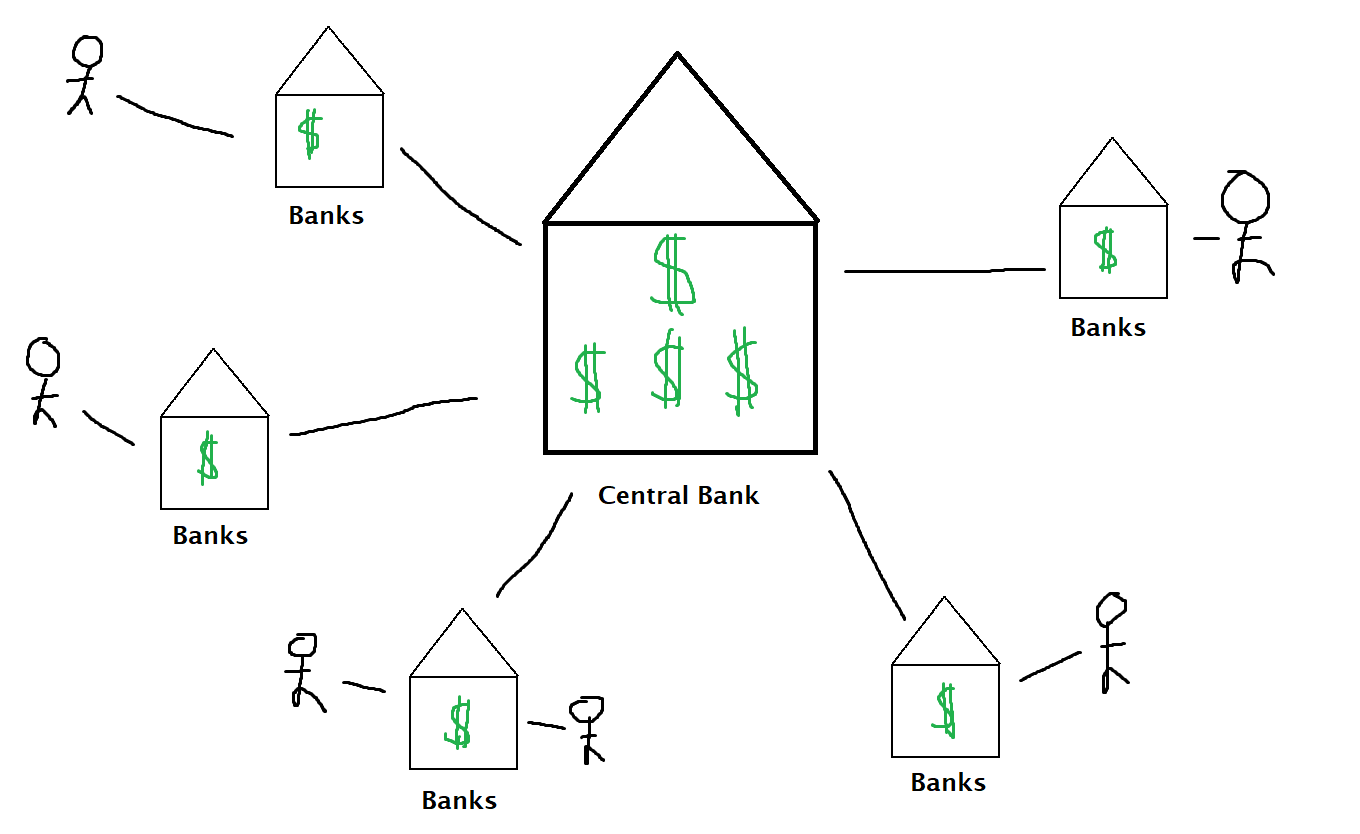
A few problems come from centralised currencies.
Firstly, if the Central Bank wants to print more money, it can, making your money worth less. Secondly, in order to make any transaction work, you need to go through many layers of complexity, which is known as the SWIFT Banking System.
Decentralised currencies fix these issues.
Computers on the cryptocurrency network create and verify currencies to ensure trust, and you can pay anyone really easily, simply using the blockchain and a digital wallet.
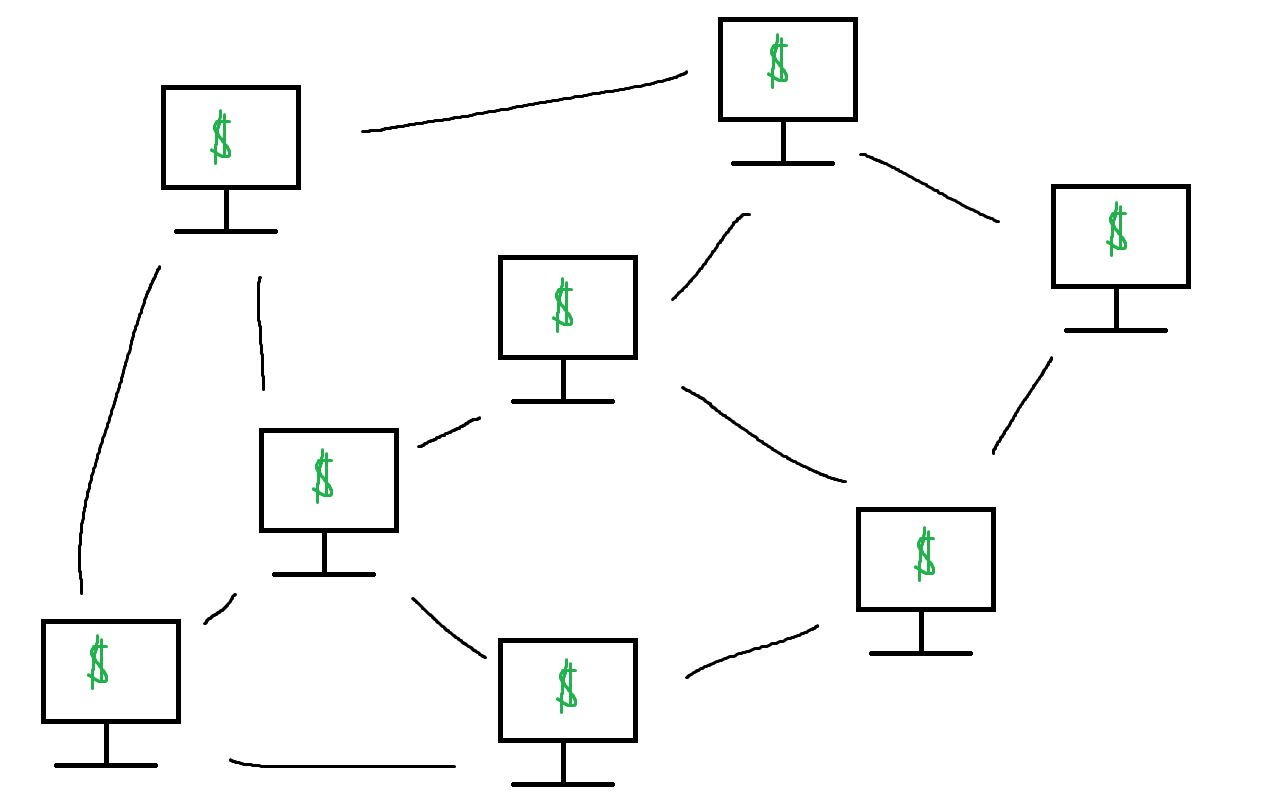
Bitcoin (and all other cryptocurrencies) have this encryption and blockchain layer added to the currency. Both these technologies ensure you can't just generate a currency out of thin air without contributing to the network.
The way new Bitcoins are generated is based on a competition between computers trying to solve complex mathematical puzzles. These puzzles are simply the verification of a transaction carried out in the system. In return, they get rewarded with a fraction of a Bitcoin.
One computer cannot falsify the digital ledger, because trust is based on the collective, not on what one person says.
But why is Bitcoin the main cryptocurrency out of them all?
Well, it was pretty much the first one to grow some proper legs, it has never been hacked, and because the community is so passionate about it (just like people are passionate about gold, therefore it is worth a ridiculous cost), it has some sort of trust that is required for any fiat currency.
Bitcoin originally started as a useful currency for making digital transactions. However, it's kinda useless at doing that now, simply because the price of 1 bitcoin is so high. It's the same reason why gold isn't used to buy McDonald's.
Now it tries to serve the same purpose that gold does; it is claimed to be the digital gold of the world. The problem is, it doesn't have a good track record of following gold during economic crises; instead, it follows the stock market, specifically the NASDAQ, which is full of the most innovative companies in the USA.
Furthermore, Bitcoin's biggest customers are those who are involved in criminal activity. Because it isn't really necessary to provide personal details when creating a Bitcoin wallet, and transactions are anonymous, you can get away with transferring funds without anybody finding out the sender and recipient, something very nice to have as a criminal.
Bitcoin might be digital gold, but until the digital world becomes as valuable as the physical one, it won't have that status.
Most financial advisors and experts strongly recommend allocating only a very small fraction of your portfolio to risky assets. In the crypto world, these are typically Ethereum and Bitcoin. A small fraction, for those wondering, is 1-2% of your net worth. Don't start punting 10-20% into a speculative asset.
I see the benefits of Bitcoin, but until it gets more widely adopted, it will continue to have massive fluctuations, as any sign of instability leads to massive sell-offs as we're seeing right now.
TLDR: Bitcoin is a decentralised "digital gold" that was created to serve as a form of payment. It is by far the "safest" cryptocurrency in terms of its stability and security, and it's the most widely adopted cryptocurrency in the world.
It is Never Too Late To Pivot
As long as you are willing to learn, you can go into any job.
Recently, I've been chatting with an old friend of mine, and understandably, he's a bit worried about his future. He's been through a lot in the past couple of years, and he hasn't had the easiest upbringing either.
He mentioned that he was scared about pivoting from the work he was doing to what he wants to do, but is also concerned that a degree will lock him in for a certain career path. I quickly shot that down and told him that's not how things work.

I've come across many stories of people who have started in one place in life and ended up in a completely different spot. I've heard this from both personal friends of mine and also from celebrities in certain industries.
Let's look at a couple. Demis Hassabis was always destined for success. He is borderline a genius. He became one of the best chess players for his age as a teenager. He was told by Cambridge to take a gap year because he was too young to join. He became a game developer during that time, went back to Cambridge, finished his degree and then resumed being a game developer.
Demis then pivoted into getting a PhD in neuroscience, which eventually led him to AI. He cofounded DeepMind, now owned by Google, and is arguably one of the greatest catalysts for the AI technology we have nowadays. If you'd like to read more about his story, I would highly recommend The Infinity Machine by Sebastian Mallaby. Thank you so much for an early copy.
You might think, "Hey, that's not a fair comparison, I'm no genius".
I wouldn't sell yourself short, but let's take another example.
Steven Bartlett, who's now renowned for his business empire in media, technology and marketing, originally started as a very dim lightbulb.
He regarded himself as not that book smart, was a bit problematic at school, quit university, was struggling to feed himself, but eventually started his own marketing agency. He eventually pivoted from that into being one of the biggest podcasters worldwide, with plenty of success with other businesses and being one of the dragons in Dragon's Den.
Needless to say, I could give more examples from my personal life. A friend of mine started in tech, and now is doing cinematography full-time. Another started working at the government and is now helping lead one of the biggest companies in the UK, and I can even include myself; I sucked at English back in school, but I'm incredibly passionate about writing.
Don't put yourself in a box. It's never too late to pivot.
I would be lying to you if I told you it would be easy to pivot from Cybersecurity into becoming an investment banker. The reality is, it isn't.
You've got to show you are willing to learn, passionate about the industry, have worked on small projects around the world of finance, and relentlessly apply for a position at an investment firm and hope you get in. It's tough but not impossible.
The most important things are curiosity, passion and willingness to learn. If you've got that ruthless triple combination, you are unstoppable.
TLDR: A career change might be hard, but it isn't impossible. With the right strategy, you can do pretty much anything in life.
Sometimes The Best Answer Is IDK
The first step to learning is admitting you lack the knowledge.
I think it's safe to say that no one wants to utter the words "I don't know".
I mean, it makes sense; we don't want to be perceived as unintelligent, ignorant, or weak. Therefore, we will always try to answer a question, even if it is by slightly changing the topic or pretending to know what is being discussed. Look at politicians; they are great at this.
However, the best answer to a question you know nothing about is "I don't know".
“The man who asks a question is a fool for a minute, the man who does not ask is a fool for life.”
― Confucius
One way to quantify your success and experience in this world is through knowledge. We make progress by filling in the blanks. One day, we might not know what the word "conscientiousness" means. The next day, after we learn about it, we know it's used to describe someone responsible and diligent.
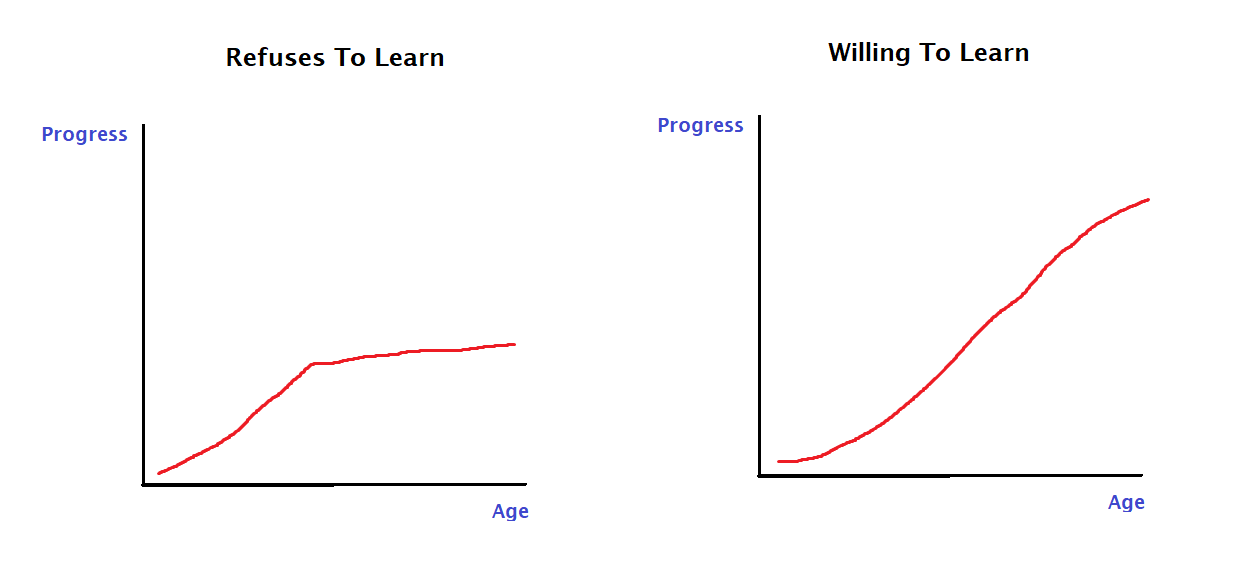
If we stuck with the mindset of refusing to learn, our progress in life would stagnate, versus someone willing to say "I don't know".
I don't know about you, but admitting your ignorance seems scary at first. The reward, though, is bountiful.
Learning begins when you say three words: I don't know.
I remember when I first learned this lesson during my English class. To be clear, I sucked at English, but there was this one teacher, Mr Williams, who really pushed me to ask questions. I learned much more in his lessons, and I'm forever grateful for this lesson.
TLDR: Someone will only teach you if you tell them you need help. If you pretend to know everything, you will never learn anything.
Goodhart's Law
The purpose of a metric is to guide you to success, not for it to become success.
I love metrics. Being able to measure something, for me, is fascinating. Being able to quantify things gives a whole new perspective.
For example, if you want to track how well you're eating, there are tons of things you can use to measure that. Depending on your goal, you might want to track calories, macronutrients and even micronutrients.
Although it's good to keep track of progress so that you know what can be improved and how to improve it, achieving a good metric shouldn't be what drives you.
Goodhart's law states:
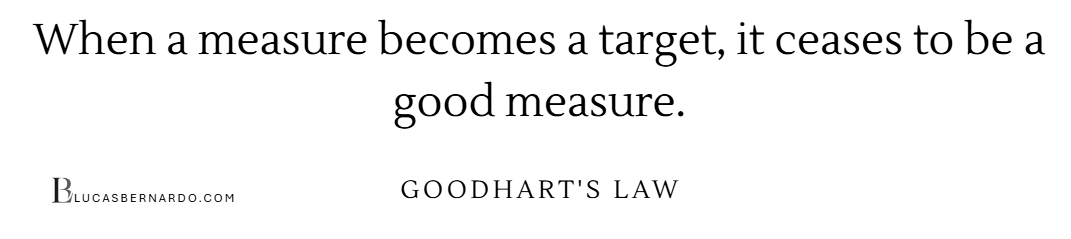
For example, imagine yourself as a religious person, let's say a Christian. A "good" Christian isn't defined by how many Bible verses you memorise, how many prayers you say or whether you go to Church every Sunday. All these help keep a good track of it, but if you're only aiming for a high metric in these areas, you're missing the entire point of being a Christian.
When you do something just to keep a high score, you've forgotten the reason you started tracking your success in the first place.
You tracked your diet to be healthy, and you tracked your Bible study to become a better Christian. Not because you wanted to have a good score.
I've actually fallen victim to this quite a few times.
For example, in January 2024, I decided I wanted to learn Japanese. I thought learning a new language would be cool, and I eventually wanted to visit Japan. However, five months in, I started to complete the same mission on Duolingo every day just to keep a high score.
Looking back at it, it was quite stupid... I wasn't learning anything; I was just keeping a high score because it made me feel better.
TLDR: Don't let metrics distract you from your original goal.
The Butterfly Effect
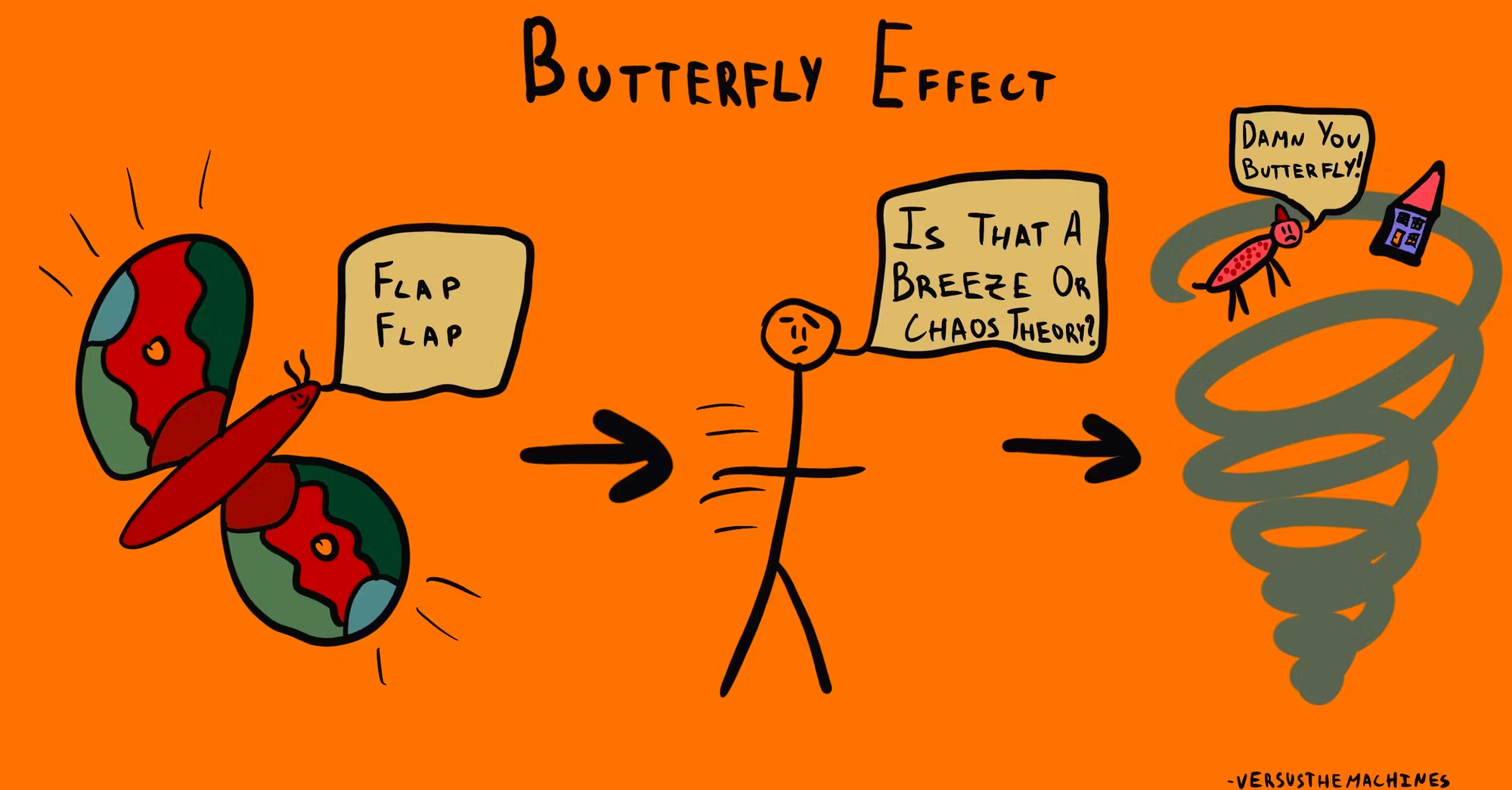
Does a butterfly flapping its wings cause a tornado in Texas?
Ever wonder what started the First World War? One small change, one death, caused millions of people to die across many nations. The assassination of Archduke Franz Ferdinand in Bosnia led to Austria's declaration of war on Serbia. Russia, being Serbia's biggest ally, and Germany, being Austria's biggest ally, meant that these two massive countries also got involved and fought against each other.
Although historians may want to add nuance and say that there were multiple different reasons that led to the start of the war, it does not take away from the fact that this one small action helped lead to one of the worst things to have happened in human history.
The Butterfly Effect describes this quite well. It's the idea that one small action could lead to massive changes later down the line.
I've got plenty of examples of this in my life.
I met the love of my life after throwing an invite to her when I was already going to hang out with a friend. That invite led to us talking, having fun, and eventually, we started going out. We are now getting married at the end of this year.
What about my career? Well, when I was in Sixth Form, we had someone come in to talk about their company and cybersecurity. I was inspired by the work, got his contact details, and I'm now working full-time at the same company in the same industry. Without him opening that door, I might not have ever entered the world of cybersecurity.
I really want to emphasise the idea that small actions can lead to massive changes. Imagine, one day you decide to go to the pub with your friends. You drank quite a bit, and now you're stumbling your way back home. As you're crossing the road just before your house, a speeding car hits you. You go flying. Later in the hospital, you were told you would never be able to walk again. One small change led to one massive reaction.
Small actions CAN have massive outcomes. It's a two-way street, for the better or for the worse.
When making decisions, I would urge you to think about the impact it could have in the future. This is something many of us, including myself, struggle to do, but it is nonetheless important to remember.
Nothing is too small in the eyes of Mother Nature. What you perceive as negligible may be the start of something big. Just because the probability of something happening is low, does not mean it won't happen.
TLDR: Sometimes, the biggest life changes just need a small nudge.
Business Model Canvas
A simple tool to use before you start any business.
If you're anything like me, you might want to start a business. However, there are so many things to learn about starting a business that it can quickly get overwhelming.
When I first told a friend of mine I wanted to start a business, he recommended I take a look at the Business Model Canvas, a template you can use to identify the key ingredients for starting a business.
Created by Alex Osterwalder, a Swiss business theorist and entrepreneur, as part of his PhD research in 2005, this became widely adopted in the mainstream business world.
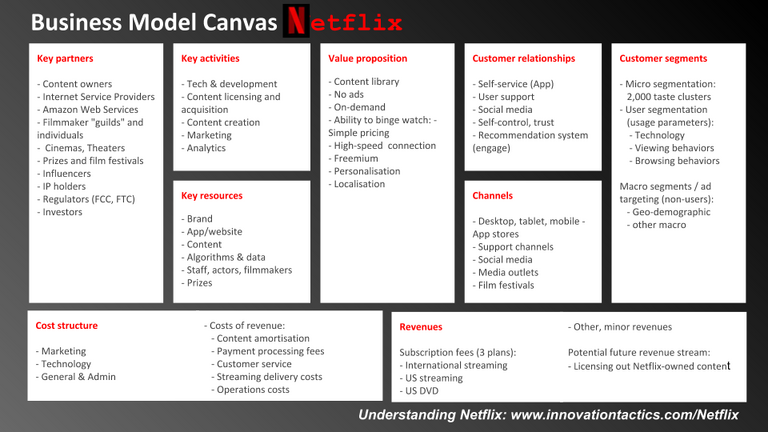
I'll briefly explain each category in the order that is recommended for you to do it in.
- Customer Segments – Who are your target customers? You want to get quite specific. In the case of Netflix, maybe you want to talk about movie fanatics, but you could also include casual TV watchers.
- Value Proposition – Why should customers choose you? What do you offer to your potential customers? Netflix offers a massive content library, alongside Netflix exclusives. You might also like the fact that they offer quite low prices if you can tolerate the Ads.
- Channels – How will you provide your services? Netflix provides their content through multiple different sources, such as TV, mobile devices, and computers, etc.
- Customer Relationships – What type of customer experience do your customers expect? Netflix is quite self-explanatory, with a user-friendly app, but sometimes they might expect some help regarding account admin or even billing.
- Revenue Streams – How does your company make money? Netflix makes money from two primary sources: Firstly, through its subscription service, and secondly, through the ads they run.
- Key Resources – What are the critical assets to make your business run? Netflix cannot afford downtime, and they must ensure their content is delivered super fast. This requires critical infrastructure. They also require licensing deals to show films and series on their platform.
- Key Activities – What are the critical activities you must carry out to stay afloat? Netflix must continue to maintain and improve their infrastructure. They must also ensure they continue to improve the AI algorithms for suggesting new movies and films to their customers.
- Key Partnerships – Who must you be in contact with to ensure your business is running smoothly? For Netflix, that would be movie and series producers, content owners, infrastructure providers, etc.
- Cost Structure – What are the most important costs that you must accept for your business? Netflix will pay millions in infrastructure, but also in licensing, so that they can provide that content to millions of consumers.
If you're interested in going into a deeper dive on this topic, I will link below some useful resources for you:
- How To Use The Business Model Canvas W/ Examples.
- Osterwalder's company, which offers free templates and guides.
Why don't you try making your own canvas for a business you had in mind to start?
The Business Model Canvas is arguably the fastest way of validating some of your assumptions relating to your business. If something doesn't add up on the canvas, it probably won't add up in the real world.
TLDR: There are 9 key things you must understand about a business before you start one. The Business Model Canvas lays them all out on one page.
Comparison Is The Thief Of Joy
The grass is not always greener.
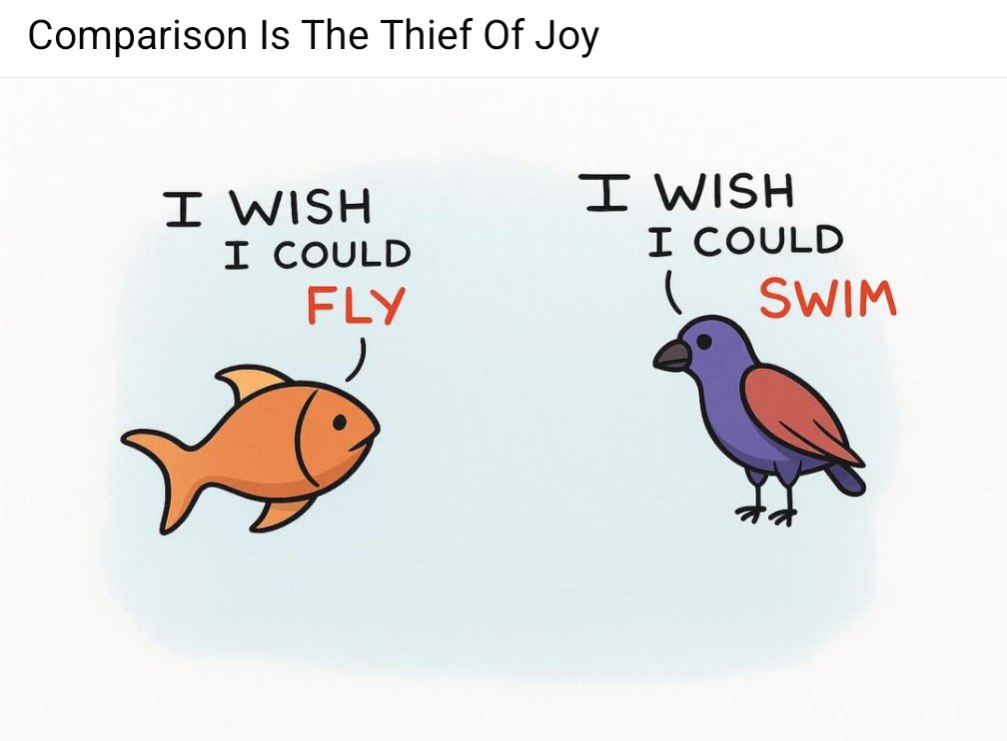
During a time when social media has taken over the world, we have an abundant number of people to compare ourselves with. The truth is, you will always think the grass is greener until you've lived there long enough to see its flaws.
I'll give you an example of this. When I first moved into a university accommodation, I thought it was perfect. It was a massive 3-bedroom home with a spare bed. We looked through it, and eventually we decided that we would move into the accommodation.
However, after having lived there for 6 months, we started noticing this continuous growth of mold. No matter how hard we tried, the mold would not disappear.
What I originally thought was a better home than I had lived in before turned out to come with its own problems.
That is the same with pretty much everything in life.
As Thomas Sowell once said:
"There are no solutions. There are only trade-offs."
– Thomas Sowell
So stop thinking life will be perfect if you decide to pivot in a new direction. It might be better, but I can guarantee you it will come with its tradeoffs.
Similar Pieces Of Writing On This Topic:
- Mimetic Theory: Stop copying other people's desires.
- Success is Relative: Are you working towards your ambitions or someone else's?
Everyone is different to you, therefore you've got to compare yourself with someone who matches you. That person is yourself.
A school kid wouldn't compare their running speed with an Olympic sprinter's, so why should you compare yourself to someone completely different from you?
TLDR: Life becomes much better when you realise that the grass isn't always greener.
Quotes Of The Week
- "The great aim of education is not knowledge but action." — Herbert Spencer
- "The man who asks a question is a fool for a minute, the man who does not ask is a fool for life." ― Confucius
- "It doesn't make sense to hire smart people and then tell them what to do; we hire smart people so they can tell us what to do." – Steve Jobs
- "He who has a why to live can bear almost any how." – Viktor Frankl
- "There are no solutions. There are only trade-offs." – Thomas Sowell