7 Days 7 Lessons #2

Stop living a life of hopelessness!
Just over a year ago, I was still at University. During that time I was really into a game called League of Legends (please don't think less of me). I mean, I was seriously passionate about being good at the game. I hate wasting time so I made it a goal to achieve a certain rank in the game and if I didn't I would quit it.
After spending more time than I should studying how to play a game during a 3 week holiday I learned a valuable lesson. The best players at the game often taught accountability, that in a game of 5v5 where you cannot play with other people, you are the common denominator.
As the common denominator it is your responsibility to win the game. Although some games are easier to win than others, there is still a small thing you can do that can change the flow of the game that will allow you to win. So don't hate your teammates, instead look at what you've done and identify what you could be improving.
This eventually helped me climb from silver to emerald within 2 weeks (a pretty impressive feat in LoL), and allowed me to also become a global top 100 Amumu player.
I started to apply this to other games, and then to my life. What I learned was that things happen to you in life, sometimes these things are out of your control, and sometimes they make succeeding in life harder. But they don't make it impossible. Instead of blaming others or blaming your circumstances, look at your situation and decide what you could be doing to improve your chances of success.
I find it so sad to see so many people be victim to the things that happen to them. Dreams get crushed, desire is lost. But I'm an example of someone who has gone through bad times, a rough background and is living a good life now. Fight for your freedom, because no one else will.
This week we have:
- Problem Solving: The 5 Whys
- Psychology: Confirmation Bias
- Habits: The Habit Loop
- Goals: Stop sharing your goals
- Life Context: Number of Holidays throughout the years
- World Context: Hype Cycles
- Psychology: Cognitive Dissonance
The 5 Whys
Stop wasting time randomly looking for a solution. The 5 whys can help you identify the root cause of a problem.
The 5 Whys is a technique that can help you find the root cause to a problem, and any other problems you need to solve along the way.
First coined by Taiichi Ohno, an industrial engineer. Taiichi was responsible for Toyota's breakthrough into car manufacturing thanks to a technique called lean manufacturing, a cost efficient and fast way of manufacturing cars.
Although a simple technique, it is incredibly fast and can help you locate the root cause to a problem (or at least give you a good starting place).
Essentially, you have a statement that is causing you issues. You continue to ask why to this question and the statements after it until you are happy with the root cause that has been identified. Typically the rule of thumb is 5, but this can vary depending on the complexity of the topic.
An Example:
- I feel unhappy (this can have multiple branches, but let's look at one).
- Why? I feel like I never get enough down time.
- Why? Making food takes a long time and commuting back home is also time consuming. By the time I've done all of that I have only a couple hours left in my day.
Just from two questions, I've been able to identify that making food and commuting is a large portion of my spare time. From this I might decide to make some Plan of Actions (POAs) such as, meal prepping food on the weekend, changing jobs to somewhere closer so the commute is shorter, or finding ways of using the commuting time as down time.
Asking why may not always get you to the right root cause, but it's definitely a good place to start. It's quick and easy to do.
Don't just stop at one why either. Ask as many whys as possible. One question might branch into many, make sure you check all of those scenarios too!
TLDR: Keep asking your problems why as many times as possible. Maybe they're the ones who can tell you how to fix them.
Confirmation Bias
You're the biggest enemy standing against truth, because if it doesn't suit you, you'll probably ignore it. Introducing confirmation bias.
Confirmation bias is a persons tendency to seek out information that already aligns with their thoughts, or aligns with the predictions they're making. This commonly involves having a negative opinion on those who oppose your beliefs. Even if information is labelled as facts, it leads to resilience when trying to accept it.
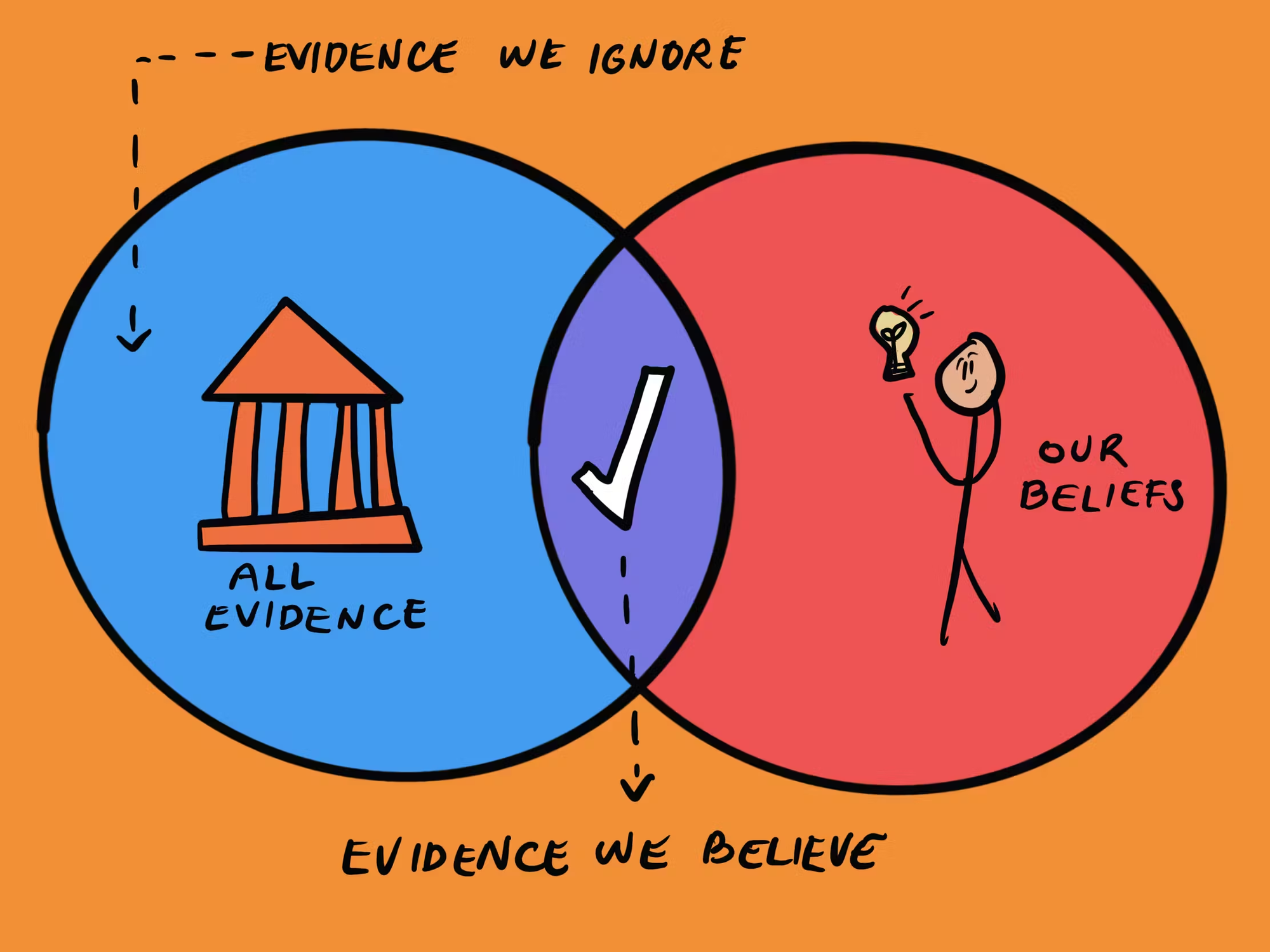
There are many reasons why we tend to do this:
- Personal experience trumps any secondary evidence and even primary evidence we don't trust.
- When someone is trying to justify the bad decisions they are making in hopes that they can live with a clear conscience (cognitive dissonance).
- The unsettling effects that truths that go against our beliefs bring.
And there are many more reasons but these are some of the main ones.
I think this is an important lesson for people to be aware of. I see this happening to many people in my life, including myself (and I really try my best to lean into both sides of an aisle in any topic).
This lesson highlights the importance of debate, and the willingness to seek out opposing views.
After all, what is the point of obtaining knowledge, just so it can stay in our heads and collect dust. Just like a tool, we should make use of it, and with that, there's the chance of it getting damaged (what you thought was true, is not), but if you take care of it, you'll repair it (adopt that new truth).
TLDR: If you truly care about seeking the truth, you would be willing to bring opposing views into the same room as each other, and watch them fight. The one that wins is the truth. Don't let discomfort stop you from achieving the truth.
The Habit Loop
You suck at building habits because you have no plan.
It's new years day, and you've decided you're going to set yourself a ton of goals, and with that new habits you want to build. However, only 8% of people who set goals actually achieve all of them. One of the biggest reasons for this is because you spend time making a goal, but spend no time making a plan.
Maybe you want to pick up a few new habits for the year. Losing weight, exercising more, reading books, scrolling less, whatever it is, when building a new habit, you need to understand the loop that takes place, and the lifecycle that makes habit building sustainable.
James Clear is probably the most respected "habit guy" in the world. He built on previous studies on habit building including what was known as the habit loop. In his modified version of the habit loop, there are 4 parts to making a habit stick.
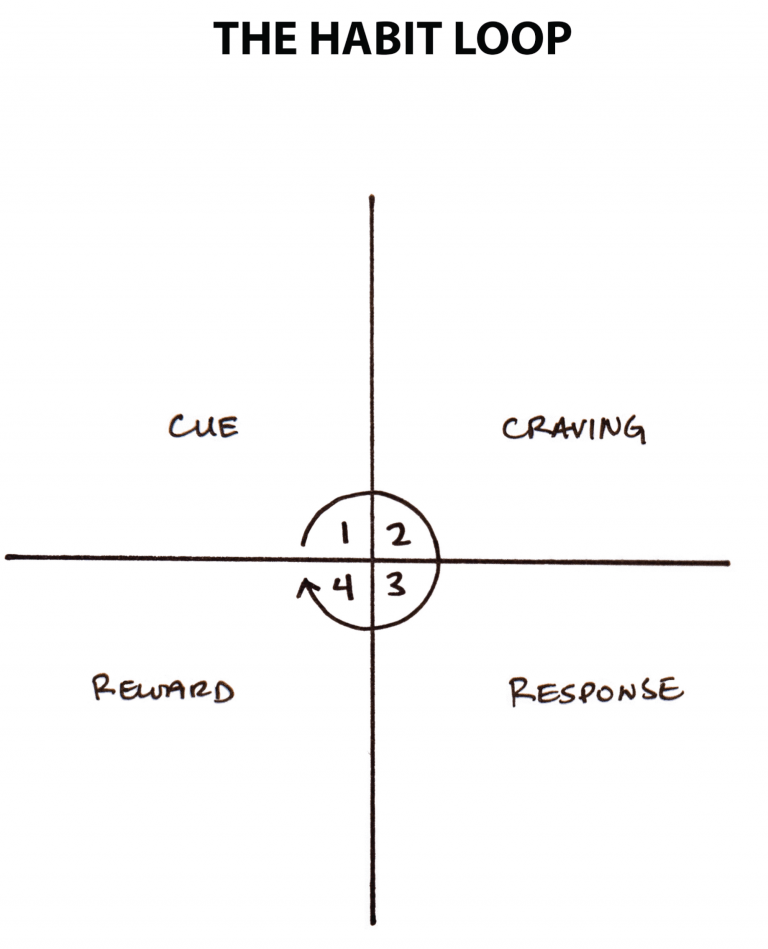
Example: Building a Habit of going to the Gym
- Cue - This is the trigger that tells you when it's time to start the habit. Without a consistent trigger, the habit is subject to your mood, and moods fluctuate, therefore so will the consistency.
Example - Every other day, once I get back from work, I will do an exercise such as running, at-home workout or going to the gym. - Craving - Making the habit look more attractive is an important step to help you stick to it in the first place. After all, we can procrastinate everything, therefore, you want to make the habit as easy to do as possible.
Example - Every morning I will put my gym clothes on my desk, so that when I come back from work, I can easily get ready to go to the gym, and stop myself from procrastinating looking for clothes. - Response - This is the actual habit! Simply carry out the action you intended on doing.
Example - Today, after work, I got the clothes of my desk, put them on, and went to the gym. I did it! - Reward - No habit will stick if it's pointless. If it doesn't benefit you, what is the point of doing it. Some benefits come in the long-term, and some come in the short-term. You need to make sure you are being rewarded in both.
Example - In the short-term my reward is that I get to go to the gym to hang out with a friend I rarely see! In the long-term I'll be healthy and shredded!
If you want this year to be the year you become your new self, I would encourage you to read Atomic Habits by James Clear. It is the 101 guide to building habits.
Humans are habitual creatures - therefore we tend to surround ourselves with a lot of habits because it brings comfort to us. But habits also allow us to develop into incredible people, because they are small tasks set consistently that build us up. The compounding effect is incredible!
Whatever your goal is, break it down into four parts: Cue, Craving, Response and Reward. Fine-tune it, and then stick to it. This is how you guarantee success in building habits.
TLDR: In order to build a habit, you must create a consistent trigger (cue), make it as attractive as possible (craving), do the action (response), and give yourself a treat (reward).
Stop sharing your goals
Just to be clear - telling people your goals is not the same as achieving them.
Every year, for whatever reason, we think that we are going to change our lives completely. By setting new goals and trying to be the best possible version of ourselves we think we can ignore tackling the underlying issues we have in hopes that we can become the successful versions of ourselves as quick as possible.
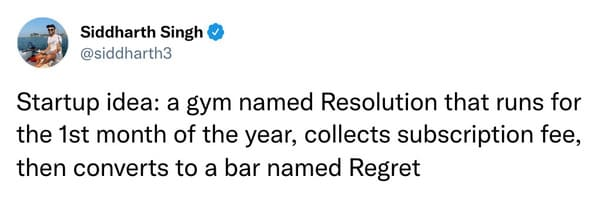
I think it's good to set short-term and long-term goals, but the most important thing we can do is carry out a mindset change as stated by James Clear in Atomic Habits.
The key to building lasting habits is focusing on creating a new identity first. Your current behaviours are simply a reflection of your current identity. What you do now is a mirror image of the type of person you believe that you are (either consciously or subconsciously).
Once you've done that, setting goals is the most powerful thing you can do. These goals must be achievable and measurable outcomes. But one thing that nearly everyone does will cause you to fail.
Sharing your goals has plenty of research indicating you are more likely to not achieve it. The joy we get making progress towards a goal is what motivates us to keep on going. But we get the same amount of joy by telling other people what we are going to do! This is because our monkey brains cannot control the happiness we get from telling people that we are doing a certain goal, and it simulates the same amount of happiness we would get when actually working towards that goal. Therefore, it can lead to your prematurely stopping the goal just before you've actually achieved it.
I want everyone to succeed in achieving their new years goals. But stop telling everyone your goals. It gives you the same dopamine as actually working towards the goal. without actually having done anything! You are normalising this happiness and eventually you'll stop working towards the goal because you get no more happiness from working towards the goal.
Instead, show your results. Tell people when you've crossed the line. This creates a positive feedback loop which then encourages you to cross the line more and more times.
TLDR: Don't share your goals, research shows that you are more likely to fail them if you do. Instead share your results, and create a positive feedback loop on achieving rather than just aiming.
Number of Holidays throughout the years
Do you think life is worse now than before? Here's some context showing why you're wrong.
I wanted to look at the number of holidays we get nowadays in context to what we used to have, and to what other countries in the world get. I think we often get carried away and complain about not having enough holiday, but when you compare it to how it was before and to the other countries in the world, it shows truly how privileged we are.
UK 2025:
- In the UK in 2025 the legal minimum is 28 days with the average annual leave being 34 days.
UK 1950:
- In the 1950's the average annual leave was around 16 days (although this is hard to verify as data wasn't being consistently collected at this point). The Holidays with Pay Act of 1938 typically led to 1-2 weeks of annual leave.
UK vs. Other Countries:

- The UK is on on par with other first-world countries with regards to holiday (at least framing it with regards to mandatory minimums).
- The UK is significantly better than non-first-world countries with regards to holiday.
I think living within your means is the smartest financial and general advice I've gotten. Being happy with what you have allows you to get out of the rat race we call "wanting" (lifestyle creep).
Lack of historical teaching on these sorts of topics has made us forget that life was much worse and still is much worse. Social media has made extravagant holidays every year normal but it never was. Due to this context being lost, we've become more entitled than before, but in fact we are in an incredibly privileged position.
TLDR: The UK's average annual leave, if looked at in a historical way and in comparison to the rest of the world, is incredibly generous.
Hype Cycles
I bet you think AI will have to succeed right now. History & Hype cycles show that you are probably wrong.
Hype Cycles first coined by Gartner in 1995 represents the lifecycle of any new innovation. Funnily enough, when the hype cycle was first invented, it was living through one. The internet!
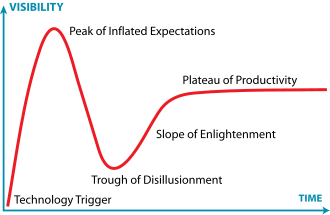
We are living through a hype cycle right now! The AI boom (more like bubble...).
What's interesting to see is that this has consistently happened with any new innovation. Trains, cars, airplanes, internet, AI, and many more instances.
Hype cycles can be split into 4 parts:
- Innovation - A new piece of technology has been identified and created! As more and more people begin to talk about it, the hype keeps growing.
- Max Stupid - All the hype has led to people, companies and governments investing heavily into the industry, even before it has the necessary pre-requisites to stand. Everyone is chasing the hype, before having asked the serious question of, how can we make this sustainable? (What is Max Stupid?)
- The Crash - This is when the hype bubble pops. People are tired of hearing of this new piece of tech that will change the world but hasn't yet. Many years still need to pass in order for the change they invested in to happen, and people start pulling funding from it.
- Sustainable Growth - People who continued to work on the technology even after it lost all it's hype, have identified a way to make growth sustainable, and provide real outcomes. The likelihood of another Max Stupid in the same industry is unlikely, because people still have the scars from before. But that doesn't mean it won't repeat itself in another innovation cycle. After all, history doesn't repeat itself, but it does rhyme many times.
Something to note is that not all innovations trigger a hype cycle. This is probably because the innovation isn't successful or it is successful but leads to sustainable growth from the start.
However, there is one clear hype cycle going on at the moment. The AI bubble! Stupid amounts of money is being thrown at AI without a good way of getting a return on those investments. It is stull unclear whether AI can continue innovating as well as it has already, it is still unclear to see whether AI can actually do what companies claims it can do, but what is very clear is the amount of money being put into it is unsustainable (and recycled!).
Personally, I'm financially hedging my bet that AI is in fact in a hype cycle, and that it will eventually crash down. Therefore, I'm keeping a decent cash reserve ready to buy up the discounted stock prices (because it is undeniable that AI is useful). I am still invested in AI at the moment, but not in a Max Stupid way. (NOT FINANCIAL ADVISE)
TLDR: Innovations can lead to hype. Instead of jumping on the band wagon, look at the innovation itself. Is it useful? If it is, then know that the full hype cycle will play out. If it isn't, then the crash will come, and everyone who wasn't diversified or knowledgeable about the topic will be in the spotlight. Just ignore it and live your life as usual.
Cognitive Dissonance
The good I want to do I don't do. The bad I don't want to do I do. Introducing cognitive dissonance, the reason why you regret the actions you make.
Cognitive dissonance is the psychological discomfort of holding two or more beliefs that contradict each other.
Some examples include:
- Killing animals for food is wrong & You like eating meat.
- You are a doctor & You are a murderer.
- You support England & Portugal in the world cup.
Signs that you're experiencing cognitive dissonance:
- Anxiety caused by actions - Carrying out an action gives you anxiety and stress. Maybe you feel unsettled by carrying out the action. This is probably because it goes against a conflicting belief you have.
- Rationalising behaviour - Excusing yourself is a common way to relive the cognitive dissonance you may be experiencing, and therefore a good indicator you might be experiencing it.
- Avoiding the truth - You may cautiously look for new information on the topic. You don't always side with what research says, and you try and justify why that is the case.
I would bet that everyone at least at one point in their life has suffered through cognitive dissonance. I would also bet that people suffer through it on a daily basis. And when it comes to addictions (smoking, drinking, pornography) this becomes even more harmful, because you probably want to stop, but you struggle to.
But I believe there are two ways that you can remove this mental discomfort:
- Seeking the truth - You don't pick a side because you are biased to it, instead you pick a side, because the evidence points to it being correct.
- Be willing to let go of your belief - You must be willing to let go of a belief that is wrong, if you can't then you will put yourself in cognitive dissonance, because the evidence is pointing completely against you, yet you still hold it.
This mental discomfort is an unnecessary burden we bring onto our lives. I believe there are two simple mindsets that can significantly reduce the cognitive dissonance you feel.
By seeking the truth by testing your belief, and afterwards being willing to let go of your belief because it was wrong, are the easiest ways to remove any cognitive dissonance you might be going through.
TLDR: Having two conflicting beliefs leads to mental discomfort. To prevent this, seek the truth by testing your beliefs, and be willing to change your belief if they are wrong.
Quotes of the Week
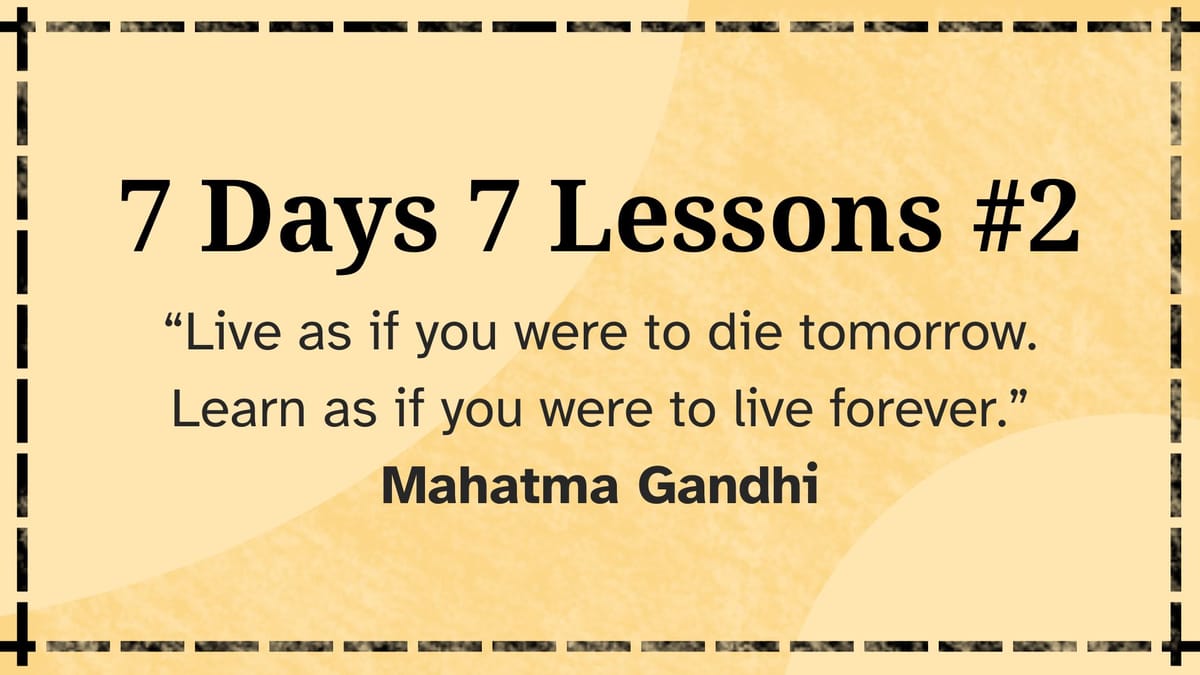
- "Live as if you were to die tomorrow. Learn as if you were to live forever" - Mahatma Gandhi
- "Stop telling yourself you're not qualified, good enough or worthy. Growth happens when you start doing the things you're not qualified to do" - Steven Bartlett
- "Those who think they have no time for bodily exercise will sooner or later have to find time for illness." - Edward Stanley
- "The reasonable man adapts himself to the world; the unreasonable man persists in trying to adapt the world to himself. Therefore all progress depends on the unreasonable man" - George Bernard Shaw
- "Don't tell me what you value, show me your budget, and I'll tell you what you value." - Joe Biden
- "If we are to fail, at least we fail while 'daring greatly', which is a more admirable fate than that of 'those cold and timid souls who neither know victory nor defeat.' - Teddy Roosevelt