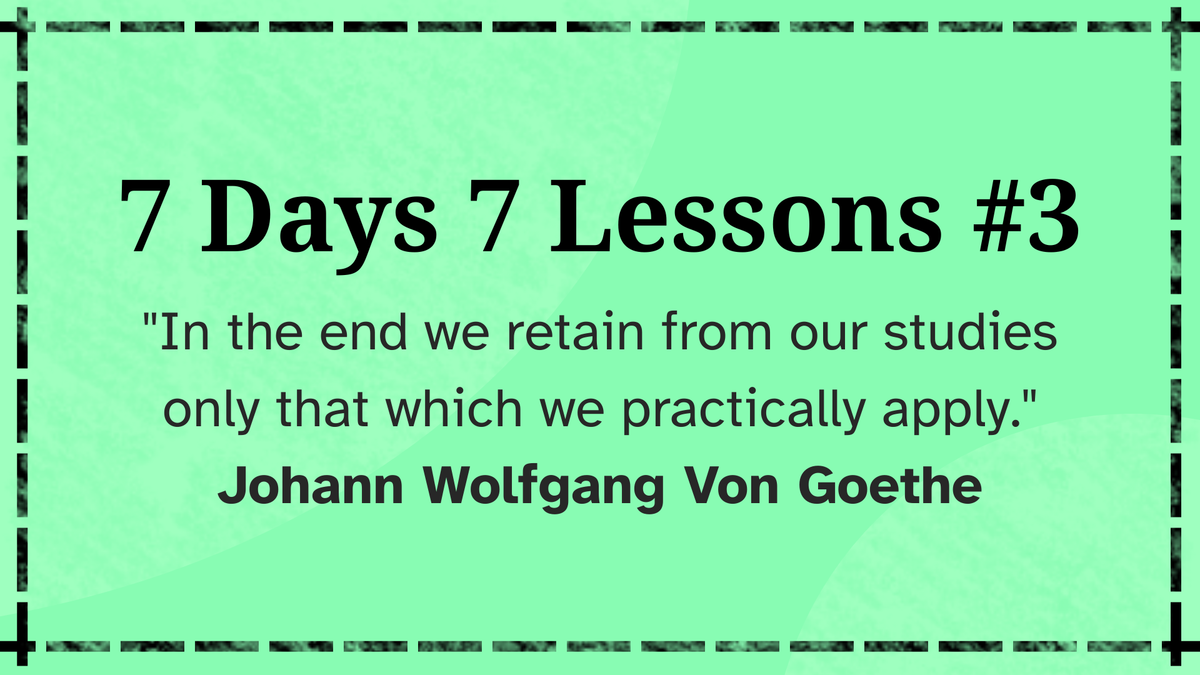
7 Days 7 Lessons #3

This week we have:
- Health: Attention Span is Falling
- Psychology: The Dunning-Kruger Effect
- Psychology: Sunk-Cost Fallacy
- Psychology: Trust Equation
- Habits: The Plateau of Latent Potential
- Psychology: Mimetic Theory
- Psychology: Ostrich Effect
Wanting more doesn't make you happy, gratitude does.
I was looking back at some of the goals I had when I was younger. It first started as "I'll be happy when I get good grades in GCSE", to "I'll be happy when I get my university placement", to "I'll be happy when I've finished my degree", to "I'll be happy when I'm finally married".
I'm getting married this year, but I can already make the prediction on whether or not the above goal will make me "happy". The answer is no, because nothing in life will give you permanent happiness. Life is full of ups and downs, and the only way to be truly happy is by removing the downs, which isn't possible.
I used to always think about the future and attach it to joy and happiness, but I now know, I'll just keep doing the same thing for the rest of my life, and it will never end.
I'll desire to be financially free and with a big happy family, someone else will desire having the ability to walk, someone else will desire the ability to see, someone else will desire the ability to speak, someone else will desire the ability to think, someone else will desire the ability to live, and it just continues.
You will never be happy when you achieve a certain goal, get a certain gift, buy a certain car, or leave a certain home. It simply won't happen. Wanting more and getting it is not what makes you happy.
Want is just an infinite loop of more and more and more, and it won't stop, because more desires will come about, the next new invention will intrigue you, and before you know it, you've added more items to your wish list than you've removed.
What will make you happy is gratitude for what you have now, and once you've got that, no amount of goals, money or anything else can replace that joy you feel when you know you are blessed to have what you have.
Attention Span is Falling
A 20-year study has shown that we have lost 2/3 of our attention span.
In 2004, Gloria Mark started a longitudinal study measuring people's attention span, which unexpectedly revealed that people's attention span was decreasing.
| Year | Avg. Attention on Screen Before Switching |
|---|---|
| ~2004 | ~150 seconds (2.5 min) |
| ~2012 | ~75 seconds |
| ~2016–2025 | ~47 seconds (median ~40 s) |
She suggests a few reasons why this is happening:
- Media has become more attention focused than ever before, therefore if content doesn't keep you engaged immediately, you will most likely lose interest.
- Media has become much shorter in length, which encourages you to continuously switch from one form of content to another.
- We are constantly being interrupted by so many things including notifications, colleagues, messages, etc.
- We are constantly looking for things to do such as check social media, checking your messages, checking your emails, etc.
All of these things have brewed into a toxic cocktail sabotaging your attention span. You can read her book on this topic for more details.
Over time, technology has evolved from a pursuit to serve the people, to a pursuit to serve it's investors. Social media was originally advertised as "a way to stay connected with your friends", or "a way to meet new people", or "a way to share videos with others".
It has now grown to something much more dangerous. More investment is being put into behaviour science by organisations with the hopes of keeping you addicted to your device longer. Your phone has become a tool for them and a distraction for you.
The phone was never meant to make you less productive, after all it was a productivity tool. Now, however, it has co-opted your mind and made it a tool for investors to make money.
I would recommend a brilliant book called Digital Minimalism by Cal Newport, where the entire goal of the book is to try and encourage you to downsize your tech footprint so that you limit it to exactly what you need.
TLDR: In 2004, our attention span was 150 seconds. Now, it's 47 seconds. The attention economy has been set in motion, and there's no stopping it. Instagram went from a platform to see what your friends were up to, to a platform where you scroll through videos of strangers. But you still have agency, and you still have the choice to stop it from sabotaging your life. Be intentional.
The Dunning-Kruger Effect
Imposter syndrome is just a symptom of progression
In 1999, the Dunning-Kruger effect was first introduced by David Dunning and Justin Kruger, with many studies after having proven it in multiple different industries, including business, politics, medicine, etc.
I mean, I would be surprised if it didn't apply to you and the industry you're working in. It definitely did for me.
When I first entered cybersecurity, I simply couldn't understand it's complexity, and it made me think "ha, how hard can it be". That's definitely not my opinion now.
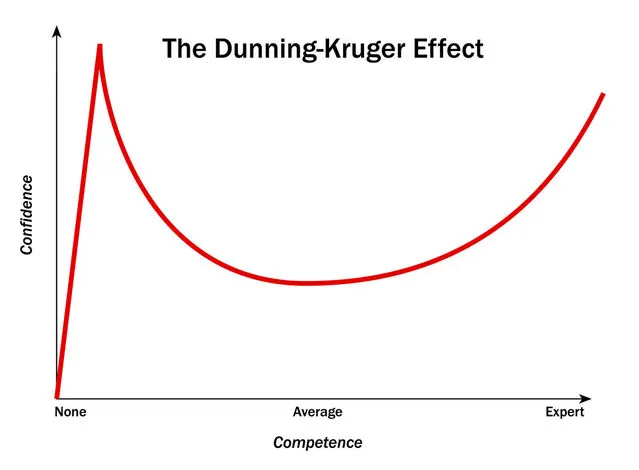
There are three parts to the Dunning-Kruger Effect:
- Ignorance is Bliss - Someone who is just beginning their learning journey will typically overestimate their capabilities and underestimate what they don't know.
- Imposter Syndrome - As you become more and more competent in the field you are working in, you begin to discover the magnitude of knowledge you must obtain in order to become a master, and therefore your confidence drops. Coincidently, it's also when you get imposter syndrome!
- Knowledge is Power - This is where you've reached the peak of your industry and you are now an expert. It means your confidence begins to grow again to all time highs, but this time for good reason.
This is a take I've had for a long time now, and I agree, it's definitely a hot one. But I stand by it, and have made my case in another blog post.
To summarise it, imposter syndrome just highlights that you're competence is growing. Furthermore, you realise that the people around you are possibly more knowledgeable than you, which is a perfect place to be if you want to grow. Therefore, a healthy amount of imposter syndrome is always good for progression.
The Dunning-Kruger effect is a powerful representation of the journey of pursuing knowledge.
TLDR: Newbies are confident and ignorant, those who are average are typically less confident, but experts are confident and competent.
Sunk-Cost Fallacy
Stop letting ignorance keep you in a bad position.
I first learned about sunk-cost fallacy in economics, but have seemed to find it has a better use as a life lesson.
Sunk cost fallacy is the unwillingness to leave the position you're in because of the amount of time and/or money you have already committed to it.
I've done this so many times, and it's natural to see why. We don't want the work we've put into something to mean nothing, and therefore we would hold onto any possibility of our position working out, even if the probability it does, is incredibly low.
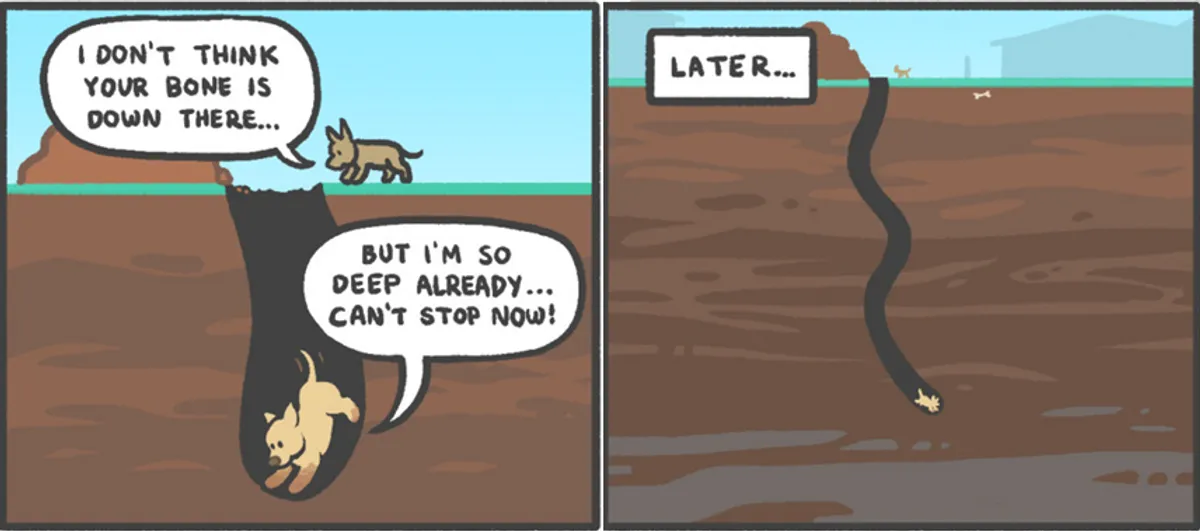
That's what the sunk-cost fallacy does. It makes us believe the improbable is more likely to happen because of the resources we've put in. But I know for a fact probability does not care about your time and effort.
I had plenty of business ideas I know for a fact wouldn't make money or that I simply didn't have enough resources to execute it. But at the time, I didn't. I really did believe in the products I was making. But when I put these projects on pause and let logic speak it was clear I was simply falling for the sunk-cost fallacy.
Sometimes you need to let go of one business idea, so that you can work on another one that will succeed. Sometimes you need to let go of one relationship so that you can gain a much better one. Sometimes you need to leave the job you're comfortable in, to find a job that you love.
Sometimes, the only way to progress is by giving up the thing you're scared of letting go.
TLDR: Humans are unwilling to leave the position they're in because of the resources they have invested into it. The probability of something happening doesn't increase if you invest more resources in it. Sometimes in order to move forward you need to let go.
Trust Equation
Build trust with anyone using four things.
Trust is one of the most important things anyone could assign to you. To be clear, trust is the "firm belief in the reliability, truth, or ability of someone or something".
Although trust is an important quality, we often try and build it without much of a plan. That's where Charles Green from Trusted Advisor comes in. He came up with the trust equation - a simple equation that shows the factors that build up trust.
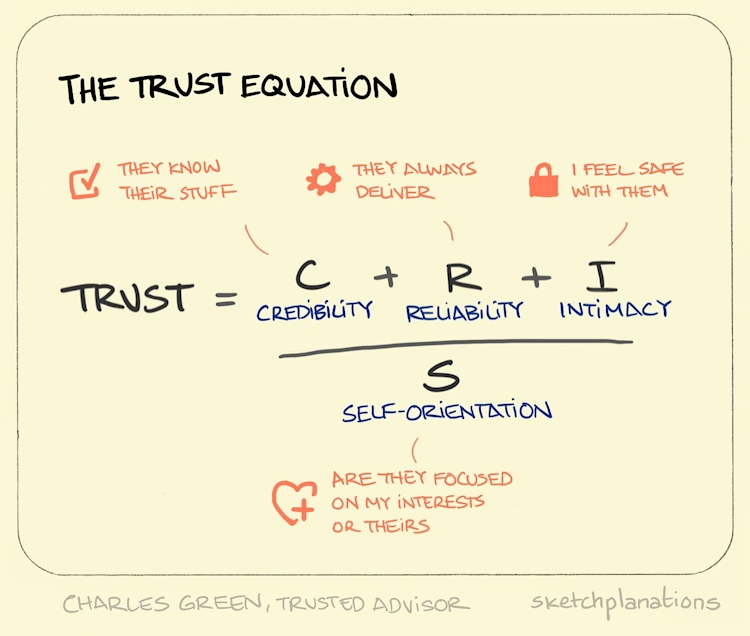
The four factors are:
- Credibility - How knowledgeable they are in their field.
- Reliability - Do their yes mean yes and no mean no?
- Intimacy - How close are you with them. Do they give you the sense of comfort to be open with them?
- Self-Orientation - Are they selfless or selfish, and by how much.
Filling in the numbers into this equation gives you the overall trust level (please don't use actual numbers. Use your gut!).
How do you know a friend will be with you through tough times? How do you know if your business partner will get their job done? How do you know your significant other loves you? It all comes back to trust.
These are all important questions that other people will be asking themselves about you, and you want to make sure that you're trust is as high as possible with them, because you don't want to miss opportunities or harm relationships because you couldn't figure out why they didn't trust you.
TLDR: Trust is made up of four variables. Credibility, Reliability, Intimacy, and Selflessness.
The Plateau of Latent Potential
This is the reason you don't see results straight away.
Building a good habit or breaking a bad one is hard. When we start building or breaking a habit, sometimes we believe that the time we put in should equal the results we receive.
Unfortunately this is not the case. There is often a learning curve before the time put in offers anything beneficial in return. This is called The Plateau of Latent Potential, and was first introduced by James Clear in his book Atomic Habits.
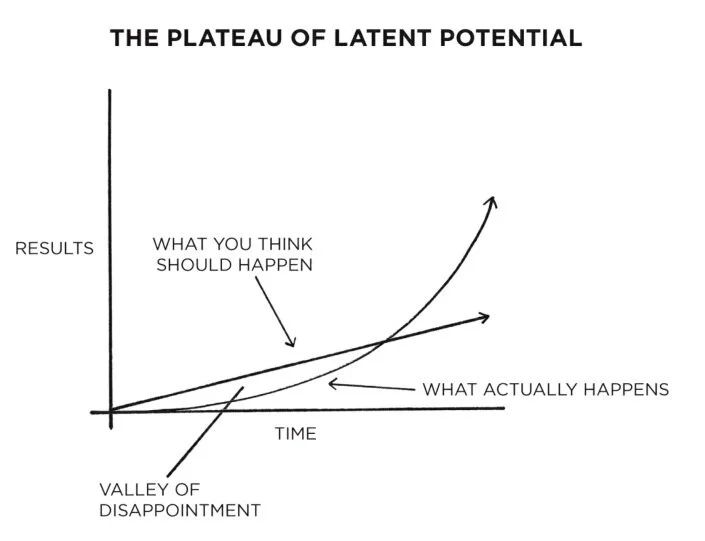
The period where the time you're putting in does not match the results you would hope to get is called the valley of disappointment, and it happens for many reasons, too many in-fact to list out. What you should know however, is that it happens for every habit.
Don't you think if the immediate benefits of a habit was received, more people would implement it? Of course we would, we are creatures who want instant gratification. But that's not how life works, the good decisions (and the bad) you make will take time to show, however, if you stick to it, they will show.
During the valley of disappointment, most people will give up their habit. They simply can't see the end and give up. But if you're consistent you will be rewarded with the results.
Before you give up - understand that this decision will reset you. This means all the effort you’ve put in now will be wasted. You're nearly at exponential growth, you're nearly out of the valley of disappointment - just keep going!
TLDR: A new habit will not show results immediately. The effort you put in is mismatched to the results you get, this is called the valley of disappointment. But once you've stuck with the habit, eventually you'll leave that valley and reach an exponential growth in your results!
Mimetic Theory
Stop copying other peoples desires.
Have you ever asked yourself, what you would desire if no-one else had the ability to judge your decisions? Maybe you would indulge yourself more in the things you actually wanted (for better or for worse). Let's add to that, have you thought what you would desire, if you had no ability to see what other people were buying?
Social media has made this question nearly impossible to answer as more people flock to the internet to show others what they are doing. This has led to lifestyle creep to be on the rise, as we buy more and more things because others are also buying it.
That's why companies spend money on influencers showing the product rather than showing it's utility. They want you to imitate the people you look up to, forcing you to make impulsive decisions rather than logical ones.
René Girard suggests that:
"Man is the creature who does not know what to desire, and he turns to others in order to make up his mind. We desire what others desire because we imitate their desires."
Thus, he coined Mimetic theory, the theory that we humans desire what the models in our life desire.
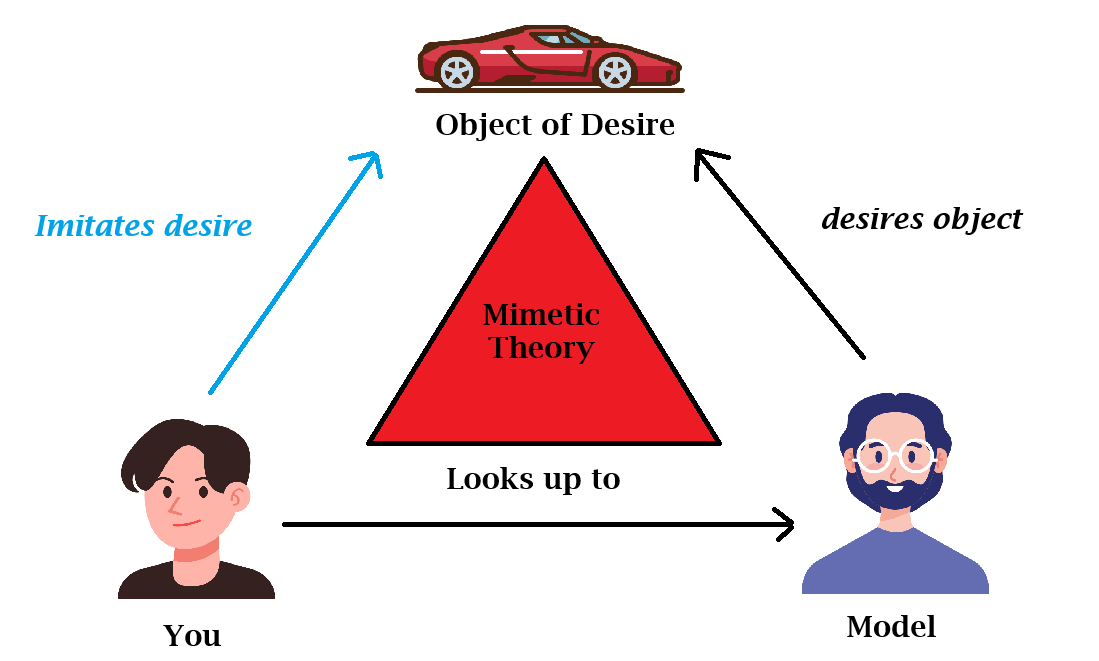
Think about the desires you have, do you desire a luxury car because you want it, or because other people want it? Do you desire the Louis Vuitton bag because you want it or because other people want it?
The day you chose not to care about what unimportant people in your life think or say is the day you'll truly be free. Stop copying people for external validation, when internal validation is all you want. One is Heroin, the other is happiness.
Understanding the mimetic theory is key to realising the difference between what others want and what you want. It's the difference between being a slave to trends and free to live.
TLDR: Humans have the natural tendency to copy what our role models desire. Instead of buying the things that make other people happy in hopes it makes us happy, ask yourself the question instead and try to answer it without copying other peoples answers.
Ostrich Effect
Stop cowarding a way from your problems. Face them head on.
What is the first thing you do when you are confronted with a problem? Do you run away from it? Do you feel like if you close your eyes, you can't see it and therefore it can't see you? Does it work?
Probably not. Named after the myth that ostriches put their heads into the floor to hide away from their predators, it is now used to describe a cognitive bias, where we avoid negative information that could be helpful, with the hopes of it not affecting us emotionally.
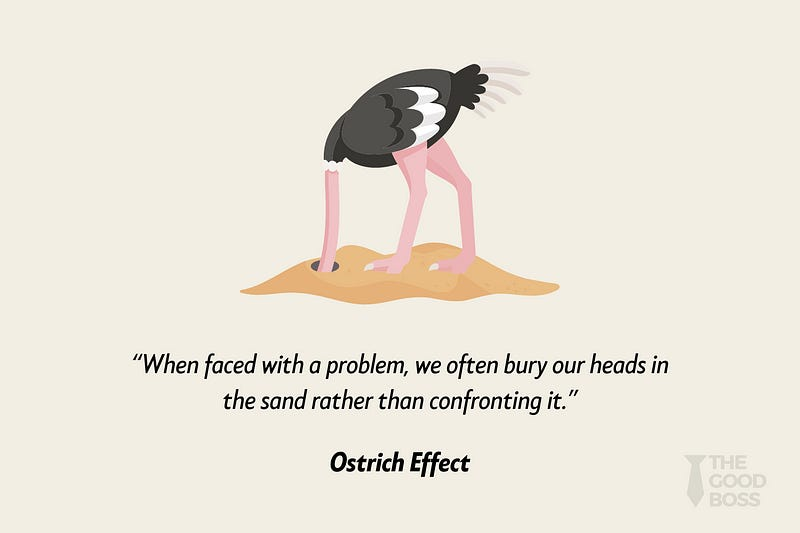
In reality, this is an incredibly harmful thing to do. If you're in a bad situation, the last thing you want to do is remove yourself from the ability to gather new information that could help you.
For example, there are plenty of studies around finance and the ostrich effect. If you don't check your bank balance you are more likely to have sporadic spending, miss your financial goals, make bad financial decisions and allow debt to spiral into a bigger problem.
Although it's human to want to run away from problems or just ignore them, that doesn't make it the best choice. Confronting your problems leads to success, not hiding away from them.
Avoiding the problem doesn't make it disappear. Instead it temporarily brings you relief whilst it snowballs into a much bigger problem.
TLDR: Humans have the natural tendency to hide away from facts that make us uncomfortable making you more likely to be ignorant to the right decision to make.
Quotes of the Week
- "In the end we retain from our studies only that which we practically apply." – Johann Wolfgang Von Goethe
- "Some people want it to happen, some wish it would happen, others make it happen.” – Michael Jordan
- "Don’t judge each day by the harvest you reap but by the seeds that you plant." — Robert Louis Stevenson