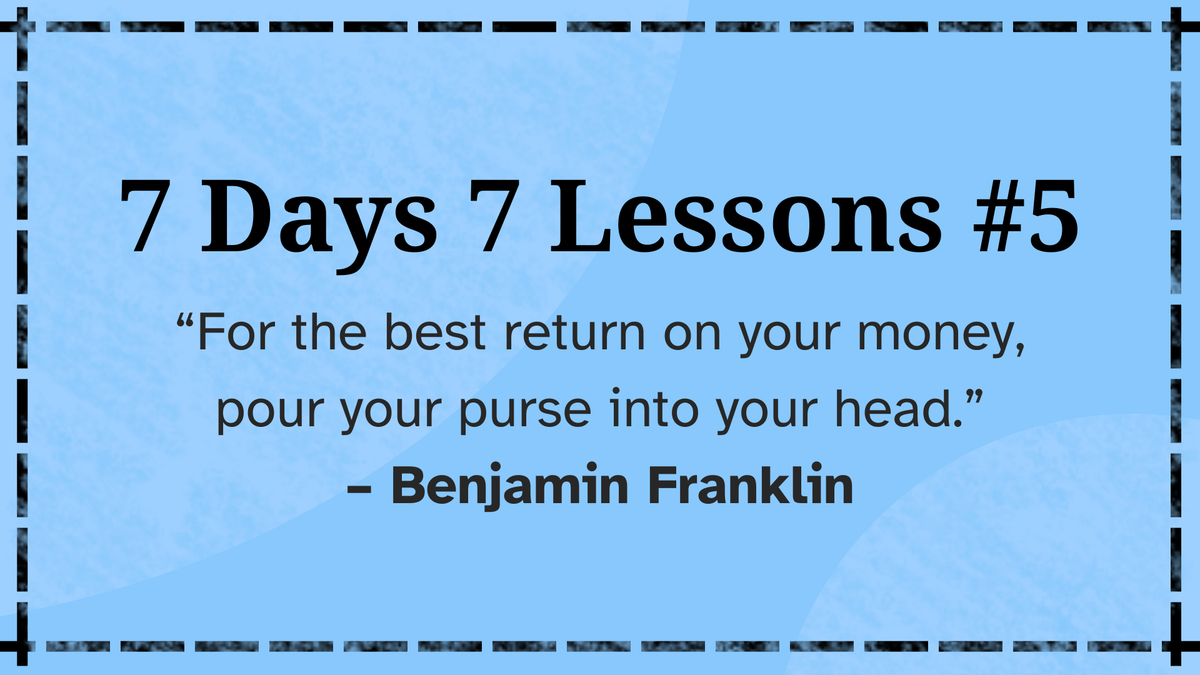
7 Days 7 Lessons #5

- Lesson 1: How to Calculate Risk? (Risk)
- Lesson 2: Negativity Bias (Psychology)
- Lesson 3: Dark Triad (Relationships)
- Lesson 4: The Spotlight Effect (Psychology)
- Lesson 5: Ego Depletion (Discipline)
- Lesson 6: The Benefits of Coffee, Not Caffeine (Health)
- Lesson 7: Learning Life's Lessons (Problem Solving)
Another 7 days have gone by, and another 7 lessons have been learned. Welcome to 7D7L #5!
How to Calculate Risk?
You can't succeed without risk. There are two factors that will help you decide when to risk it and when to play it safe.
I work in cybersecurity, and one of the things we are constantly talking about is risk. Risk is the possibility of something bad happening. As you can probably imagine, cybersecurity and risk are symbiotic.
Although risk is commonly spoken in the business sense, I think it can be applied to the "life" sense.
How do I know I should start a business with £4,000 of my savings. Should I invest in X?
These questions can all be answered by examining the risks of a decision. From that you can calculate the risk, and risk can be easily calculated. It's simply the probability of the risk happening, multiplied by the impact it would have if it did happen.
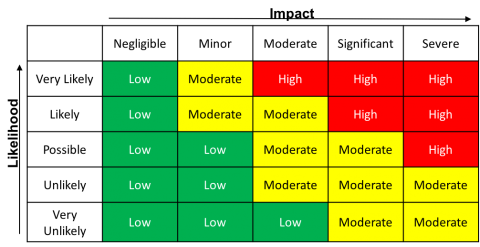
Should I put £4,000 into my start-up?
- The real question should be: what's the probability of it failing, and what's the impact it could have on my life?
Should I invest in the S&P 500?
- The real question should be: what's the probability of it going down, and what's the impact if I lose the money I put in?
Understanding the risks in your decision can help you fine-tune your answer.
- Maybe instead of putting £4,000, you put £2,000. The probability won't change, but the impact on your life will if it fails.
Maybe instead of investing into company X blindly, you do some research.
- The probability will change because you have more information, but if you don't change the amount invested the impact won't.
I'll stop rambling on, but you can see the point I'm making. Understanding risk helps you make better decisions.
I don't invest money into something I don't understand. Why? Because I want to decrease the probability of me losing money on my investment. This is simple risk-matics.
If the decision is important, and you haven't calculated the risk, it's clearly not that important, because you are willing to go with your gut and nothing else. That's not being brave, that's called being stupid.
That doesn't mean all risky decisions are bad. It just means you should give it some thought before betting on something that could cripple your life.
TLDR: Risk is the chance something bad could happen. Before making any decision, find all the risks, and calculate the risk using a simple formula: probability multiplied by impact.
Negativity Bias
A secret to being happier - removing negative things from your life, not just adding positive ones.
Science tells us that we are more likely to be pessimists than optimists. Introducing the Negativity Bias.
Negativity Bias is a cognitive bias we have where negative events are weighted at a higher regard than positive or neutral ones.
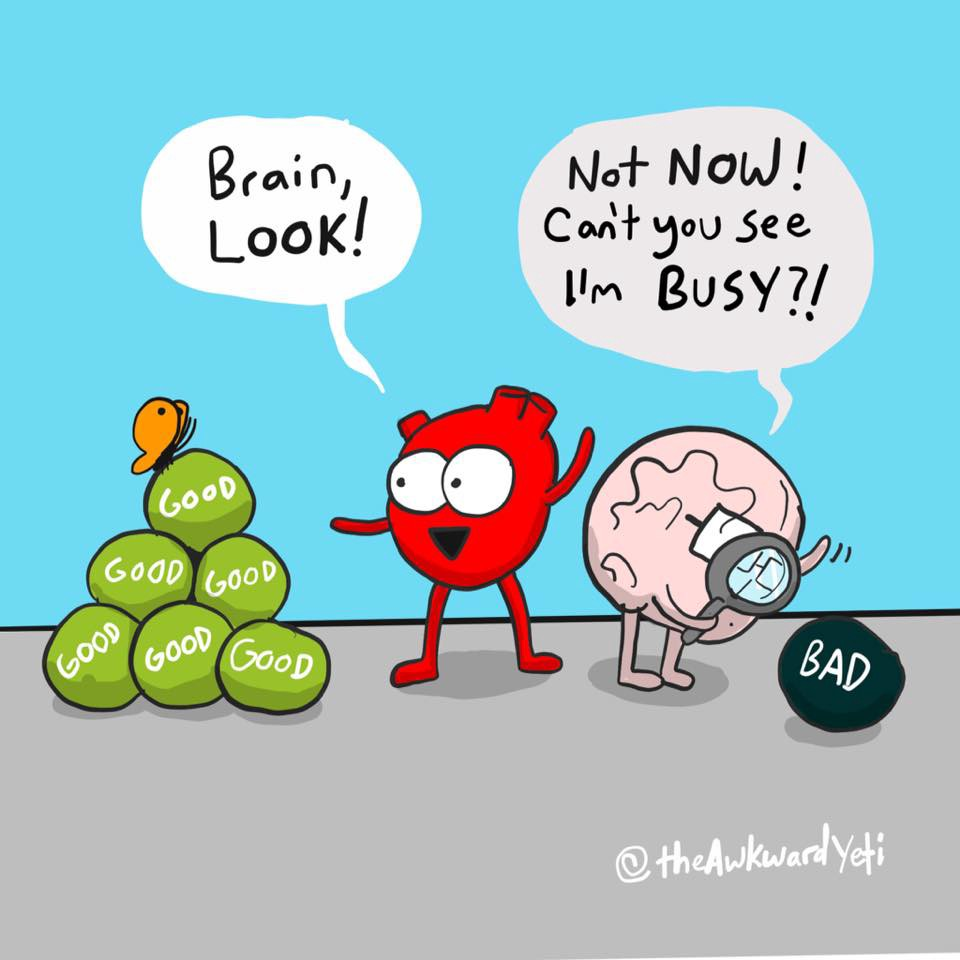
I don't know about you, but every time I think "What If..." It's not a positive event. It's "What if I woke up late and missed my train". Or "What if I left my phone in the office". Or "What if an invisible car hits me when I'm crossing the road".
Our brain is wired this was because we have the natural instinct of loss aversion. Essentially, if we fail or succeed by the same proportion, the failure would be more impactful to us. Therefore, we are wired to think of the bad things that could happen, and put more credibility on it, so we minimise the likelihood of negative events.
We can extrapolate this into a lesson of happiness.
I must say, negativity bias isn't a bad thing, it's a large reason as to why we are still around as a human race. Otherwise, we would be killed by our own stupidity. However, I would say that it being our default reaction has long outgrown it's purpose.
However, negativity bias is very helpful at identifying what is making us so unhappy. The negative things in our life. Maybe it's your job, maybe it's your relationship, maybe it's your friends. Maybe it's time to let some of these go.
TLDR: Negative events affect us more than positive and neutral events even if their impact is the same. The secret to becoming happier isn't by adding more things you like to do, but removing the things you don't like to do.
Dark Triad
The people you should avoid at all cost.
Let's get this straight. None of us are perfect, we all fall short of what we consider good, some more than others.
Despite this, we also don't want to hang around the wrong types of people and rely on them as friends.
Your friend group is too important to just let anyone in. The Dark Triad helps us identify some traits that we should avoid. These are three traits that someone can display that when combined together turn into a toxic cocktail, making them more likely to commit crimes, cause social distress, and create severe problems for a businesses.
These Traits are:
- Narcissism – Someone who's pride and ego is beyond normal. They think very highly of themselves.
- Machiavellianism – Someone who's manipulative, lacks empathy and is self-interested.
- Psychopathy – Someone who's anti-social, reckless in behaviour, selfish and unremorseful.
This is the combination of traits you don't want in a friend.
That's the advice you get told when you're on an airplane. It might sound judgemental to exclude these types of people from your friend group, but you must ensure your sanity before you can act compassionately.
Like I said before, friends are one of the most important relationships anyone can have, that is why it's seriously important to choose the right ones. Be picky, be selfish, put your oxygen mask first.
TLDR: If someone displays a combination of ego, manipulative tendencies, and a lack of empathy, run away from them. This combination of traits make them more likely to commit crime, be a social nuisance and cause problems to your business.
The Spotlight Effect
Caring about what others think about you is what's holding you back from your true potential.
Scared about asking a question? Because you think people will make fun of you for being dumb? Aren't you even dumber for knowing you don't know something and sitting quietly, not asking the question?
"He who asks a question is a fool for five minutes, but he who does not ask is a fool for life" – Chinese Proverb
We sometimes manage to boil a small issue into a massive one, especially if it puts us in the spotlight. For whatever reason, we have a tendency to believe we are being noticed more than we actually are. The way we dress, the way we speak, the way you look, we think it to be so important, that someone will pause what they are doing to judge you. You aren't that important mate. This is the spotlight effect in action.
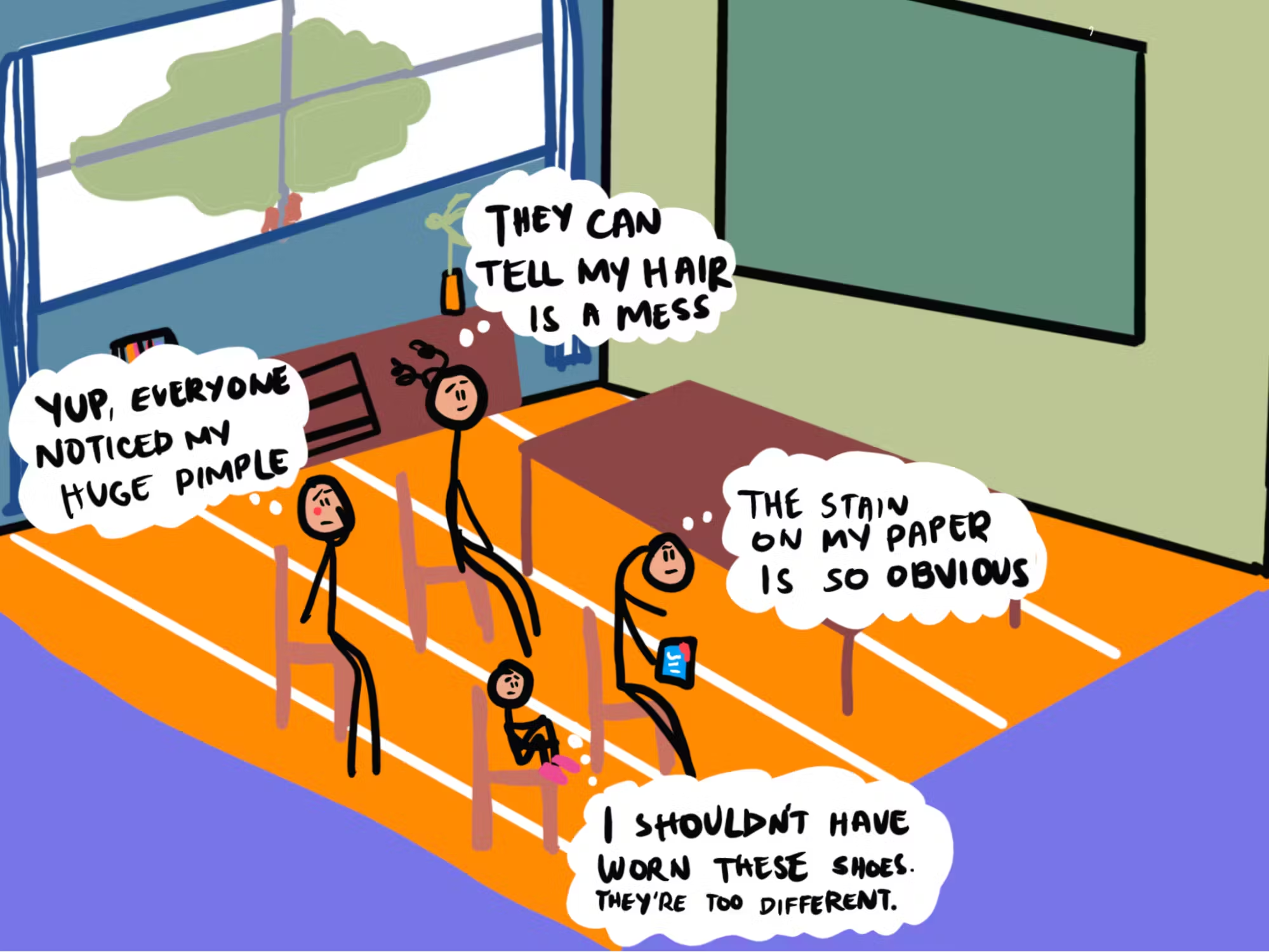
"You are not the star of everyone else's story—you're simply a supporting character in theirs."
Don’t worry about what others think about what you are doing. You are not the main character to their lives, nor are you the main character. You may think that’s the case, because all you have access to is your own thoughts, but no-one has the time to spend their entire lives watching what you are doing.
Sure some people may comment here and there about what you are doing, but it’s rarely relevant, and never long lasting.
Forgot what other people might think about you, and get on with your life. Don't let others stop you from adding value to this world. You only get one chance to live it, make sure you live it unapologetically, and passionately. Passion is what drives innovation.
TLDR: Screw what other people think. Don't be scared to be you, no-one else will care either. The only thing stopping you from living a life of mental freedom is yourself, not other peoples opinions.
Ego Depletion
Willpower is like a battery - it drains the more you use it.
It's the new year, and I'm going to make an easy guess that a majority of the population has set themselves a lot of ambitious goals to achieve by the end of the year. Some may set 3, some may set 10, some may set 20 or more.
The problem however, isn't setting goals, but setting too many. I've fallen victim to this, and the more goals I set the more likely I am fail at achieving them. Ego Depletion explains this.
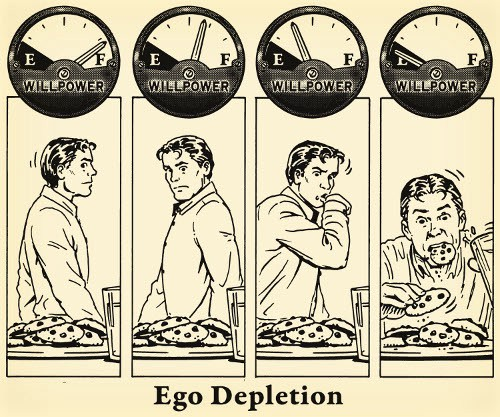
In fact, research supports this concept.
- Going shopping hungry? You're more likely to buy things you shouldn't.
- Just finished a tough workout? You're more likely to get a snack.
- Had a tough day at work? You're more likely to let the anger out on your family.
In all of the above examples, your willpower has been spent, and the willpower to act appropriately has disappeared.
This is still a topic under discussion, but evidence does support it. How it works is less clear, and findings suggest that willpower may work more like a muscle than a battery, something that can be built up over time, and exhausted when used too much.
The ability to do the things you don't want to do, discipline, is such an important trait everyone should develop. No matter how you frame it, discipline can solve nearly every issue you have. But willpower is limited.
Prioritising your goals is the most important thing you can do. That's why eating the frog makes sense. Getting the things you don't want to do out of the way when your willpower is highest is supported by ego depletion.
Stop spreading your resources thin and instead focus on a few important goals.
TLDR: Willpower is like a muscle. It can be trained, but it can also become exhausted. You can't solve all your problems at once. Use your willpower sparingly, focus on the most important goals, and achieve them.
The Benefits of Coffee, Not Caffeine
Coffee decreases the chance of chronic disease, protects your brain, and decreases the chance of cancer. Not from the caffeine, but from the antioxidants inside it.
Coffee is the 3rd most consumed drink worldwide. Coming just behind tea, and water. Many of us drink it because of the stimulating effect it has on us, thanks to caffeine, but many of us also don't know that it comes with much better health benefits.
Coffee is very rich in antioxidants and polyphenols, which means that it provides a numerous amount of health benefits, similar to green tea. These include:
- Reduced Risk of Type 2 Diabetes
- Liver Protection - Potentially reducing the risk of liver cancer and cirrhosis.
- Brain Health - Lower risk of cognitive decline and neurodegenerative diseases like Alzheimer's or Parkinson's.
- And plenty more benefits to list out, but you can find most of them in the links above.
However, what's important to highlight is that these benefits don't come from the caffeine in the coffee, it comes from the polyphenols. In-fact caffeine could potentially lead you to an early death if you are consistently drinking coffee too close to bed time.
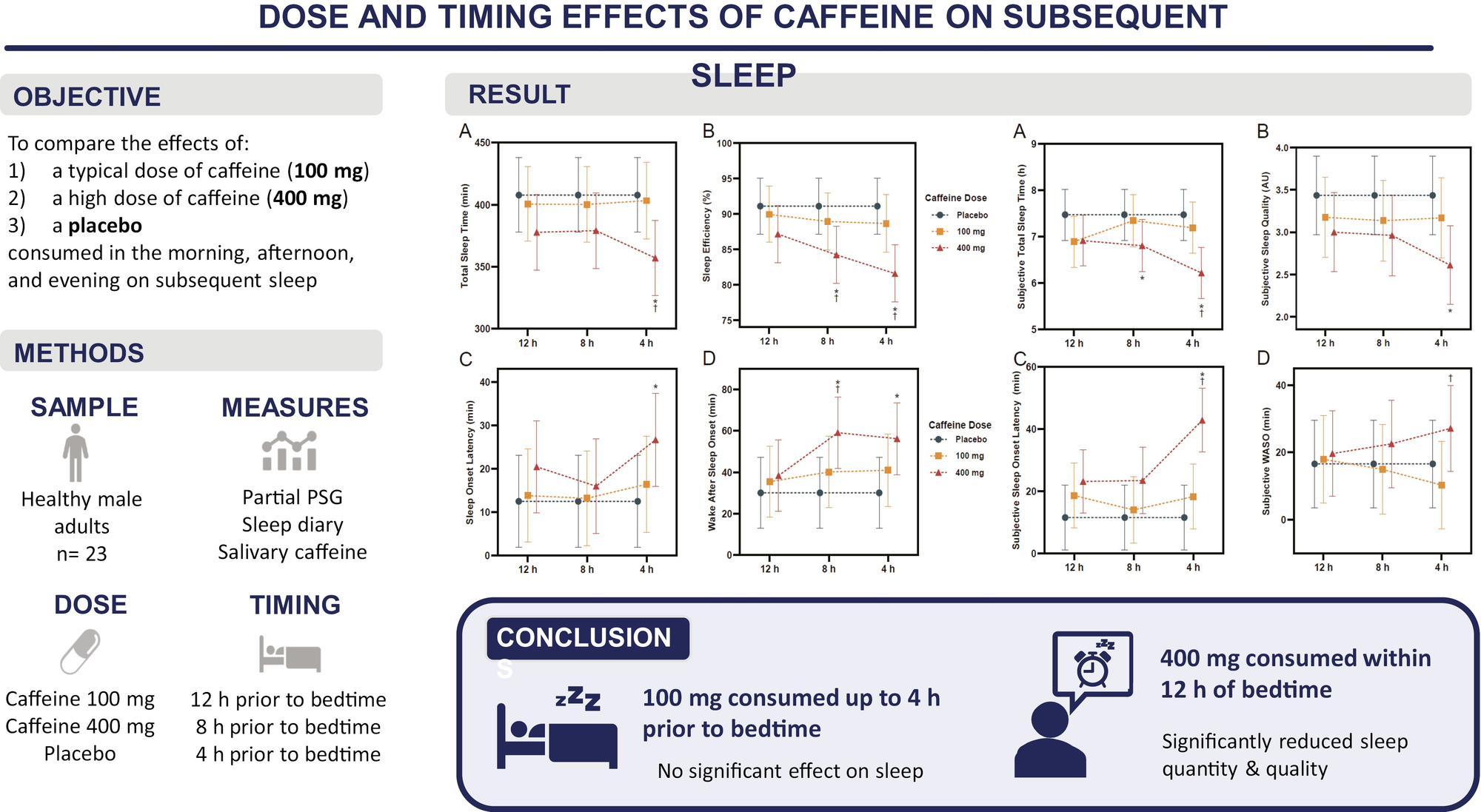
Sleep expert Matthew Walker highlights this important distinction. He's a fan of coffee, but not caffeine. After all the reading I've done on sleep, I understand why. Hindering your sleep can lead you to an early grave, increase the chance of developing chronic illnesses, ruin mental health, and increases the chance of developing Dementia.
I used to be a massive caffeine drinker, then I read Why We Sleep by Matthew Walker and immediately removed majority of the caffeine from my diet. Caffeine just keeps you stuck in a loop.
Bad sleep -> Drink coffee -> More bad sleep -> Drink more coffee.
By focusing on fixing my sleep, I've removed the need of caffeine. However, I still drink decaf coffee because of it's many health benefits.
TLDR: Coffee is good, caffeine not so much. Fix your sleep to remove your reliance on caffeine. Drink some decaf coffee to get many of it's health benefits.
Learning Life's Lessons
Learning Life's Lessons is a framework I've built and personally apply in my everyday life. The goal is to create simple steps that anyone can follow from the challenges you've faced in your life.
The idea is, when you next face a challenging task ahead of you that you've already faced before, you can follow the steps you set out, and complete it with a lower amount of effort and stress.
The inspiration for this framework came from a popular finance book Rich Dad Poor Dad, and in the book Robert T. Kiyosaki says that life will throw many lessons at you. These are life's lessons. Some people ignore them and don't learn anything from these lessons, and others notice them, and learn how they should react to this lesson.
The framework has four simple steps to fill out:
| Challenge | What is the lesson life is trying to teach you? |
| Origin | Where did this lesson come from? |
| Strategy | What are the steps you can take the next time this happens. |
| Learned Lesson | What is the lesson you’ve learned. |
For example:
- Challenge - Miscommunication when working on a task leads to frustration.
- Origin - My team member and I consistently disappoint each other because of the work we do. It doesn't meet each others expectation. This is caused because of miscommunicated expectations.
- Strategy -
- Firstly, track all the instances where this has occurred. Attempt to find common patterns.
- Use these patterns to try and come up with a new process. There’s a reason why miscommunication is happening. It’s not because of malice, but it’s because the previous process or lack of it was causing it.
- Suggest the process and explain your reasoning, welcome input.
- Learned Lesson - Sometimes miscommunication will happen. But it happening constantly helps no-one. Attempt to find a good way to minimise this so that both parties are happy. Remember this, blame the process, not the person.
This framework is the simplest way of avoiding the same mistake twice.
Don't let the same mistake take you out again. What's the point of going through that challenge, just so that when it next happens you react the same way. Doing the same thing expecting change is called insanity.
TLDR: Stop avoiding the lesson life is trying to teach you. Learn that lesson in four simple steps. What is the challenge? What is the origin of this challenge? How will you handle a similar challenge? What lesson did life teach you?
Quotes of the Week
- "For the best return on your money, pour your purse into your head."
– Benjamin Franklin - "He who asks a question is a fool for five minutes, but he who does not ask is a fool for life" – Chinese Proverb
- "You are not the star of everyone else's story—you're simply a supporting character in theirs." – Unknown
- "I have noticed that doing the sensible thing is only a good idea when the decision is quite small. For the life-changing things, you must risk it." – Jeanette Winterson
- "Someone will start with more money than you. Someone will get into a better school. Someone will inherit connections you need to build from scratch. Someone will get picked before you. In other words, you’ll have no problem finding people with a head start. That’s not the point. The point is: when you get your opportunity, you make the most of it." – James Clear