7 Days 7 Lessons #6 - Sleep Edition

- Lesson 1: Lack of sleep: The Negatives
- Lesson 2: How does sleep work?
- Lesson 3: The Stages of Sleep
- Lesson 4: Alcohol, Caffeine, and Melatonin
- Lesson 5: Uncovering the "Paying sleep debt later" Myth
- Lesson 6: The Four Pillars of Sleep
- Lesson 7: Practical Sleeping Advice
Sleep is underrated. Sleep is the unwanted by-product of evolution. People hate sleep, and wish they could live without it. However, there's a reason evolution has kept sleep in humans, and every other animal in the world. However, it isn't spoken about enough.
With doctors only spending 3 hours learning about sleep, and the rising epidemic of sleep loss, no wonder countries are losing fortunes and people are suffering from mental destruction now more than ever. Sleep is a third of your life, it doesn't matter how you try and play it. You shorten the amount of hours you sleep, you decrease your life expectancy.
We know all of this, yet we don't know enough about sleep. We don't get taught anything about sleep, and frankly we don't get told enough about the downsides of sleep deprivation.
In this 7D7L dedicated to sleep, I cover some of the most important topics I've learned about sleep. I recently became fascinated by it last year when reading a book called Why We Sleep by Matthew Walker, a leading neuroscientist on sleep. My goal is that you, the reader, can also be fascinated by sleep, and encourage you to think more about it in your every day life.
Welcome to 7D7L #6 - Sleep Edition!
Lack of sleep: The Negatives
Not sleeping enough is stopping you from being the best you.
I think oftentimes the downsides of not getting enough sleep is downplayed. We complain that we feel dead, our brains aren’t as sharp and that’s all true, especially the feeling dead part…
Lack of sleep is oftentimes seen as success. I haven’t been able to get enough sleep because:
- Working on my side hustle
- Partying with my friends
- Playing my favourite video game
But the only decision your making the day you decide not to get enough sleep is “I’m happy to risk my health on this one day”.
Let me start with one shocking figure. Sleep costs most countries 2% of their GDP. It doesn’t end there, it impacts businesses, education, and your health.
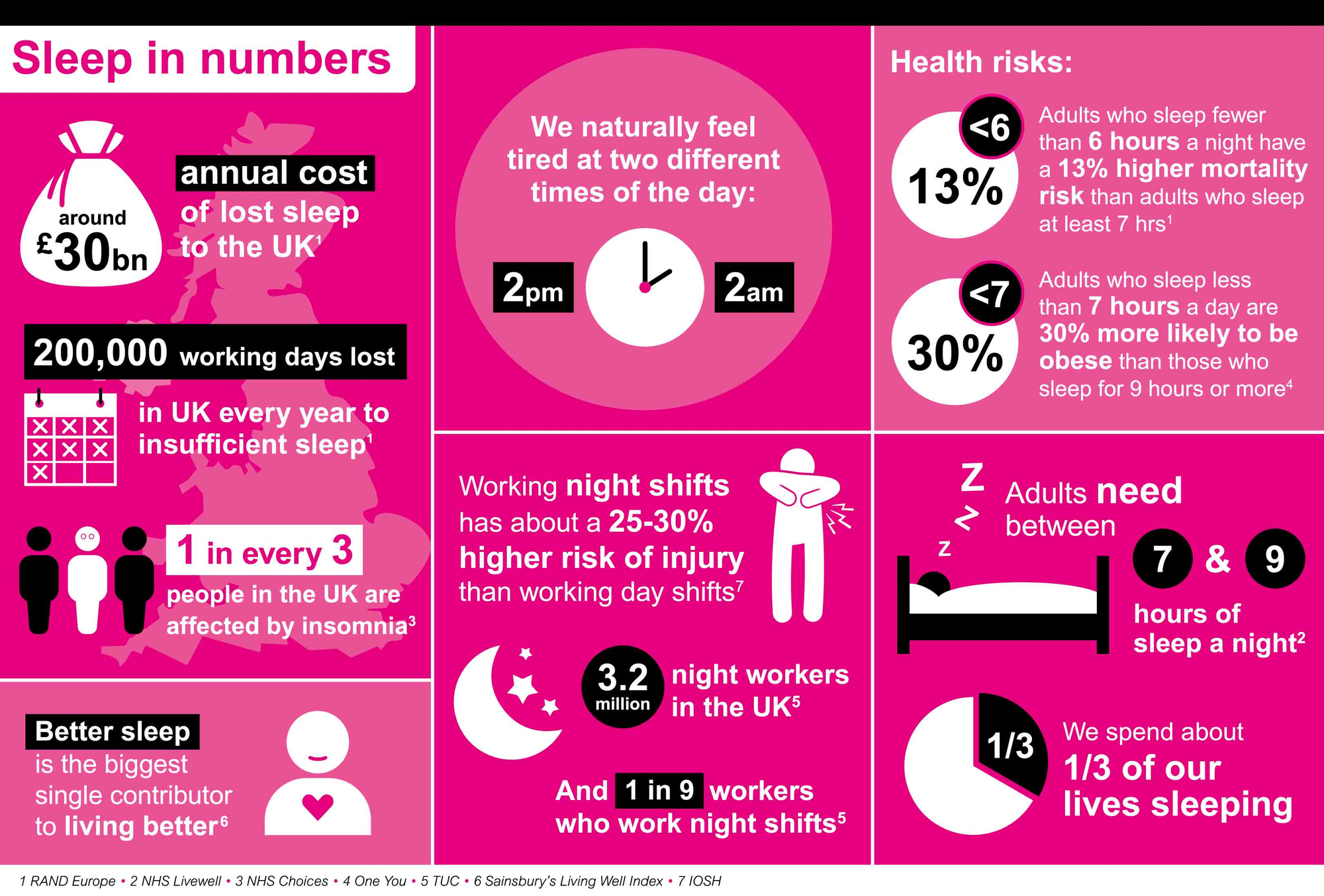
Let’s start with the impact it has on a business:
- A study across 4 big US businesses found that it cost $2,000 in lost productivity per employee. This number grew to $3,500 for the most sleep deprived employees.
- Businesses set KPIs of intelligence, creativity, honesty, productivity, etc. All of which are destroyed by lack of sleep.
- Having a lack of sleep leads you to being more likely to choose less challenging problems.
- Sleep deprived employees don’t notice worsened performance, meaning they won’t change on their own and will continue to be a hole in your water barrel.
- Leaders who don’t get enough sleep are less motivating studies show.
- Social loafing increases in team-based tasks.
Now education:
- Our education is forcing children to lose their last few hours of sleep, critical for REM sleep, giving them symptoms that resemble those of anxiety and depression. This is because the circadian rhythms shift a few hours later and we force them to wake up early for school.
- Children who sleep longer get higher grades.
- Children who sleep longer are more likely to developed higher IQ.
- Delaying school start times increases attendance rates, decreases behavioural issues and decreases substance abuse
- Children are being misdiagnosed with ADHD when in fact they have sleep deficiency (overlap a lot). Medication given to ADHD individuals makes people more awake, the last thing a kid with sleep deficiency needs.
- Lack of Sleep also destroys your ability to retain information for long periods of time, and if you don’t sleep on a day of learning, you’re more likely to completely forget that days learning.
Lastly healthcare:
- Sleeping too little can impair your attention, memory, learning and decision-making. It increases the chance of getting anxiety, depression, and cognitive decline over time.
- Chronic sleep loss increases the risk of high blood pressure, heart disease, stroke obesity, and type-2 diabetes.
- Your immune system is weakened by a lack of sleep, making you more likely to fall ill and increases the time it takes to recover. It even decreases the chance a vaccine is effective.
- Short and irregular sleep is linked to increased risk of cancer, neurodegenerative diseases like Dementia and all-cause mortality.
- Take two people, both who lost 5kg, but one didn't sleep enough hours and the other did. The person who slept less will lose mostly muscle vs. the person who slept enough who lost mostly fat.
If you haven’t realised it yet, lack of sleep is terrible for you, no matter who you are, and is something everyone should prioritise.
There’s a reason why we need to spend a third of our lives asleep. It’s so the two thirds we are awake, we are at our peak, maximising our awake time.
Think about yourself, your kids, your future. Think about how much better it would be if you/they maximised 1/3 of your/their life. Arguably it’s the easiest 1/3 of your life to get right, and the benefits are incredible.
TLDR: Lack of sleep is an epidemic costing countries 2% of their GDP, destroying your health, your business and your children.
How does sleep work?
Before you can optimise 1/3 of your life, you need to understand how it works.
Although we spend 1/3 of our lives sleeping, most people don't understand how it works. And if you don't know how something works, how do you expect to optimise it?
So let me explain how it works briefly.
Two things drive our want to sleep. A chemical called Adenosine and our circadian rhythm. Adenosine is a chemical that builds up the more you are awake, which binds onto receptors in our brain and makes us feel sleepy. This is sleep pressure. The circadian rhythm is an internal clock that encourages our body to sleep at regular intervals. This is measured by our internal temperature and is called the wake drive.
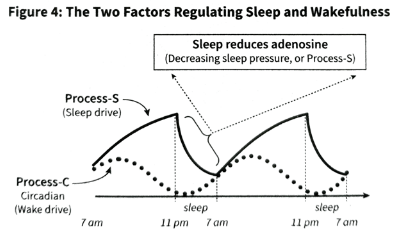
As you can see from the above graph, our sleep pressure builds up every second we stay awake. However, once we sleep, the sleep pressure begins to drop significantly. We can also see our circadian rhythm going up and down. This is our internal body temperature going up and down, based on the internal clock in our brain called the hypothalamus. Imagine it as a stopwatch that when light is sensed, starts a timer that lasts around 15 hours by which at the end of the timer, you are ready for sleep because your body temperature has decreased and melatonin has signalled your body to sleep.
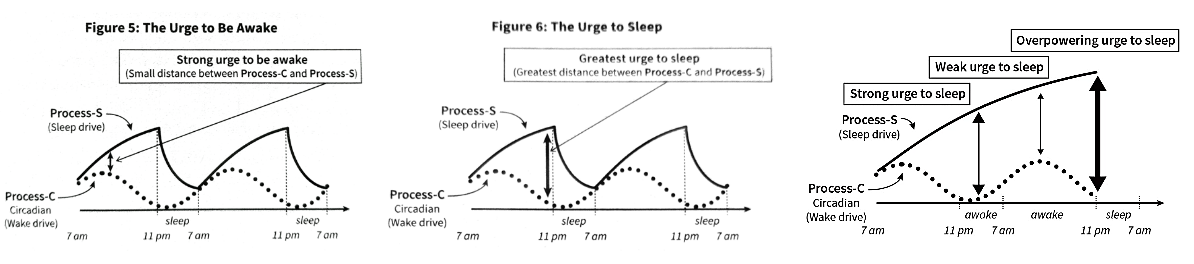
One last thing to mention. As shown in one of the above graphs, adenosine continues to build up if you don't sleep. This is like an outstanding loan continuing to rack up debt. It's bad news. You're borderline mentally unstable after one day without sleeping, and that's simply because of the adenosine build up. Nothing can remove that debt apart from sleep.
More information on how sleep works can be found here.
You may think: "wow, I've just wasted 3 minutes reading how sleep works, not sure how that's going to change my life". But I promise you, knowledge is what gives you power. Like I said before, you can't optimise something if you don't know it. You can't master something without understanding it.
TLDR: Sleep is driven by two factors, sleep pressure (which builds up the more you're awake) and wake drive (which goes up and down based on the time of day).
The Stages of Sleep
Dream sleep, what is it and when does it happen?
Sleep is broken up into many different stages as shown in the below graph. It might take you a while to understand what the graph is showing, it definitely took me a while, but it's probably the best way of showing how sleep works.
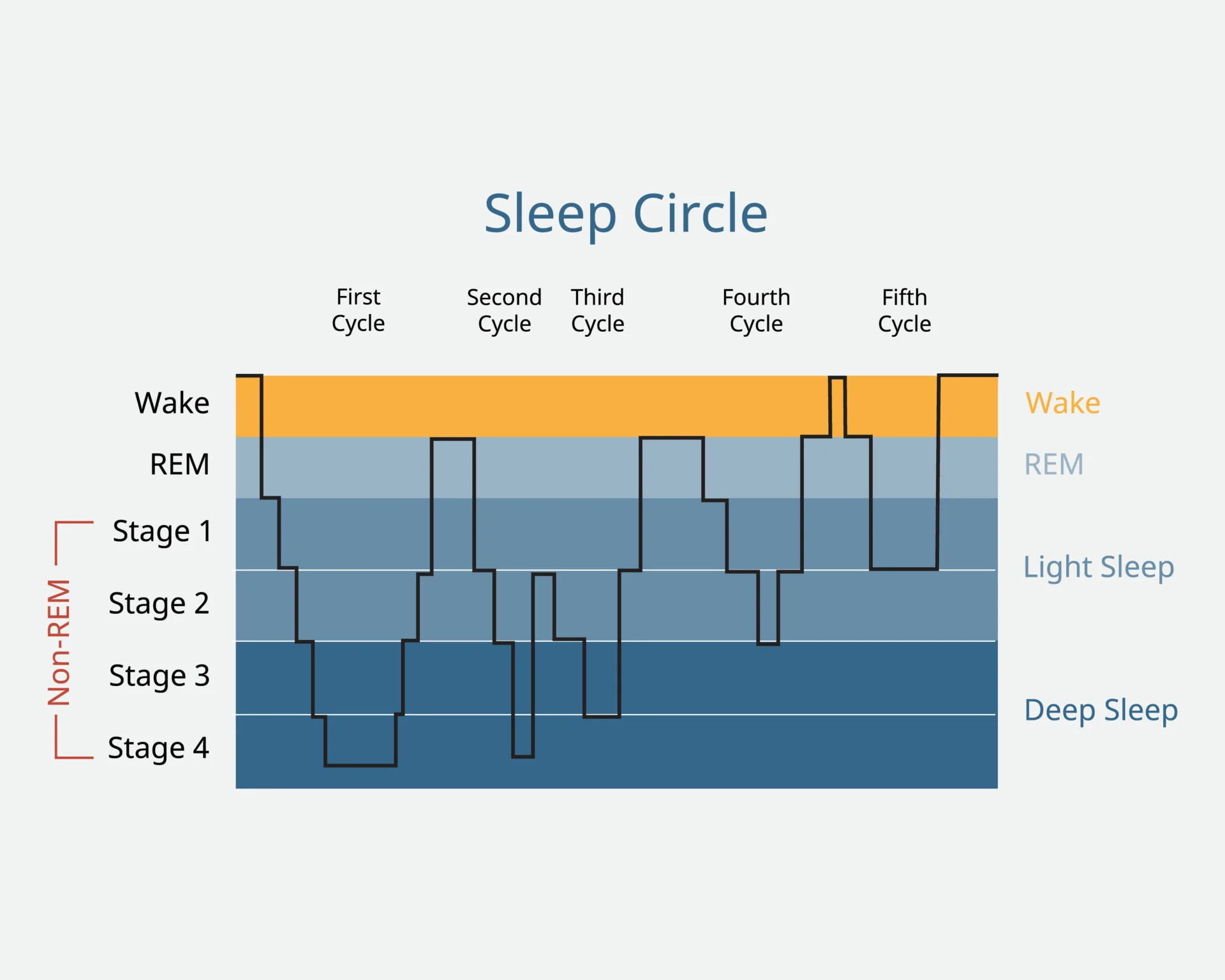
As you can see, sleep is broken up into 5 stages, and still broken up into more categories like Non-REM and REM or Light and Deep Sleep. Let me break each stage down and tell you what it looks like and what it does for you.
Stage 1 is your light non-REM sleep, you can think of it as the transitional state where you are going from wake to sleep. Your heart rate and breathing rate slow down, your muscles decrease in tension, you body temperature drops and you eye movements slow down. Your body is preparing for sleep.
Stage 2 is the next stage of light sleep. Your eyes stop moving completely, your body temperature drops further, and your sleep cycle begins (more on this in another chapter). During both stage 1 and stage 2 your brain waves are quite similar to your brain waves when you're awake, small in size but high in frequency. But this changes in deep sleep.
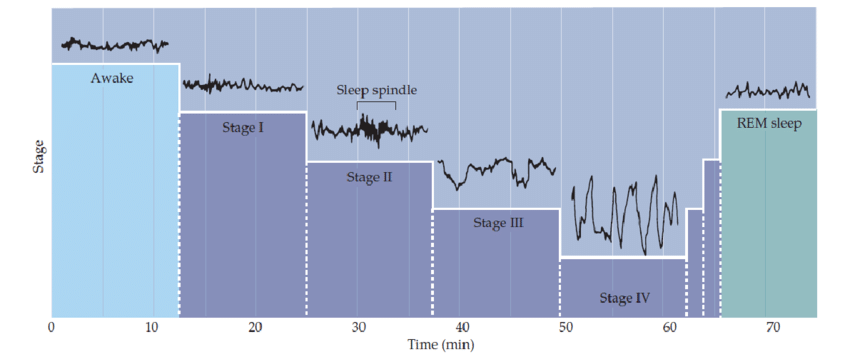
Stage 3 is the first stage of deep sleep, and is where a lot of the restorative benefits from sleep come from. The brain waves become very strong but lower in frequency.
Stage 4 is a much better version of stage 3, the brain waves become even stronger and lower in frequency. Again similar to stage 3, this is where the physical benefits from sleep comes from.
The above stages are considered non-rem sleep. Sleep where no dreaming is carried out. In fact, during these stages of sleep very little is being hallucinated in our mind. But the last stage of sleep I haven't mentioned is REM sleep AKA dream sleep.
REM sleep is interesting. The brainwaves resemble those of you being awake. Majority of your muscles become paralysed (atonia) so you don't do the actions you're dreaming of. Your heart rate increases, and so does your blood pressure. It's quite similar to you being awake. A lot of benefits come from REM sleep, specifically around mental well-being.
Two quick things before we end this chapter:
- Firstly, the sleep cycle. This is how long it takes to go through all the stages of sleep. This typically takes 90 minutes, however, it can range from 70-120 minutes across different people.
- Secondly, sleep is not distributed equally. The first half of the night is dominated by deep non-REM sleep (70-80%). The second half of the night is dominated by REM sleep (70-80%). That means losing the last 2 hours of your sleep could mean you sacrifice the majority of your REM sleep, impacting the mental benefits sleep brings you.
I know I've mentioned sleep benefits during the different stages. I don't want to dive into that just yet, there's an entire chapter on this, but I just wanted to introduce the concept of sleep stages and how the sleep cycle works.
Again, knowledge is what allows you to optimise something. This will be important if you want to truly change your sleeping habits.
Your physical health benefits come from the first part of the night during your non-REM sleep. But the mental benefits come during the second part of your night.
Working in an industry that requires constant problem solving and creativity, I've put my REM sleep on my top list of priorities. I want to make sure I am maximising my ability to problem solve, and be mentally fit and therefore I sleep around 9 hours a day. This might be something to consider if you value your intelligence and creativity.
TLDR: Your body goes through a sleep cycle every 90 minutes on average. During this time you go through 5 different stages of sleep each one causing you to go deeper and deeper to sleep, with the final stage causing you to dream.
Alcohol, Caffeine, and Melatonin
Three highly consumed items that lead to no change in sleep or harm your sleep.
Alright, the past two lessons might have felt a bit too theory heavy. Let me make up for it by giving you three practical tips regarding Alcohol, Caffeine and Melatonin and it's impact on sleep.
Let's start with Alcohol. In 2022 it was found that 78% of the UK have drank or still drink alcohol. That means the majority of you reading this have probably experienced the effects on sleep that alcohol has on you. You go to the pub, drink a few pints, and fall straight to sleep when you hit the bed. In fact, some people intentionally drink alcohol to get to bed quicker.
Unfortunately, alcohol does nothing but harm to your sleep. To be clear, it does not induce sleep, instead it's a sedative. These two things are completely different. One just knocks you out, one restores you. Not only does it not induce sleep, research shows it is incredibly detrimental to your REM sleep.
Next we have Caffeine. I've briefly touched on this on a previous post, so I'll just recap that. Remember that chemical mentioned before, adenosine? Well, adenosine attaches to adenosine receptors, this causes sleep pressure.
When you drink caffeine, instead of letting the adenosine attach to those receptors, it attaches itself to the receptors, making it essentially unusable until it is cleared out by your body. The caffeine temporarily prevents the attachments of adenosine and therefore temporarily blocks build up of sleep pressure.
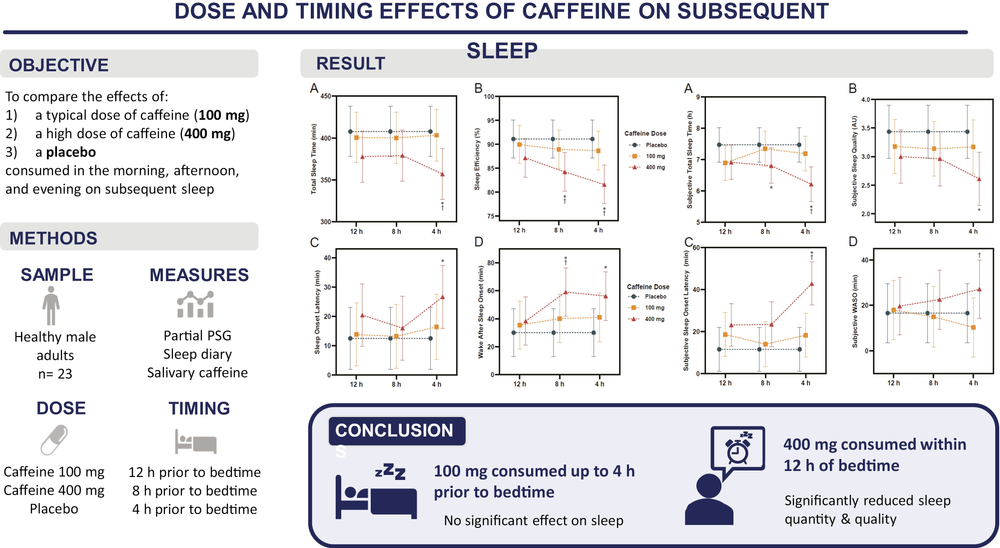
Furthermore, adenosine doesn't just disappear, it builds up and creates a massive backlog of this chemical which could make you tired for many days afterwards. Once caffeine is cleared, the adenosine rushes to the receptors and causes a caffeine crash. Specifically regarding sleep however caffeine has harmful impacts on your quality of sleep, quantity, and the onset of sleeping as show in the below graphic.
Lastly, Melatonin. I'll keep it short. Melatonin doesn't make you sleep, it tells your body it's time to sleep. Melatonin is the starting pistol of a track and field race, the rest of the body that induces sleep is the runner. In fact, research shows that melatonin has very little impact on initiating sleep.
There's no short cuts to having good sleep. No amount of liquid courage or tablets can improve your sleep, and caffeine does nothing but harm sleep if you drink it too close to bedtime.
Don't waste your money on melatonin pills, maybe swap out some caffeinated coffee for decaf, don't drink caffeine after 12PM, and reduce your alcohol intake. These are all good recommendations for improving your sleep.
TLDR: Alcohol makes your sleep worse, even if you get put to sleep quicker, caffeine is harmful for sleep, especially closer to the time you are going to sleep, and melatonin is generally not much better than a placebo.
Uncovering the "Paying sleep debt later" Myth
Evidence shows that trying to catch up on sleep is incredibly ineffective.
You might have heard plenty of times of someone saying "I'm gonna catch up on my sleep on the weekend, I simply haven't had enough time to sleep recently". Although a commonly made statement, evidence shows that catching up on sleep doesn't really work the way we think it works.
In fact, research shows that someone who catches up on sleep on the weekend vs. someone who doesn't isn't more likely to live a longer life. Meaning both pale in comparison to someone who sleeps the appropriate amount of time on a daily basis.
Although "catching up on sleep" is incredibly popular in our society, it simply doesn't work that well.
I don't even see the appeal of it. Spending 5 of your days incredibly exhausted, emotionally unstable and tired, just so that you can sleep-in two days? It just seems incredibly short-sighted.
Of course, some people can't help it, such as new parents, doctors, or insomniacs. But the fact of the matter is, if you aren't in one of these categories, do yourself a favour and just sleep 7 hours!
TLDR: Catching up on sleep is incredibly overexagerted and doesn't really hit the same spot that sleep does. Forget about catching up on sleep, and prioritise getting enough sleep daily.
The Four Pillars of Sleep
These four pillars will help you understand what makes sleep good.
What makes good sleep? After decades of research, and plenty of studies to prove it, Matthew Walker popularised the Four Pillars of Sleep. These are four factors that contribute to making your sleep good.
The Four Pillars of Sleep (QQRT):
- Quantity - This is how long you should sleep for. The medical consensus is 7-9 hours. But there is a difference between surviving (7 hours) and thriving (9 hours). The longer you sleep, the better you'll do health wise.
- Quality - Sleep Efficiency is one way to measure the quality of sleep. This can be calculated by doing: time spent sleeping/time spent in bed. 85% sleep efficiency is considered optimal. Furthermore, if you find yourself in a sleep laboratory, they may measure the spikes in your sleep. The bigger they are, the better it is for you. Quality seems to better at predicting mental health than quantity.
- Regularity - Going to bed at the same time everyday is critical. A recent study in the UK showed that:
- Those with most regular sleep patterns (±15 minute variation) had:
- 49% lower all-cause mortality risk
- 39% lower cancer mortality risk
- 57% lower cardiometabolic disease risk
- In fact, regularity beat quantity when it came to predicting mortality when both were analysed together.
- Those with most regular sleep patterns (±15 minute variation) had:
- Timing - The time you want to sleep is heavily linked to genetics. Sleep chronotype isn't a mystical thing like your star sign. It's science. Lining up your sleep to match your chronotype makes your sleep optimal. However, if you are an evening type (~30% of the population) unfortunately society isn't made for you and it will be hard to line up sleep for you. Find out your sleep chronotype here.
Getting good sleep can be hard nowadays, especially when there are so many distractions around us, I'm looking at you technology. However, if you just focus on getting the above things right, and using some of the tips I'll bring in the next lesson, you can smash your sleep goals, and optimise yourself for what the next day has in store for you!
TLDR: The secret to good sleep is quantity (how much you're sleeping), quality (lac of interruption when sleeping), regularity (are you going to bed the same time every day) and timing (what time does your body want to go to sleep).
Practical Sleeping Advice
12 Tips that are guaranteed to help improve your sleep.
Struggling to fall asleep at night? Maybe you're just trying to improve your quality of sleep, get to sleep quicker or stay asleep longer. This is the chapter that will tackle these issues with 12 easy to apply pieces of advice from leading sleep expert Matthew Walker. If you're interested in optimising your sleep, these tips will also apply to you.
12 Tips for Sleep:
- Regularity - As mentioned in the four pillars of sleep, regularity is one of the most important pillars. Not only is it a better predictor of death, it's also incredibly beneficial if you're trying to improve your sleep. Humans are creatures of habits, therefore, sleeping and waking at the same time regardless of the day is a great way to improve your sleep.
- Exercise - Not only physically and mentally beneficial, it also helps promote sleep due to physical exhaustion. However, do NOT do it too close to bed time, as this can mean your cortisol levels are high when you're trying to sleep, a recipe for disaster.
- Minimise or remove stimulants from your diet - Not everyone will stop drinking caffeine or consuming nicotine. However, if you can, limit it, and if possible, keep it to before 12PM, to at least give your body time to reset in time for bed.
- Avoid alcohol to close to bed time - Again, very hard to do this, otherwise you would be considered a day drinker, and no one wants to be labelled that. However, do try and avoid alcohol before sleep, it's incredibly disruptive to sleep, and robs you from your REM sleep.
- Stop drinking or eating before bed - Eating close to sleep can cause indigestion, and drinking too much water before bed can cause you to wake up to go to the toilet.
- Avoid medication that can disrupt sleep - PLEASE DON'T KILL YOURSELF IN THE PROCESS. If you can avoid taking medicine because it's not needed, then great. But if you need to take it, don't stop taking it. It would be incredibly stupid for you to try and maximise your sleep to have a better quality of life, just to die in the process.
- No napping after 3PM - Avoid taking naps after 3PM, and if you have insomnia, DON'T TAKE NAPS.
- Relax - Don't do anything stressful before bed. Read, watch a movie, listen to a podcast. Just chill!
- Hot Baths - Maybe not an everyday thing, but a hot bath or hot shower just before bed is a good way of lowering your body temperature which is needed to fall asleep.
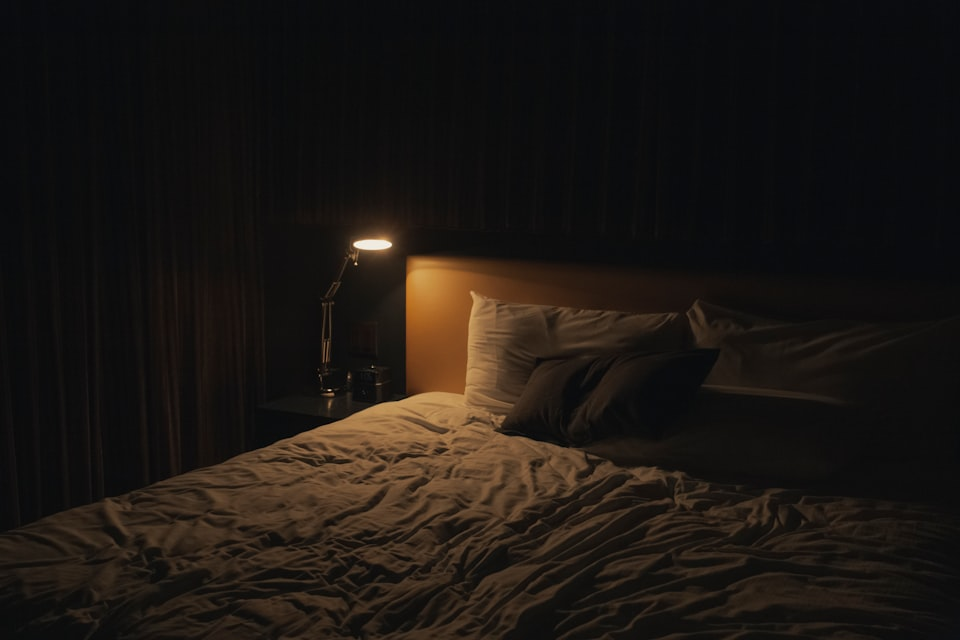
- Perfect Bedroom - Keep your bedroom dark, don't have lights keeping you awake, candles or dimed lights are a good way of doing this, and if possible keep the room cool.
- Sun Exposure - Get out of bed and straight into the sunlight. The sun starts the stop watch in our internal clock, which ensures we get sleepy 15 hours later.
- Get out of bed if you're not sleeping - Bed is for sleeping. Don't scroll on your phone, don't just lie there if you can't sleep. This will create a negative feedback loop that associates your bed with the wrong things.
Not all of these tips are practical every night. But some of these tips can be game changers for you, just give them a go. Try make some of these consistent, and agree to break some of them. You don't want perfect to be the enemy of good. The best sleeping routine is one that you will stick with.
Maybe you can't stop smoking, and you have to take medication that can disrupt your sleep, there's not much you can do about those tips, but you can still apply some of the others like making your room dark, or making sure you don't nap after 3PM. Either way, there's at least one thing that can help you from the above list.
TLDR: Sleeping can be made easier by making sure your body is in the right environment for sleep, it's at peace, it's cool, it doesn't have chemicals disrupting your sleep routine and it wants to sleep because it's exhausted.
Quotes Of The Week:
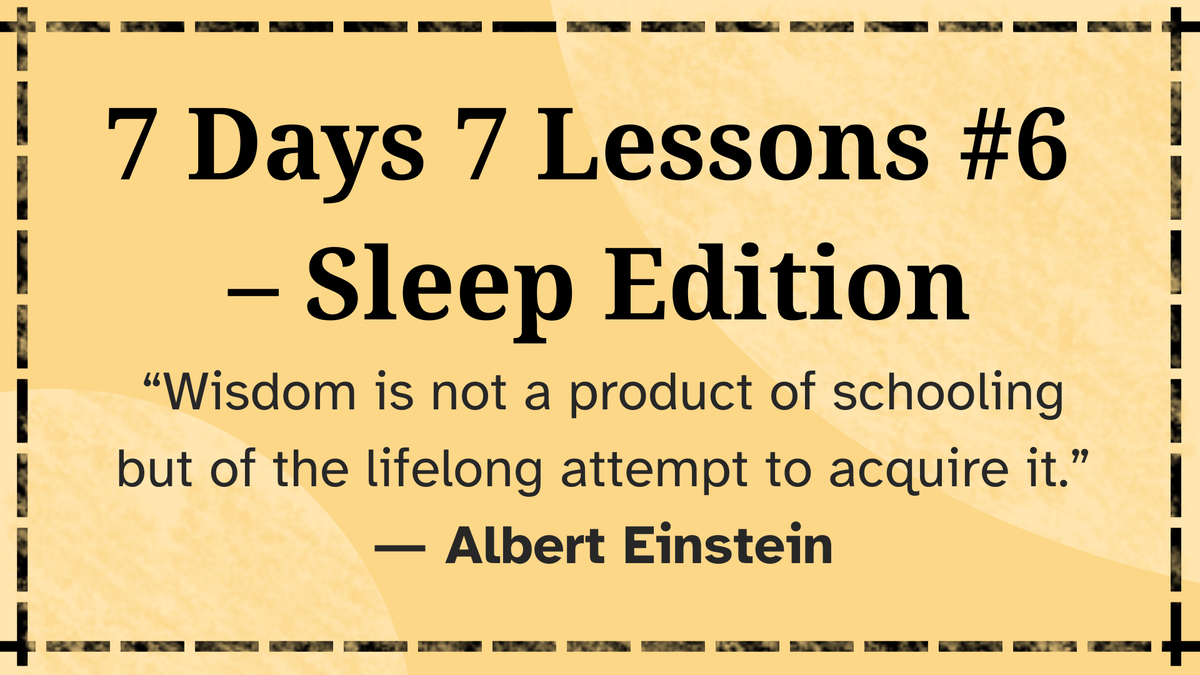
- "Wisdom is not a product of schooling but of the lifelong attempt to acquire it." ― Albert Einstein
- "There is more refreshment and stimulation in a nap, even of the briefest, than in all the alcohol ever distilled." - Edward Lucas
- "No day is so bad it can’t be fixed with a nap." - Carrie Snow
- "Man is a genius when he is dreaming." - Akira Kurosawa