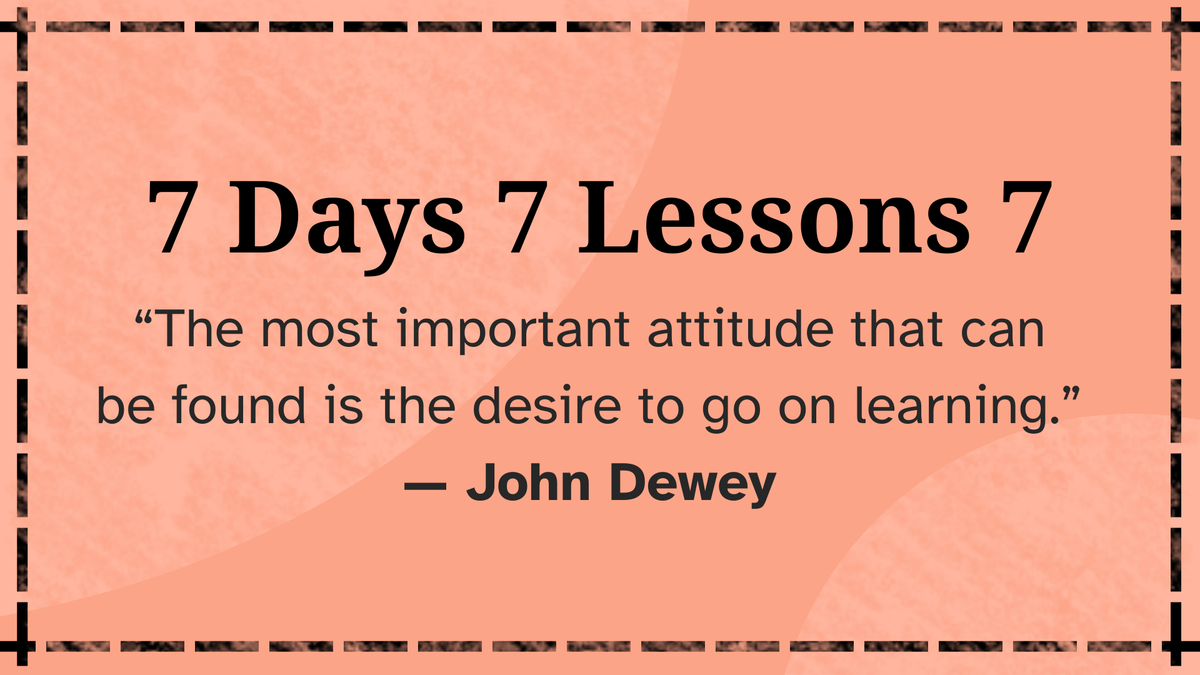
7 Days 7 Lessons #7

- Lesson 1: Reading: An underrated hobby (Hobbies)
- Lesson 2: Success is Relative (Perspective)
- Lesson 3: Purchasing your Freedom (Finance)
- Lesson 4: Curb Your Entitlement (Perspective)
- Lesson 5: The Benefits of Standing (Health)
- Lesson 6: What is Arbitrage? (Finance)
- Lesson 7: Margin Calls (Finance)
Just a reminder that you're more loved than you think! Let's dive into 7D7L Week 7!
Reading: An underrated hobby
Reading has proven benefits for your brain, regardless of what you're reading.
I think it's quite obvious to see that reading as a hobby has shot down in recent years. With new gadgets and apps to catch your attention, specifically crafted to keep you spending all your leisure time there, it makes sense that reading is hitting all-time lows.
If you look at the percentage of kids who enjoy reading from 2005 to 2025, it has dropped 36%. It is no surprise that as technology has become more available, reading has become more unpopular.
This pattern isn't just for kids. It's for adults too. In a YouGov piece of research. carried out in 2025, 40% of Britons hadn't read or listened to any books in the last year. To be clear, this number could be much worse, as the people who typically fill out these surveys are reader-heavy.
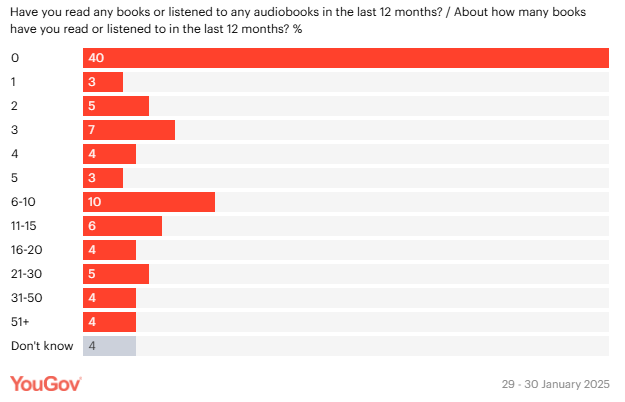
It's needless to say that this drop is an utter shame. People have replaced one form of pleasure (reading) with a much easier-to-achieve form of pleasure (scrolling through your phone, or watching videos, etc.). The world's pursuit of instant gratification has meant people are not gaining the benefits of reading.
Below is a short list of benefits that come from reading:
- Improvement in patience and self-control. I'm sure I'm like most people, where it can take some time to start loving a book. But once you've spent 40 mins reading, things start picking up, and you begin to enjoy it. The ability to wait until the excitement kicks in is a perfect example of building patience and improving your self-control. If you keep making the choice to read, you're actively choosing not to replace it with something easier, like scrolling.
- Improvement in Focus. Reading a book requires quite a lot of focus. You can't just mindlessly look through words, like you can with videos; you need to process them and build a bigger picture. This helps build focus. The more you spend reading, the longer you will read before needing to take a break.
- Improvement in creativity. Most hobbies have this benefit, but being able to read a piece of fiction and walk through the creative works of a talented author is bound to spur some creative thoughts for you.
- Helps battle against neurodegenerative diseases. Anything that challenges your brain is a good way of battling things like Alzheimer's or Dementia.
- Reading battles cognitive decline. Research shows that older adults who read daily delay their cognitive decline.
I'm only scratching the surface, and for more benefits, you can find them here.
I'm not telling you to give up gaming, running, or binge-watching TV. I would be a hypocrite if I told you "all I do is read and nothing else".
What I am saying is, find an interesting book, maybe it's a book on history, or self-help, or a fiction book like Harry Potter, and just read through it. Force yourself to get through it. Hopefully, by the end of it, you'll be glad you read the book; if not, at least you practised voluntary discomfort.
TLDR: Reading offers too many benefits for you to ignore it. Find something interesting, and read it. You might regret it, but your brain won't.
Success is Relative
Are you working towards your ambitions or someone else's?
What's your goal in life? What does success look like for you? For me, one of mine is to retire in my early 50's so I can spend the rest of my life working on something I'm truly passionate about. But yours might be to travel the world, or have a ton of kids, or become a millionaire, or start a business, or live in a different country, or become a doctor, etc. Needless to say, your definition of success is much different to mine.
However, something we always do is compare ourselves with other people. Maybe we look at our friends partying every day, maybe we see them driving really cool cars, maybe we see them travelling all across the world. Maybe it isn't just our friends, it's also the people we watch on TV. Maybe we just want to be like them.
But do you really? I mean, really think about it, and don't let Mimetic Theory kick in. What brings you joy? If you were partying all night, would that bring you joy? Or would it just make you tired, and because you really care about sleep, it would make you unhappy? If you were travelling every month around the world, would that make you happy? Or would that just hinder your goal of retiring early?
I think sometimes we get so caught up in what other people define as success that we sometimes forget to ask ourselves what our definition of success is, and how we achieve it.
Sit down today for 1 minute. Just ask yourself, "What will make me happy"? Is it really the car you're driving, the takeaway you're buying, the holidays you're travelling on? Or is it instead having freedom, being healthy, reading books, and staying at home in a cozy bed?
It really depends on the person, but I urge everyone reading this to really ask themselves this question. Don't go your entire life obtaining more metrics of success which are useful to others but not useful to you.
TLDR: We often compare ourselves to others to see how well we are doing. But you could be playing checkers while someone else is playing chess. Don't compare yourself to others and their successes; compare yourself to your past self and the person you want to be in the future.
Purchasing your Freedom
A choice people don't know they can make.
If I told you that I would pay you £50,000 a year to work on anything you want. Literally anything. That could be you watching every single episode of One Piece, The Simpsons, you name it. Would you take that offer?
I think most of us, if not all, would say yes. That's what I plan on doing in my early 50's. Don't get me wrong, I love what I do. I love working in cybersecurity, studying, taking tons of meetings, commuting (okay fine, not love but like), and getting to enjoy the office environment. I find it fun, it's what my younger self always wanted to do, and he's doing it now.
But I can't imagine myself doing it until I'm 67 years old and then retiring to enjoy the rest of my short life. A 30-year career for me sounds great, and then "retiring" in my early 50's sounds even better!
However, although this is probably something all of us want to do, I don't think many of us realise this is a decision we can make now. Of course, you won't reap the results until you're approaching your 50's, and you'll have to sacrifice in the present in order to have a better future, but it's still an option, and I want people to be aware of it.
I really try my best to minimise spending on things I could live without. That doesn't mean I don't splurge on fun things; I just splurge wisely. Most people drink at least two coffees a week (£5), eat takeout at least once a month (£20), go on holidays every year (£500), buy video games when they release (twice a year, at least £120), and it keeps going.
We spend on things very carelessly without thinking about the ramifications it can have on the future. I mean, that money you're spending could make a massive difference in how early you retire. Nonetheless, we make the decision impulsively.
Let's say we cut all of the above spending and replaced it with cheaper alternatives. Let's say we save 80% of the total cost (the total cost was £1,280). Then we wack the savings (£1,024) into an investment account tracking the S&P 500, and based on historical gains, in 30 years you would have £204,526.39.
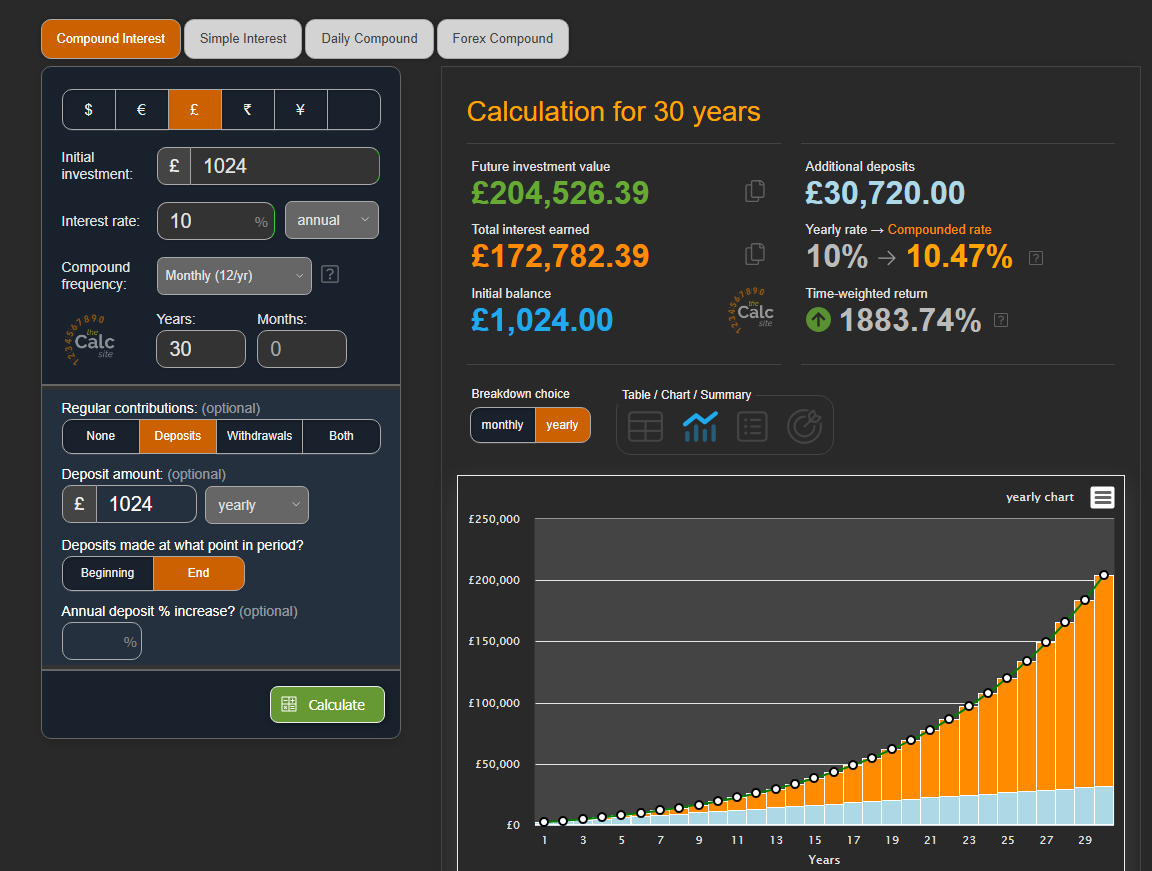
Now, sacrificing on all those things seems worth it; it's a good amount of cash to help towards retiring early. Of course, this might not get you retired completely, but that was only from some of the spending cuts in your life. Increasing your salary and decreasing what you spend can supercharge this even more. This isn't even including any possible savings you're making anyway.
This is the thing people don't realise. When you cut out your daily Starbucks and instead invest that money, you're choosing to buy your freedom earlier in life. And that's what I wanted to show you today, that you can choose if you want to. It's definitely not for everyone, but it was for me, and it's the best decision I've made in my life.
When looking at a long list of things you want to buy, I want you to add "buy freedom one day earlier" to the list. Maybe the expensive car you want to buy isn't worth it anymore, or maybe your daily Starbucks isn't your default answer.
People don't usually know they have the option to buy themselves their freedom earlier, and I just wanted to make them aware that it is there for them to buy.
TLDR: People say you can't buy time, but I would disagree. You can buy time by retiring early. Buying time looks like investing in and improving your personal finances. It might not become your default option when deciding what to buy, but I do hope it becomes an option.
Curb Your Entitlement
Your desire for more is your Achilles heel.
I think social media has made us forget how unfortunate people are in the world. We get so caught up with what celebrities are doing, we look up to them and want exactly what they want.
This not only impacts our desires, but it also makes us think we deserve more. Well, I'm here to ruin your parade, and I'm grateful that I decided to do this lesson because it just reminds me how lucky I am.
Do you live in the UK? Well, water coming out of your tap is clean drinking water, and you can go to pretty much any restaurant and ask for tap water for free. But guess what. 1/4 of the world's population doesn't have access to safe drinking water.
Angry with how you’re being treated at work? Angry with how the police handled a situation? Angry with what the government is doing? How about you complain about your first-world problems to people still living in internment camps? Don’t know what they are, well, most of them are very similar to the concentration camps the Nazis had in WW2. Why don’t you look at the list of active internment camps, and look at the millions of people stuck working in extremely poor conditions, who have lost their freedom for no reason?
Complaining about inflation? About how little you can afford? How much do you work and how little you get paid? Why don’t you complain to the 8.5% of people worldwide living in extreme poverty, or to the 44% of the world's population who are considered globally poor? I can almost guarantee you, if you’re reading this, you ain’t one of them.
Why don’t you go complain to the people who have been forced into war, to fight for a cause they may or may not believe in? Go complain to the millions of people narrowly dodging bullets and barely surviving every day, for the freedom that we take for granted.
Even your ability to complain is a privilege, as many countries don’t allow you to speak freely. Look at Russia, where if you speak against the Kremlin, you seem to disappear or die coincidentally a few days later. Look at North Koreans, who aren’t allowed to complain about their living conditions because if they do, they will be thrown into an internment camp. Look at Iranians, who are trying to abolish the dictatorship they are living in and being killed in the process of protesting. Look at the disasters of what has happened to Venezuela after a once incredibly wealthy country per capita was destroyed by a communist dictatorship that silenced any adversary.
Stop complaining about every single small thing. Stop thinking the world owes you more. Believe me, you don’t want what the world is giving.
I must say the tone I’ve written this in has been different to what I usually write in, but I’m incredibly passionate about this. I come from a family that didn’t have much, yet we had more than so many people. I’m grateful for the small things in life I have, and I know how privileged I am to have these things.
Yet many people don’t know how lucky they are because they’ve been brought up in a bubble, where the worst thing that could happen is an argument.
Look at the world around you. If you still think you deserve more than what you have, you're wrong.
TLDR: You’re privileged; if you don’t think you are, you’re ignorant. People are dying from things we take for granted, yet some people still think they deserve more.
The Benefits of Standing
Standing - a privilege we take for granted.
Our Apple Watches tell us to stand, our parents tell us to stop sitting around all day, and our teachers tell us to stand up straight. For whatever reason, we've been told to value standing.
Recently, I've moved into a new office, and I was incredibly happy to see that every desk was a sit/stand desk. I've also wanted to buy one, but I've always pushed it back because of other priorities.
Anyways, we moved into this new office, and I immediately started to use the standing up desk, and I thought to myself, why is standing so important to us? I felt energetic when working whilst standing up, despite having some chronic back pain, but I also wondered what other benefits standing brought me.
Here's what I could find:
- We burn more calories - When we sit, we naturally burn around 60-85 calories; however, when standing, this number jumps up to 70-95 calories. It might not seem like much, but it compounds quite quickly.
- Cognitive Improvement - Creativity seems to increase when we are standing, we feel a perceived energy boost, we have an improvement in mood and focus, and we feel less stressed and fatigued.
- Improvement in posture - Although posture doesn't seem important, it can prevent problems relating to your back, alleviate your bones and joints, improve your breathing, and help with incontinence.
- Improved health benefits - We decrease the likelihood of developing Type-2 Diabetes, lower the risk of heart disease, decrease wrist degradation, and improve blood circulation and therefore decrease the risk of blood clots.
Maybe you're not in a position to get your own standing up desk. I can empathise with you, but how about you make more of an effort to stand up throughout your day?
But if you can get one, honestly, it's worth it, and it's on my shopping list. I didn't think it would make that much of a difference, but when I tried it, it definitely did!
TLDR: Standing has many benefits. If you have the chance to, stand, improve your posture, your health and your mood with a very simple daily action.
What is Arbitrage?
A powerful technique that helps you allocate your money correctly.
Recently, I was calculating whether or not I should pay extra money towards my student loan. After many hours on the topic, I realised, as of right now, there are better places I can be allocating any extra cash I have, for example, towards my work-based pension, which allows me to sacrifice some of my salary right now, and essentially get it doubled for when I retire. This is by far the best return on my investment I can get as of right now, and it is also known as arbitrage.
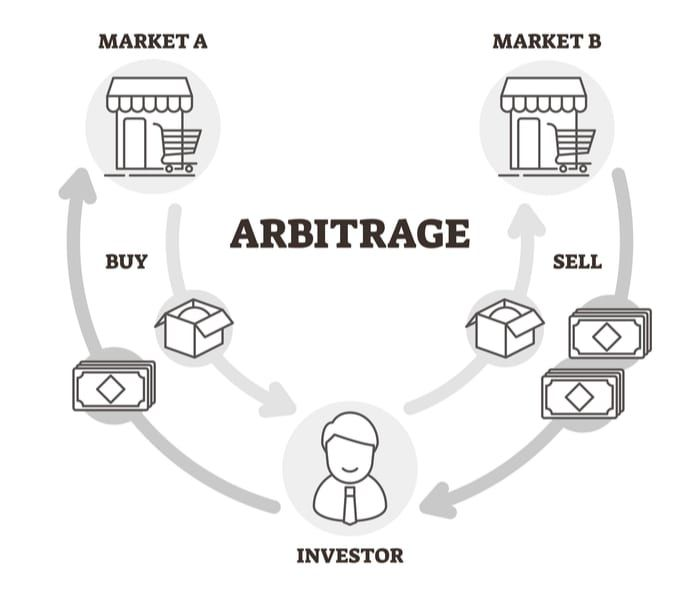
Arbitrage is "the practice of exploiting a price, value, or return difference between two or more equivalent or closely related options to earn a profit with little or no risk".
In this case, I'm exploiting the fact that putting money into my pension doubles my return, whereas putting money towards my student loan would get me nowhere near that return.
You have to visualise it compared to your networth. The result of putting money into my pension is greater than the result of paying off my student loan.
There are many other ways you can arbitrage, for example:
- Mortgage Arbitrage: If you have low interest rates for your mortgage, it could be a good idea just to put your money towards a safer asset with a higher interest rate, such as a high-yield bond. Maybe your mortgage payment is 3%, and the high-yield bond is 5%. Putting money into the bond would yield you an extra 2% increase in returns.
- Bank/Savings Arbitrage: You can move your money from one bank account to another if the account you're moving to has a better interest rate. For example, for me, my Cash ISA has a better interest rate than my Santander account, so I would rather max the Cash ISA before putting money into my Santander account.
- Credit Card Arbitrage: This is the process of borrowing money from your credit card at a low interest rate and putting it in a high-yield savings account. The interest being charged for the credit card could be lower than the interest rates for your savings account. I actually did this quite often with my student debit card. I would not pay back my overdraft until I was risking affecting my credit score, and just before it could hinder my credit score, I moved money from my savings to my overdraft, getting a decent chunk of profit in the process.
- Retail Arbitrage: If you can find a cheap item in a retailer, like a clearance store, you could then sell it on another platform, like Amazon, to turn a profit. I've done this a few times, but it is by far the most time-consuming option.
You previously could do arbitrage in the stock market and crypto market, but massive companies with millions in funding can do this better than a retail investor. Therefore, arbitrage is incredibly hard to do for newbies like us. That doesn't mean all the opportunities are gone; it just means that you need to look for new ones like the ones I've suggested above.
You might think the returns of doing the above don't sound great, but some of these require very little time and effort, and can return you a decent amount of passive income.
I've probably earned myself a few thousand pounds from doing Arbitrage over a few years, with very little time commitment, maybe at most 4 hours a month. Honestly, it's a very good return on your investment.
TLDR: Keep an eye out for small gaps in the market that you can take advantage of and make some profit from. Should you be paying back a loan or investing that money? That is something arbitrage will teach you.
Margin Calls
A common cause of massive stock price crashes.
If you're subscribed to a newsletter that keeps you up-to-date on what is happening in the economy, you've probably seen that silver has had a massive crash in the past two weeks.
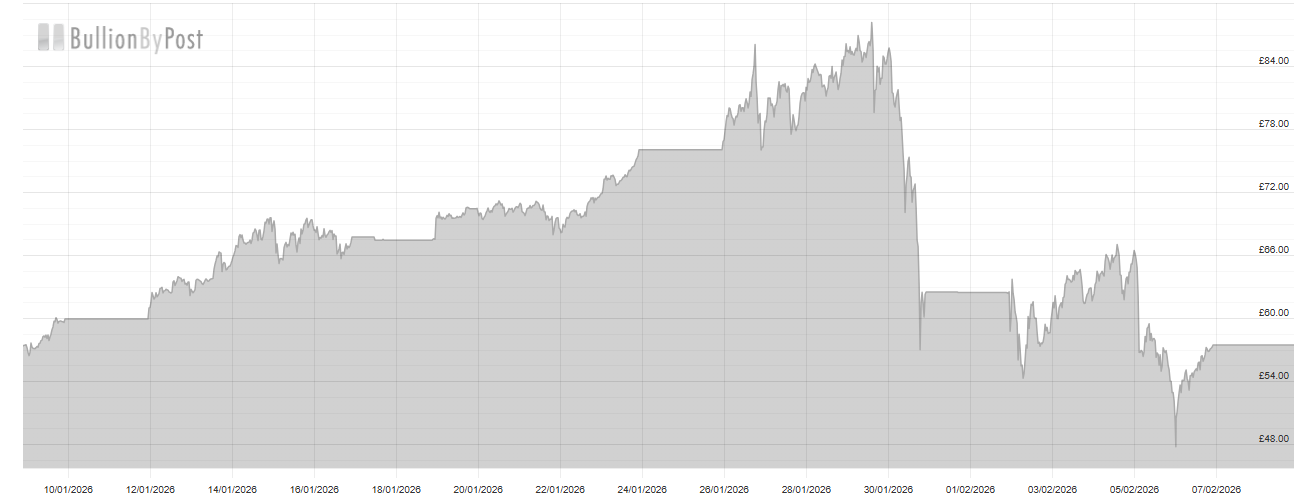
I mean, just by looking at it, you might be confused as to how a raw material can just crash all of a sudden? I mean, did we suddenly find the formula to create silver from dirt? Or did a massive supply of silver just appear out of thin air? Are people suddenly moving away from silver as a material in datacentres? The answer to all of these questions is no.
Before we dive in, we need to look at the performance of silver for the past year.
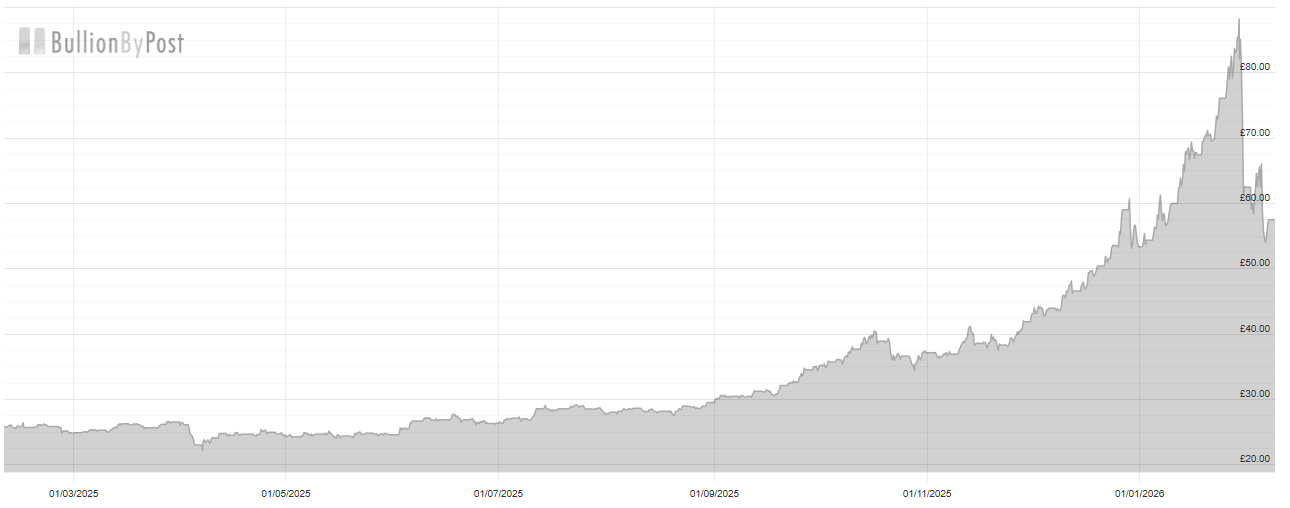
As you can see, silver has been running up its price insanely fast. This is because of a less stable US dollar, demand for silver being greater than its supply, and it being used as a hedge against inflation. As a result, this has led to millions of pounds flooding the silver (and other raw materials) market, causing a massive increase in price.
What I want to make you aware of, however, is the following trend.
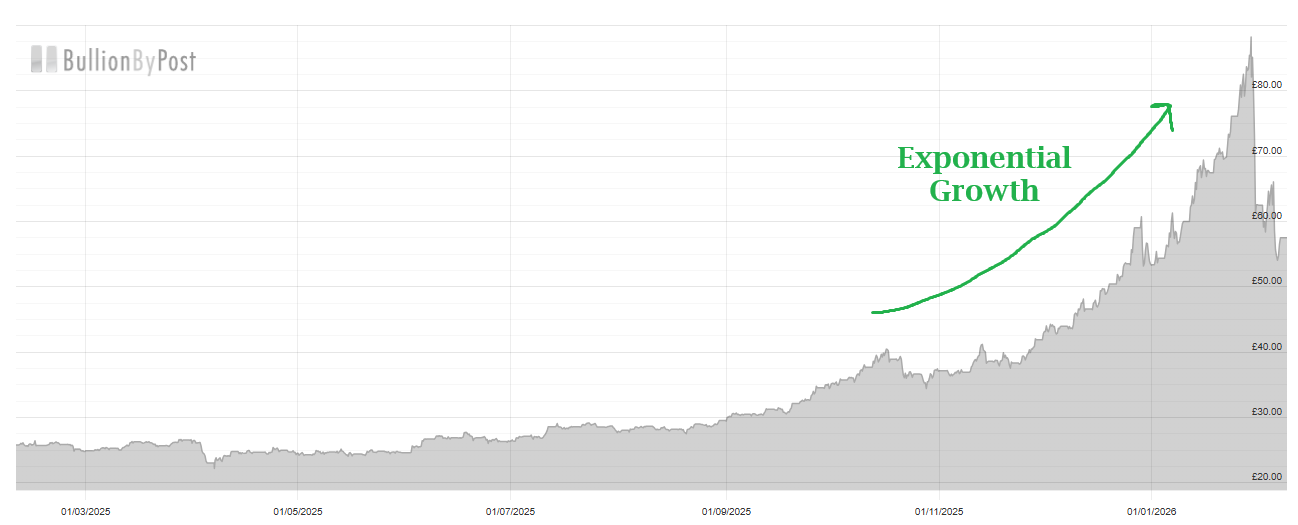
Whenever you see exponential growth in the value of an asset, you can definitely expect people to borrow money to invest in that asset. This is called leverage trading and is incredibly risky.
Essentially, what then causes the massive crash afterwards is when there's a slight blip in the value of the asset, which then causes the investors who used leverage to go into the negative, and an automatic sell is carried out by the lenders to recover the money they lent out. Essentially, the lenders don't lose any money, but you lose everything, and sometimes you still need to pay them back
Because a decent-sized dip led to automatic sales, which led to more automatic sales, this caused a massive crash, and this is called margin calls, or forced liquidation.
This was a market correction. A very foamy market caused silver to be over-inflated with a lot of hype, and when the price went down, people who took out loans to invest got caught with their pants down.
Leverage trading is just one example of greedy people making investments in assets they know nothing about.
Leverage trading is incredibly risky. And to be clear, I am no financial advisor, so don't take my word for it, do your own research.
TLDR: A margin call is when an investor borrows money to invest, but after the investment, the asset value goes down, causing forced liquidation of the asset to pay back the loan. This happens thousands of times across different people, causing a massive crash in the price of the asset.
Quotes Of The Week
- "The most important attitude that can be found is the desire to go on learning." — John Dewey
- "The person who learns the most in any classroom is the teacher. If you really want to learn a topic, then “teach it”. Write a book. Teach a class. Build a product. Start a company. The act of making something will force you to learn more deeply than reading ever will." – James Clear
- "If I don't practice one day, I know it; two days, the critics know it; three days, the public knows it." – Jascha Heifetz