An Unpopular Take on Imposter Syndrome

Recently, I had the chance to get involved with a workshop about everything to do with Imposter Syndrome. I think it's safe to say that the majority of the world—myself included—has dealt with imposter syndrome before.
Immediately, the first thing I think about is not myself, but someone dear to me who has suffered with imposter syndrome incredibly significantly. I understand the real-world ramifications it can have on your mindset, mental health, productivity, and outcomes from both first and second-hand experience.
During this task, we were asked to describe our thoughts on Imposter Syndrome in five words. While most people replied in a negative tone (rightfully so), I decided to reply the way I always do when it comes to Imposter Syndrome.
"Not always a bad thing"
My Reasoning
Firstly, let's define what Imposter Syndrome is:
"The persistent inability to believe that one's success is deserved or has been legitimately achieved as a result of one's own efforts or skills."
Now, although the definition sounds incredibly black and white, it doesn't describe the actual impact of imposter syndrome. Consider this: an estimated 70-84% of the world has experienced Imposter Syndrome. Yet it certainly doesn't feel like 70-84% of the world has been unable to work or has performed incredibly poorly. In fact, if that were true, we wouldn't have seen the economic boom we've experienced from the 2000s until now.
So to be clear: when I say Imposter Syndrome is not always bad, I mean moderate Imposter Syndrome—the kind that doesn't cause significant performance deterioration or unsustainable living conditions. I'd argue that most Imposter Syndrome cases fall into this category.
The reason I embrace my (moderate) Imposter Syndrome thoughts is because it shows that I'm in an area where I can grow. "The people around me are much more experienced, with much more knowledge, and in the job roles I want to be in the future." Perfect! It means I have the chance to absorb all of that. I would much rather be in a position where I experience Imposter Syndrome because that's a good indicator of having room for growth than to be in a position where I have no need to worry about my knowledge or expertise. Ultimately, that mindset leads to complacency and lack of innovation, something that I personally don't stand for.
So yes, I think (moderate) Imposter Syndrome is good, and no, I don't think all the negative connotations it gets are warranted.
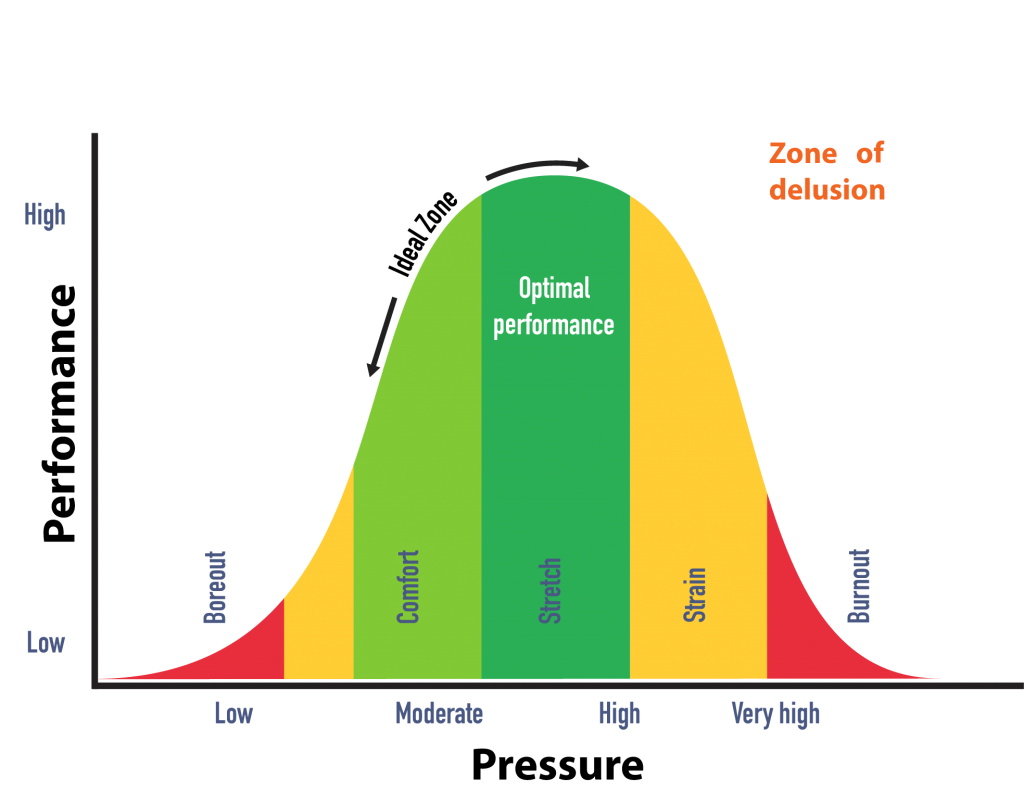
It actually reminds me of the Stress-Pressure-Performance curve, which shows that a healthy and controlled amount of stress (moderate) is actually beneficial for our lives, as it allows us to reach optimal performance.
How I Deal with Imposter Syndrome
- Firstly, the mindset I have on Imposter Syndrome is a great way to handle what's otherwise considered a negative outcome. However, I understand that some people will struggle to adopt that mindset, and that's okay. I have more ways of handling it.
- Imposter syndrome is typically irrational, and irrationality is defeated by facts and stats. Ask yourself why you feel that way, and use facts and stats to show that what you're being fooled to believe is irrational. I'd encourage you to try the "5 Whys" technique. The further you go along in the whys, the more you'll realize that your reasoning is unfounded.
- Understand that it's okay to make mistakes and not know everything. Everyone starts from that position! Use that as permission to ask as many questions as possible, which will exponentially increase your learning.
- If it's really impacting you, speak to someone about it. But it must be someone you trust—ideally someone who's been in the same shoes as you have. They'll be able to connect with you and tell you that what you're feeling is most likely normal and that's exactly how they felt.
Final Thoughts
And to be very clear: this is what I would recommend if you're dealing with moderate Imposter Syndrome. If you're really struggling with it and think it's severe, please seek professional help!
But here's what I genuinely believe: Imposter Syndrome doesn't have to be the enemy. It doesn't have to be something you spend your life running from or feeling ashamed about. For most of us, it's simply a signal that we're in the right place at the right time—growing, learning, and pushing ourselves forward.
The next time that voice creeps in telling you that you don't belong, that you're not good enough, that everyone else has it figured out—pause. Take a step back. Ask yourself if this is the kind of Imposter Syndrome that's holding you back, or if it's the kind that's holding you up. Because there's a difference. And once you recognize that difference, everything changes.
You've got this.