7 Days 7 Lessons #23

- Lesson 1: The Ben Franklin Effect (Relationship)
- Lesson 2: GLP-1 Drugs (Health)
- Lesson 3: The Three Types of Work Ethics (Business)
- Lesson 4: Learn How To Fish and Teach How To Fish (Learning)
- Lesson 5: Data Privacy Sells (Business)
- Lesson 6: Inversion (Growth)
- Lesson 7: Teams Need Trust (Time Management)
The Ben Franklin Effect
Favours may seem like burdens, but they are great tools for influencing.
Benjamin Franklin, one of the founding fathers of the United States, wrote in his autobiography: "He that has once done you a kindness will be more ready to do you another, than he whom you yourself have obliged".
In essence, he is stating that someone who has done you a favour is more likely to see you in a positive light than if they had not.
Anecdotally, this happened when he was trying to build a better relationship with his rival, who had significant influence. He knew his rival had a lot of books, so he asked to borrow one, read it and wrote a note thanking him afterwards.
From there, they became good friends.
In asking his rival to do something for him, he turned an enemy into a friend.
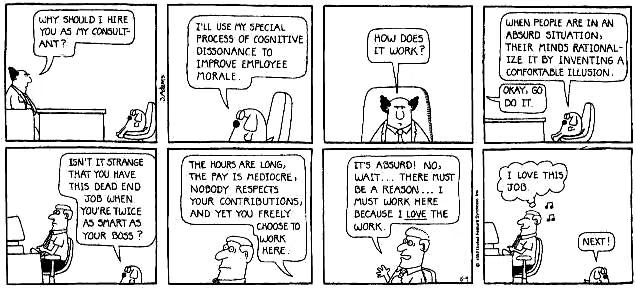
Interestingly, this plays on a topic I've discussed before, cognitive dissonance. When doing someone a favour, your brain tells itself, "I wouldn't do something for someone if I didn't like them".
As a result, you inevitably reason that you like that individual. Of course, this only works if you previously had a neutral opinion about the person in the first place.
A few studies have since been published, including one in 1969 in which participants were asked to return their prize money; when an individual rather than a secretary made this request, they were seen more favourably.
More recent studies relating to Facebook friend requests in 2016 and donations to migrant workers in 2021 further validate this effect. ◼️
I'm not telling you to start offloading your work; at that point, that's taking advantage of someone's kindness. We've all been in that position, and no one has liked that.
Instead, you can use small favours to win people over. Maybe it's asking to borrow a book, or asking someone to keep an eye on your drink whilst you go to the toilet, or even asking someone to grab you a coffee from the machine as you are stuck in meetings for the next few hours.
Something small and natural: those are the types of favours you want to ask people to do for you.
GLP 1 Drugs
Ozempic, the miracle drug. Or is it?

Listening to music? You might have heard your favourite rapper mention Ozempic. Keeping up with the stock market? You may have seen pharmaceutical companies raking in massive amounts of profits from this medicine. Looking to lose weight? Ozempic might have been recommended for you.
There are many brands for GLP-1 (glucagon-like peptide-1) drugs. Ozempic is the most popular.
In 2017, GLP-1 drugs were approved to help manage type 2 diabetes.
After a few years, however, people began noticing that it had the unintended consequence of helping patients lose weight.
In 2021, Wegovy (another GLP-1 drug) was specifically approved by the FDA for weight management, making the weight-loss use officially on-label for the first time.
This resulted in GLP-1 gaining lots of traction and has now become one of the most profitable drugs worldwide, making pharmaceutical companies very happy.
Your small intestine naturally produces GLP-1. The modified version of the hormone (one that lasts longer) is injected into your body, which helps decrease blood sugar.
However, GLP-1 has some additional effects, such as slowing down your digestion, making you feel full sooner, and suppressing hunger cues.
Losing weight is really tough. There are two ways someone can lose weight. Firstly, one could consume fewer calories than they currently do. Secondly, one could burn more calories than they already do.
Both require willpower. Finding the right eating and exercising routine is very challenging and sometimes impossible.
However, GLP-1 drugs tackle this head-on.
To be clear, I'm not saying people are obese because of willpower. There are other factors, such as education (understanding calories, how much you need to consume, what foods are most filling, etc.) and genetics. However, willpower plays a role for many people.
Ultimately, the pros for GLP-1 drugs are that they help patients lose between 15% and 20% of their body weight, which inevitably results in a decreased chance of having heart attacks and strokes, as these are heavily related to obesity.
However, although GLP-1 drugs may not have many short-term side effects (nausea, diarrhoea, vomiting and constipation), they do have two interesting phenomena.
Firstly, studies suggest that stopping treatment leads to weight regain. Weight cycling, the process of gaining and losing weight, is generally considered unhealthy.
Secondly, in March 2026, Lindt, a luxury chocolate maker, reported that chocolate sales are rising faster among US users of GLP-1 drugs compared to the rest of the population. They suggest that GLP-1 users are being more conscious of the snacks they are eating and going for more premium treats rather than mindless munching of what is cheap.
Although for now, the negatives to GLP-1 drugs can be managed, the long-term side effects are yet to be determined and are currently being studied. GLP-1 drugs will remain a miracle drug for now, but will they retain their seat after factoring in cost and long-term health effects? I guess we will "weight" and see. ◼️
Bottom line, if you cannot lose weight, probably talk to a doctor about GLP-1 drugs. Obesity is no joke.
However, I think too many people claim they can't lose weight without trying out different diets, foods, exercises and ways of living.
For example, in my case, I really struggled to cut down on snacking. I also struggled to go consistently to the gym. But introducing more protein into my diet and going to the gym right at the crack of dawn has helped me get more into shape.
Keep trying lifestyle changes until it doesn't work.
The Three Types of Work Ethics
It only takes a few bad apples to ruin the barrel.
I've had the chance to work in all sorts of environments. From charities, group projects, university projects, to an FTSE 100 company. In almost every single one of these environments, I've been able to identify three types of people.
- Those who raise the bar
- Those who keep the bar steady
- Those who lower the bar
It is almost impossible to go into an organisation without finding one of each.
As you can imagine, everyone wants to be the bar raiser; no one thinks they are the bar lowerer, and people ignore the in-between.
In reality, most people fall into the middle category. That's not necessarily bad; leaders need people to lead, and those typically end up being the ones who keep the bar the same.
People who raise the bar are rare and are much more valuable in strategic and managerial positions.
Those who lower the bar do so because of the environment they are in, secondary motives, or simply because they know they can get away with it.
Ultimately, good managers can label their employees as such; doing so correctly allows them to make the right strategic decisions, such as promoting, paying bonuses and firing. Managers must be especially careful with the bar lowers, as they can undermine morale and ultimately diminish camaraderie, trust, and team culture. This is known as the bad apple effect. ◼️
Understanding the type of person you are is important. Trying to be a bar raiser is admirable, but holding the bar steady when it is already high is just as valuable.
Imagine attempting to drive up a hill in a car. The handbrake doesn't drive you forward, but without it, you'd slide back and lose everything you'd gained.
If you have any respect for the person you are and for the people you work with, you will do your best not to be someone who lowers the bar. You should be proud of the work you do, and you should always aim to do it well.
Learn How To Fish and Teach How To Fish
Don't keep giving people fish forever; it will get them addicted and keep them in a cage. Give them the fishing rod instead and teach them to fish.
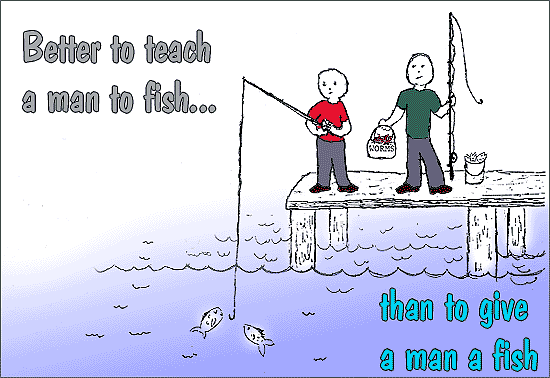
We've all heard the parable before:
The key to success is consistency and sustainability. That cannot be achieved from one-time winnings, or from luck of the draw.
Ultimately, you must learn how to consistently and sustainably win, not just try and leave it to chance.
Not only is it important for you to learn so that you can succeed, but it is also important to teach so that others can follow suit.
Giving handouts is no better than trapping someone in the life they are living now.
Teaching them how to get what they need without the reliance on others gives room for growth, self-sufficiency, and purpose.
Nowadays, people are too focused on trying to get a fish that they neglect to learn how to fish so that they can be fed for the rest of their lives.
Learning is a sign of youth; the day you stop learning is the day you've grown old.◼️
There are many reasons why doing something yourself to achieve success is better than just receiving success.
You gain a sense of purpose, you learn the intricacies of doing the craft, you can teach others, you put effort in, and you succeed.
All of the above cannot be achieved if you just achieve your success. Don't rob yourself or someone else by giving and receiving fish. Instead, give and receive the fishing rods.
Data Privacy Sells
Ensuring your product is Data Privacy compliant is expensive and might not obviously generate you money, but if marketed the right way, that couldn't be further from the truth.

I work in cybersecurity, and just like many other functions in a business, we don't directly generate revenue. Instead, we prevent the loss of revenue.
For example, having a data breach is incredibly damaging to brand reputation and could mean we lose future customers. HR might not generate revenue, but they do ensure no scandals brew up in a company.
So for years, money was always spent on marketing, development, and other areas that generate revenue, whilst giving the scraps to the non-revenue-generating segments.
However, a recent study in the Journal of Marketing showed that organisations that treat customer data responsibly attract more customers and perform better financially.
Brands with strong privacy practices had a 12.31% higher purchase intent than those with weaker privacy practices. In fact, this was even stronger for brands individuals already liked (255%).
Brands also saw an increase in usage if they had good privacy practices.
Ultimately, Data Privacy is expensive, but you can use it to generate more revenue for you by marketing your product as secure and private. This is not done through one advert, but through constant messaging, so privacy seems embedded in your product.◼️
To ensure this works as best as possible, a few things need to be in place.
Firstly, you need to ensure your product is actually secure. Lying to your customer is a sure way to destroy your reputation.
Secondly, you need to repeatedly show that you care about your customers' Data Privacy through adverts, privacy notices, messaging, updates, etc. The ultimate goal is to have a customer say one of your core values is privacy.
Inversion
Spend time on how you could fail, and create a plan to stop that from happening.
When we do something, what do we expect to have as the final result? Success!
When have you ever spoken to someone and heard: "My goal was to spend time doing something just so I could fail"? I can bet you probably never.
Charlie Munger was the business partner of Warren Buffett, one of the best investment firms to ever exist, Berkshire Hathaway.
Charlie Munger was obsessed with success, so much so that Inversion, a strategy to help with it, was commonly represented by him.
Charlie Munger had a very famous quote:

Inversion is simple: identify what would guarantee failure and do all you can to stop that from happening.
Most people plan on how to succeed, but overlook what could go wrong, which would mean success was never possible.
Imagine this: I am trying to create a clothing brand. There are so many clothing brands; the idea is theoretically viable, but the execution is what matters most.
Because of this, planning how to succeed doesn't really help. Thousands of people have done exactly that and still failed; the plan is the easy part.
Where people go wrong is not thinking about what could go wrong. Why did the other people who tried to do the same thing as I not succeed? Was it because of their design? Quality? Where was it made? Cost? Colours?
So before I design a single item, I make a list of every reason a clothing brand fails, and I build my plan around avoiding those things
Understanding why other people failed will allow you to not make the same mistakes and increase the chance of success.◼️
Before you tackle anything, be it a simple goal or a massive dream, highlight the reasons why others have failed, and create a plan as to why you won't fail the same.
Teams Need Trust
Trust improves everything.
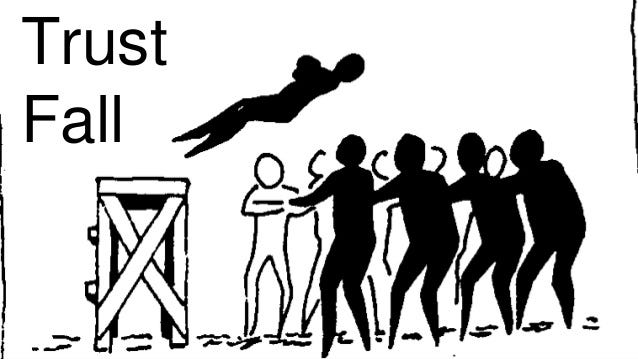
One of the most important qualities every team needs is trust. Trust is a core value, meaning that if there is no trust, there is nothing else.
Most organisations and teams struggle with a lack of trust; this is not something special to a specific team. If you are a manager and unaware of it, it means your team cannot trust you enough to speak about this issue.
But why is trust so important? I mean, surely work can get done even when teammates don't trust each other?
That is true, but the results are similar to a group of strangers trying to win a 5-a-side football match.
There's no chemistry; there's no understanding of each other's capabilities; there is no camaraderie; and therefore, the results are subpar.
I mean, think about it. Why would anyone pick up more work to fill up their time if other people are getting away with not doing any, and you can do the same?
Why would you believe that the reason blockers exist is because of other people and not just from laziness?
Why would you believe someone's expertise if they have consistently let you down?
Trust is vital for all teams and an organisation's success. As a manager, if you can't foster trust, you must take the right measures to do so or step down from a managing role.
It is not the employee's job to fix it. They are the workers. The managers are the strategists. Managers find what needs to be fixed and implement it with the help of their team.
Without trust, your team is simply a group of strangers going through the motions.◼️
Putting trust in place means a few things.
Getting rid of the people who don't want to change and don't want to foster trust. It doesn't matter if they are the best in the world; their individual output cannot match what a trusting team produces.
Increasing visibility. Making sure people's work is put on display. Making sure others know what everyone else is doing, not to micromanage, but to give everyone a clear picture of what is happening.
Improving accountability. If people are unable to admit to their own mistakes, trust will be demolished.
Quotes Of The Week
- “Change is the end result of all true learning.” — Leo Buscaglia
- “Give a man a fish and you feed him for a day; teach him to fish and you feed him for a lifetime.” – Famous Proverb
- “All I want to know is where I'm going to die, so I'll never go there.” – Charlie Munger
- “Life can only be understood backwards; but it must be lived forwards.” – Søren Kierkegaard